Mousehole: the name is justification enough to warrant a visit. And what a mousehole it is, with little alleys, nooks and crannies leading to endless holiday lets and airbnb’s.
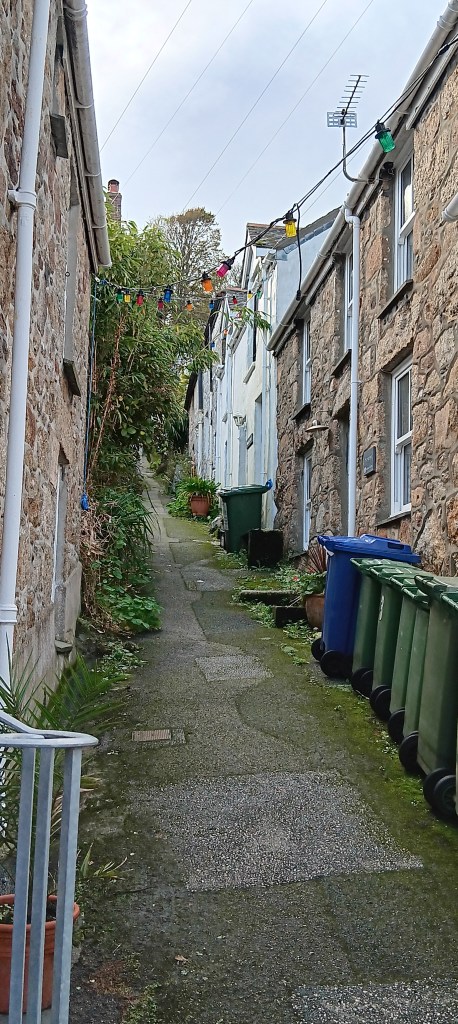
And therein lies a problem. Local taxes only apply to permanent homes. Just ten percent of the livable buildings pay for all the services and activities of the area. Or, as one lady put it, the few are supporting the many. Worse, the absentee owners are making money from the town without giving anything back, and they are already well off (otherwise how could they afford to buy in the first place?). This has caused growing resentment, especially when the absentee landlords/holiday-home owners get themselves onto community committees. One example is the annual Christmas lights, which volunteers erect each year. The committee have ordered bigger, brighter, ‘better’ but it’s the permanents who have to give up their time to install the lights, and many of those folk are aging.
Mousehole (pronounced mauzell) is served by a bus service which comes from Penzance, running at fifteen minute intervals. On the bus I met a burly, not quite clean-shaven, gent who everyone knew. He’d had a heart attack recently, so was taking life a littler easier, though he suspected his wife was not best pleased, having him underfoot. During his working life he’d retired from roading twice, eventually going gardening. He’d loved treating each clients garden as his own, and shaping them into something special. But the Doctor had put a stop to that.
This smiling man, with well-worn yellowing teeth, collects coloured pieces of Moorcroft and Lalique for a hobby. He enjoys combing auctions and antique places for that special piece, the one which appeals to his taste. His biggest win was at a car boot sale where he found a piece for a few quid, acted on a hunch, and has since had it valued at thousands. It sits in pride of place at his home, not for it’s monetary value but because he spotted it.
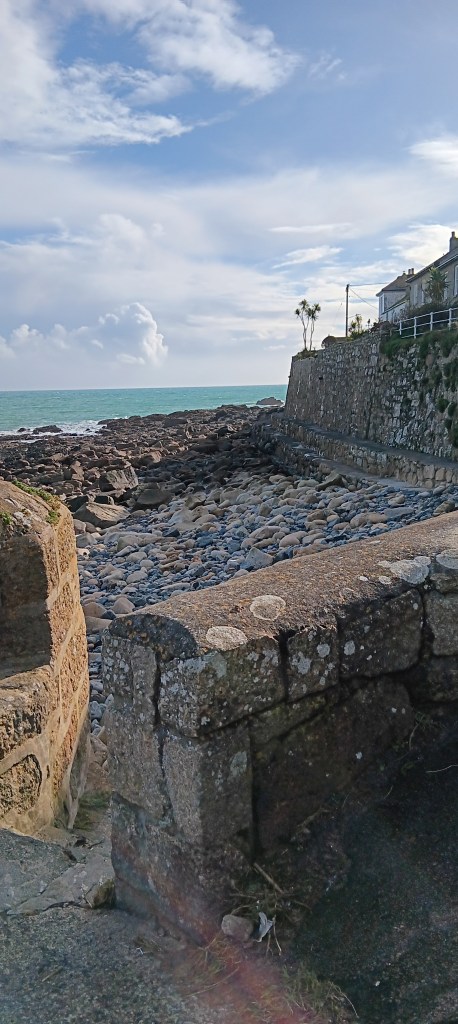
Wandering around Mousehole is a chance to enjoy the sights and sounds of the seaside within a gated wall. The sea hammers outside whilst children play safely on the beach, owners check their boats, and visitors absorb icecreams on seating strategically placed to miss most of the wind. At each end of the bay, houses rise from behind the sea wall, as though safe. But rocks pile at the base, enabling climate-change-affected storm tides to throw spray over that wall.
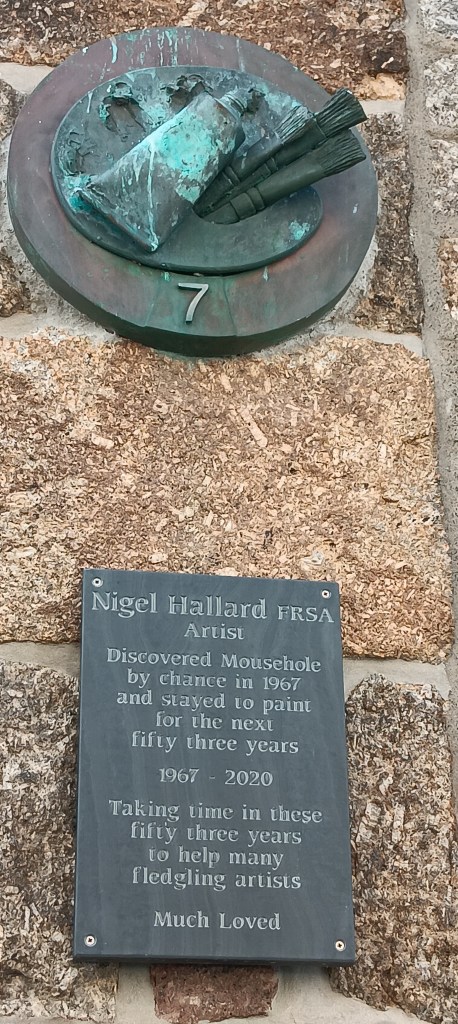
One of the joys of seriously cute/picturesque places like Mousehole is finding the little touches that speak of community. A plaque memorialises an artist known for helping others:
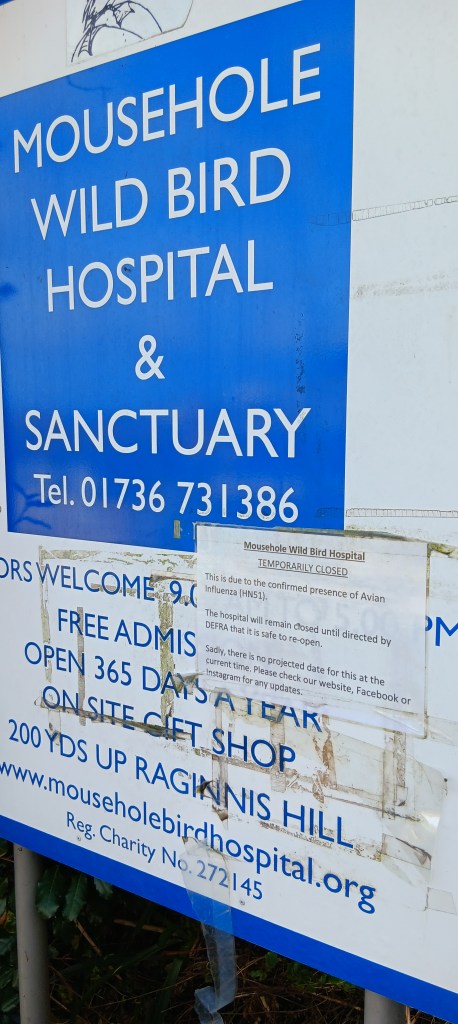
Even here, so close to Land’s End, the dreaded bird flu has made it’s presence felt:
Up a network of cobbled alleys, I came across a tiny cafe. It had no views, and yet was packed with customers; a sure sign of quality. The owner very kindly made a proper Cornish Pastie for me to take away with my cup of tea. Cornish pasties were originally created by wives for their men to take down into the tin mines for lunch. Meat and vegetables wrapped in pastry. If those workers had anything like my pastie, they were blessed indeed! The crisp thick pastry enveloped a mix that had been worth waiting for. No wonder that cafe was busy!
Despite the bus service, I decided to walk part way back, as there’s always something not easily noticed from a vehicle, and this did not disappoint. Tucked between the road and cliff face, behind a rock wall, a community of allotments! With no houses nearby, and not easily accessed, it seemed an unlikely site, and yet there it was. Some gardeners had productive vegetable patches, whilst others seemed to use theirs for expressing artistic talent, a sense of fun, or even just as a place to gaze out to sea. Whatever the purpose, those gardens were sheer delight, and utterly invisible to the road users.
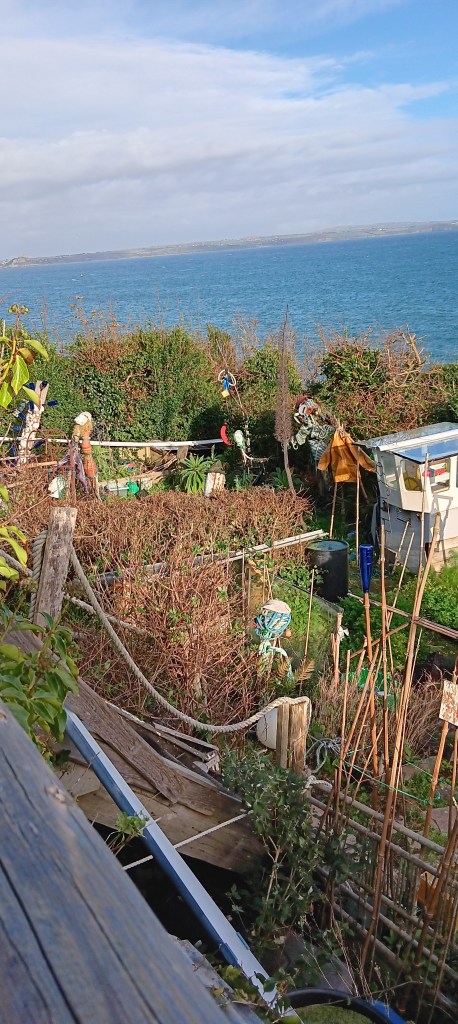
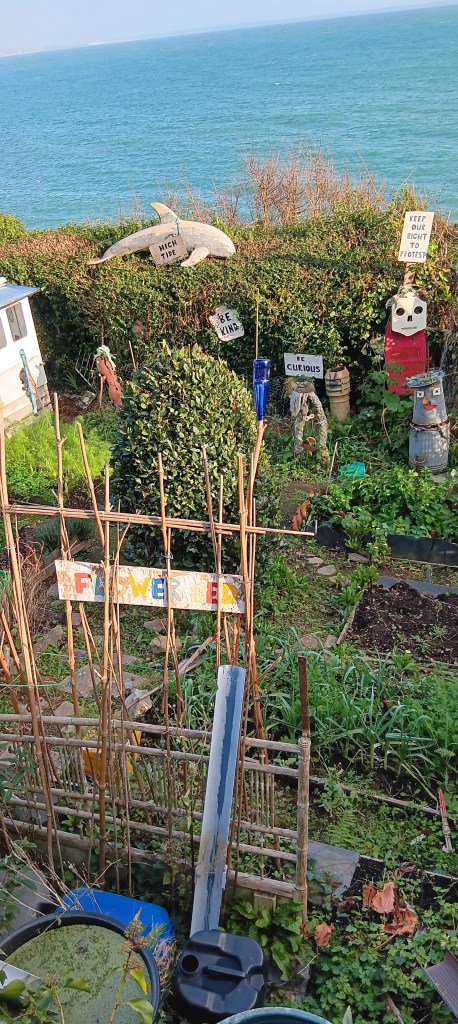
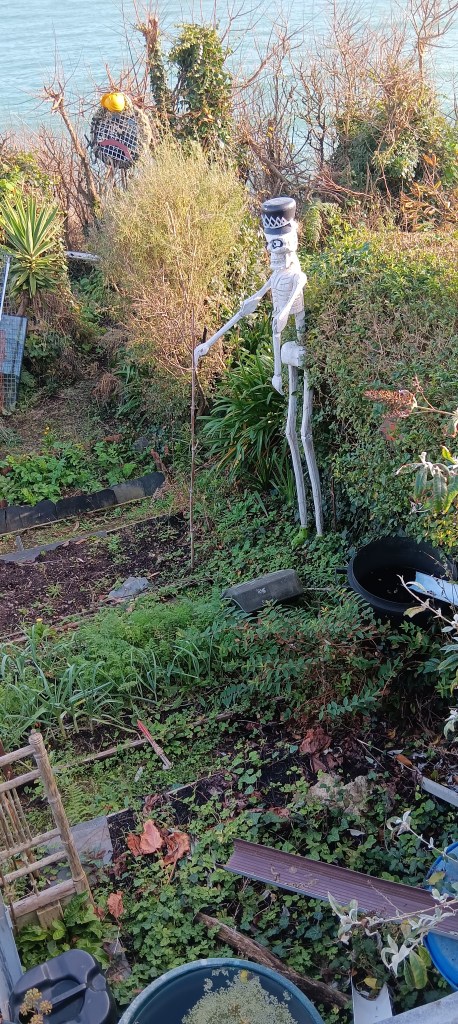
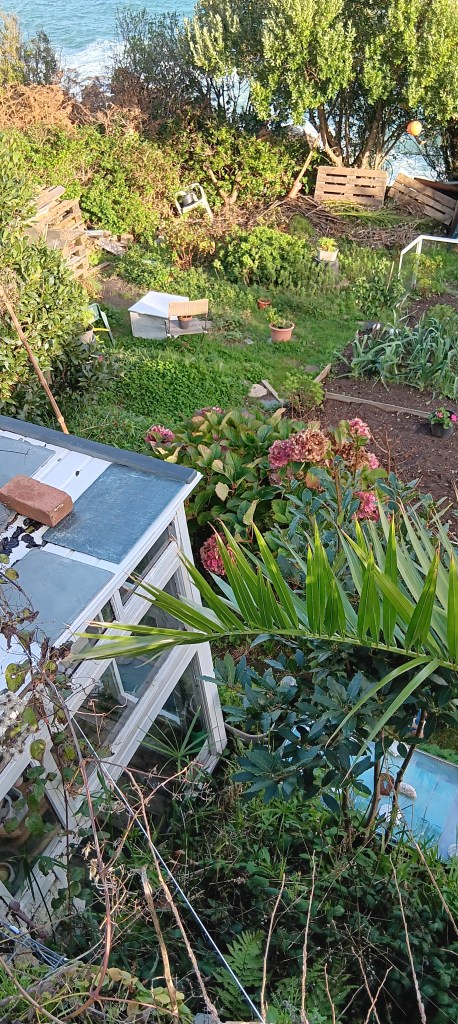
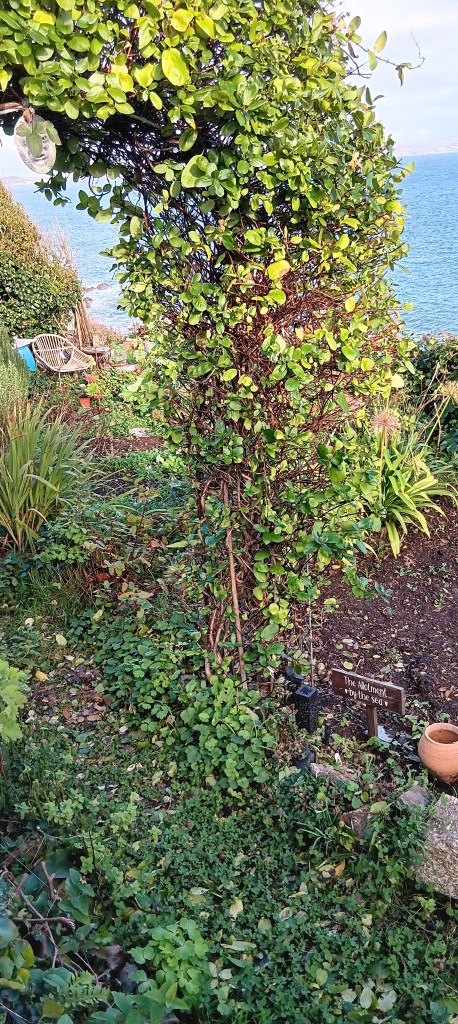
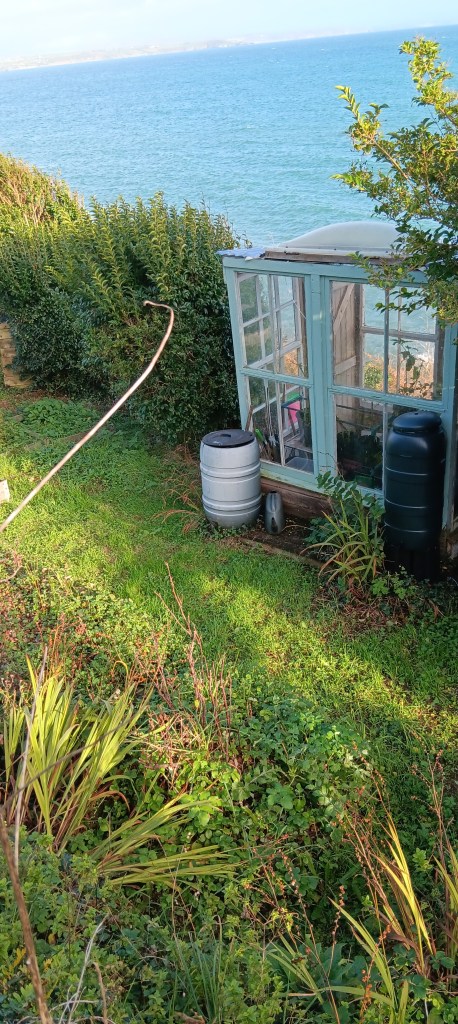
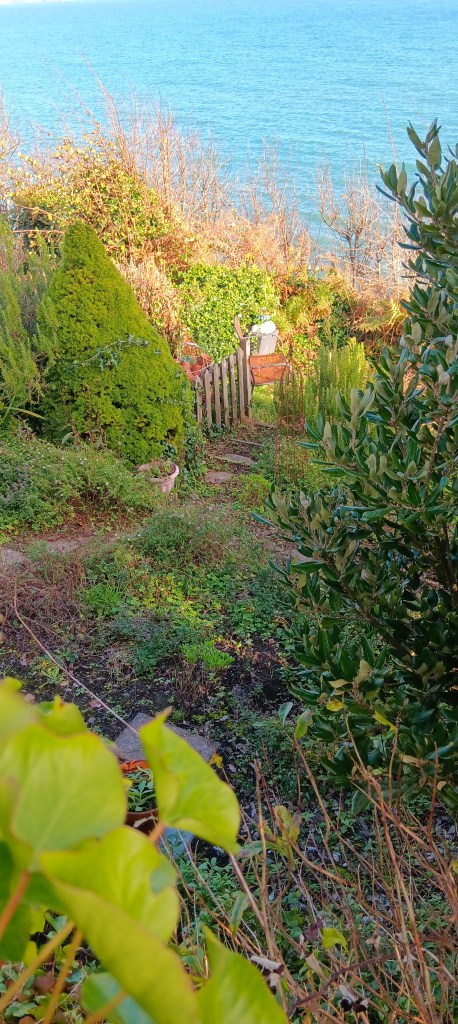
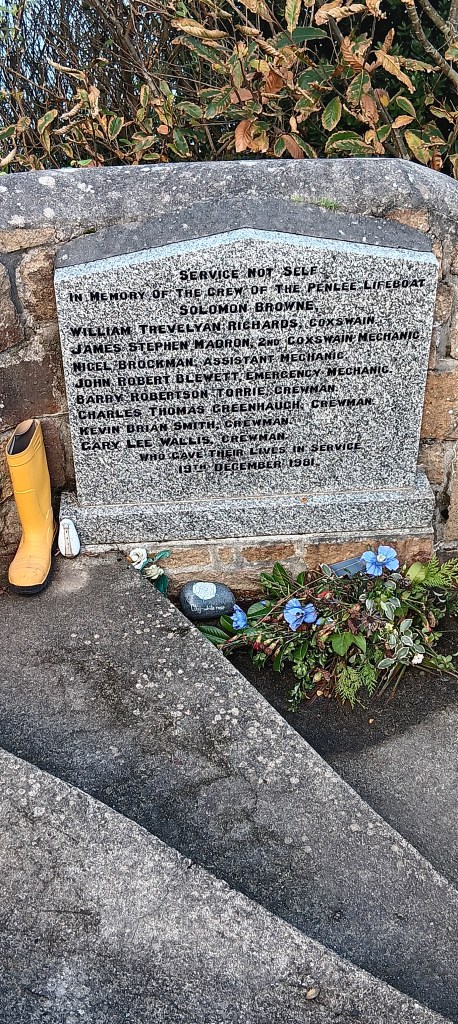
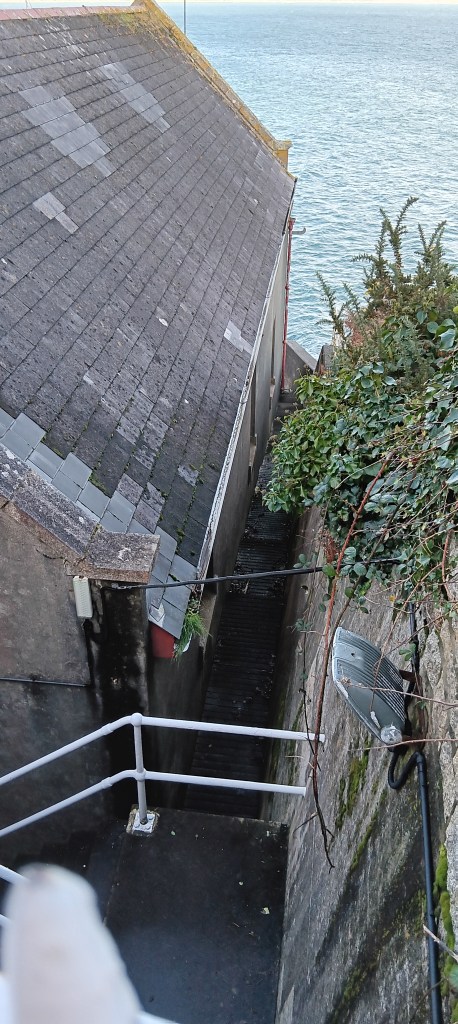
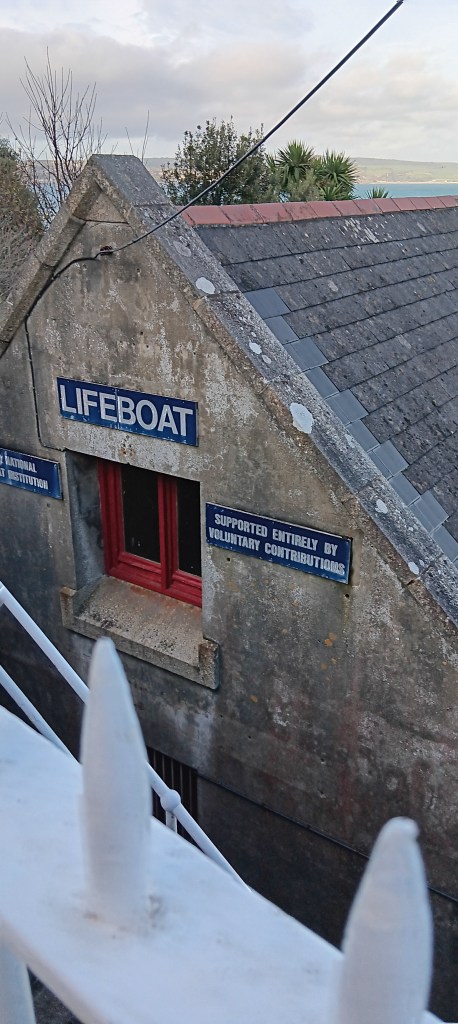
Around the corner a memorial garden and the historic remains of Mousehole’s original Lifeboat station, which had been one of the first to have a slip direct into the water, saving precious time. Sadly the crew of one mission all perished on their way back from what had looked like a successful rescue mission. Within days of the tragedy, enough folk had come forward that the voluntary service was able to continue!
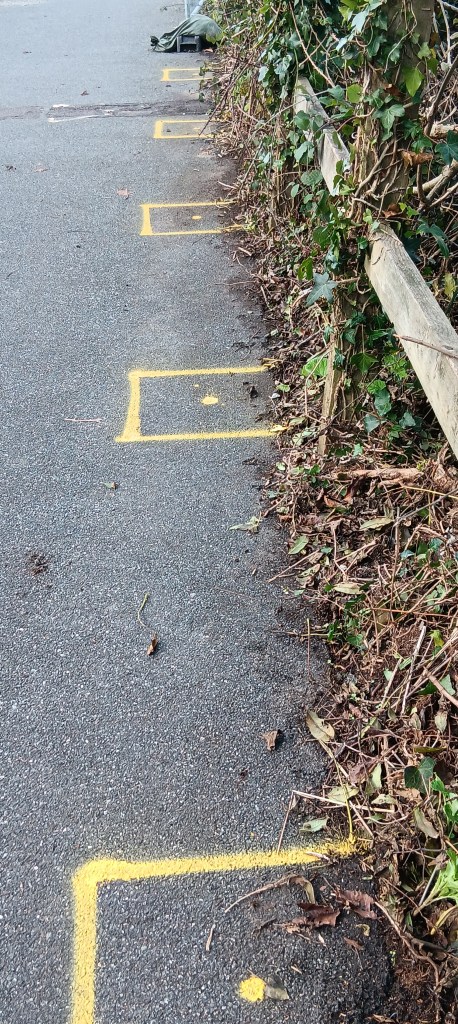
Further on some workers were replacing an old wooden barrier with a new version. I watched as a man marked the square to be dug for the new post, then marked the actual post spot. Now, forgive me, but when they dig out the square, what becomes of the spot?
Once I got tired of walking, just before the seaport of Newlyn, it was just a matter of finding the next stop, wait a few minutes, and wave down the obliging bus.
The ride back to Penzance passed a row of lovely south facing bay-windowed terrace houses. With homes like these spread throughout the UK, it’s surprising that these were notable, but they highlighted something I hadn’t really thought about before; was there one chair or two? Placed strategically to gather the cosy warmth of the afternoon sun, those windows enveloped elderly couples reading in the last rays of the day, a lady knitting on her own, another gazing out her window at the world passing by. Yet another bay window revealed a telescope flanked by two high-backed leather chairs, whilst next door their neighbours foxy dog bounced expectantly between lazyboy and window as though too energised to wait patiently for whoever they were expecting! But these are only glimpses of other lives, caught in brief moments whilst passing by. Who are they, what is their story, and are they fed up with nosy tourists peering at them when they are just trying to relax before supper?
We’ll never know. But I do hope they are all residents, rather than visitors contributing only to the pockets of outsiders.

