The first clue was the sight of the grand old Stromness Hotel where I was booked. It sits fair on the harbour, centre stage, unchanged since it was built in cobbled-street days. No modern ramps or disability services here. Steps up to the front door, then just inside the lobby, wonders of wonders, an old heavy wooden revolving door. Not designed for suitcases. Nor is the lift. One person and one suitcase can just fit inside the bifold metal doors as the lift clanks it’s way up to the first floor, where reception is a heavy wooden bar. Keys, big old turn keys, are kept in wooden post boxes behind the clerk. This is a dry hotel; the owner doesn’t believe in alcohol. Breakfast is 15 pounds ($30)! I’ll have cup soup in my room.

I am in room eight. Up sweeping deep-red carpeted stairs, with guilded silver/gold wallpaper.
The ensuite room has the smallest wall TV I’ve ever seen, but wonder of wonders, over 18 channels. There’s a lady’s vintage dresser, complete with mirror and stool. Absolutely superb.
Heading out to explore Stromness, I discover the wonder of being ignored! There’s no touristy stuff, and no crowds. Islanders getting on with their lives, chatting in the street about a gnarly weed, and notices in the grocer window about an upcoming funeral.
Checking online, after getting quizzical looks from the lass at the ‘Travel centre,’ I discovered that there are no tourist services as such. If I want to visit history sites, I need to catch the island commuter buses under a hail-and-ride system. Then walk. Fit in with island life, or miss out.
The forecast says fine, or showers, or rain a bit. Covers the bases. Rain tomorrow. I take a jacket.
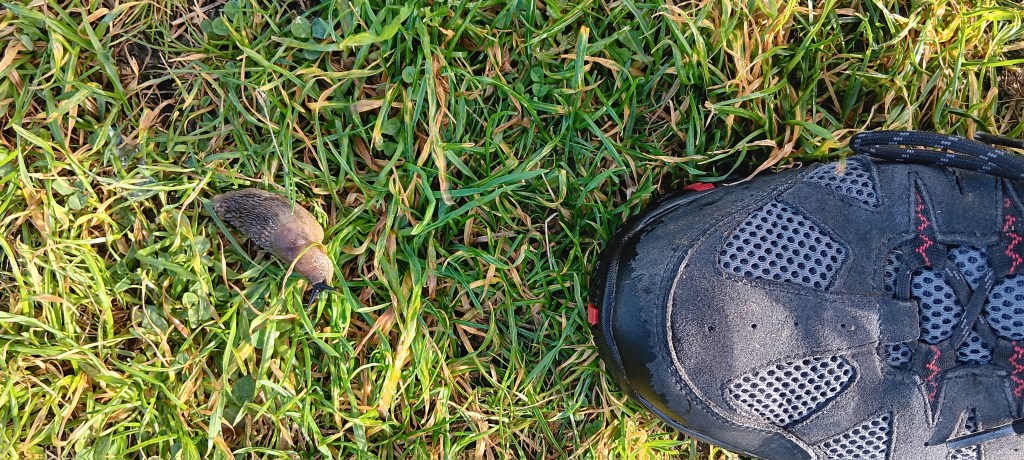
A nice local couple at the bus stop suggest I buy a day pass. The bus driver promises to drop me off near the Standing stones of Stenness. The photo below shows where ‘near’ is.

I walked, in the sun, wind, and showers, watching swans, oyster catchers and sheep, but felt pleased I wasn’t the slowest user of the path.
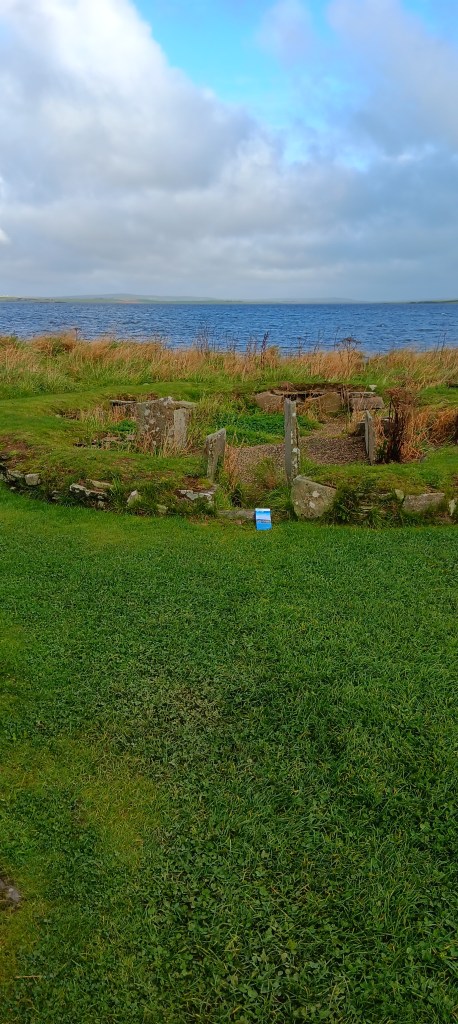
Where did Neolithic islanders sleep in their huts? I placed my bus timetable in the doorway to give a sense of scale. The stonework was flat and impeccably placed. One hut was unusual in that it was two households sharing a common entry; could this be UK’s first attached house?
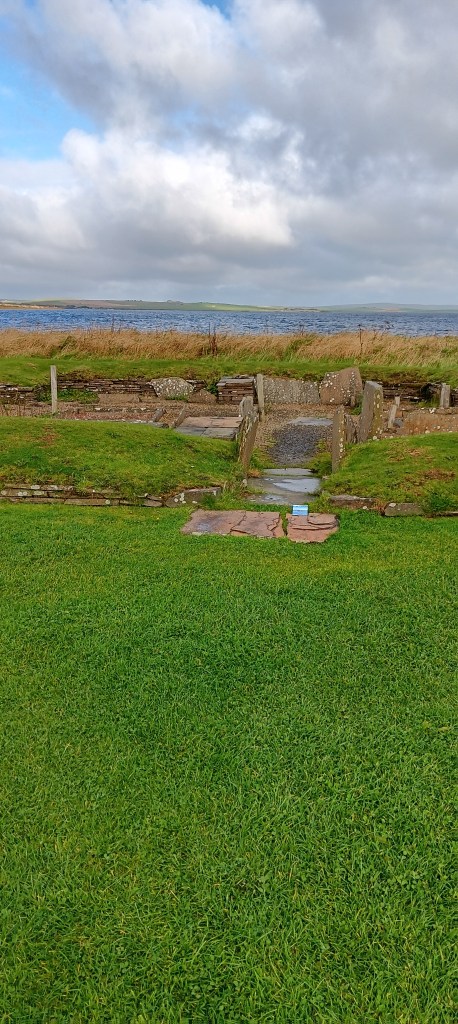
Walking on, past archeological diggings, and to the stones. I wasn’t expecting the moat. The stone circle extends 105 feet diameter, with 16-foot high stones about 12 inches thick. And those Neolithic builders didn’t have cranes!

Care of the sites take precedence over tourists; just lovely.
Walking back, I felt the weather sweep in, and become sleet. At the end of the road, praying for the bus to appear didn’t hasten it’s schedule, but of course the sun returned with the bus.
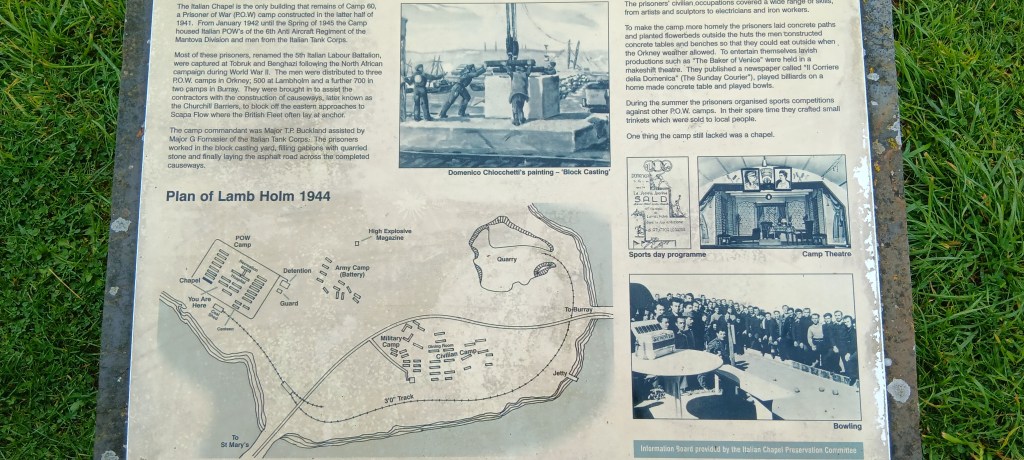
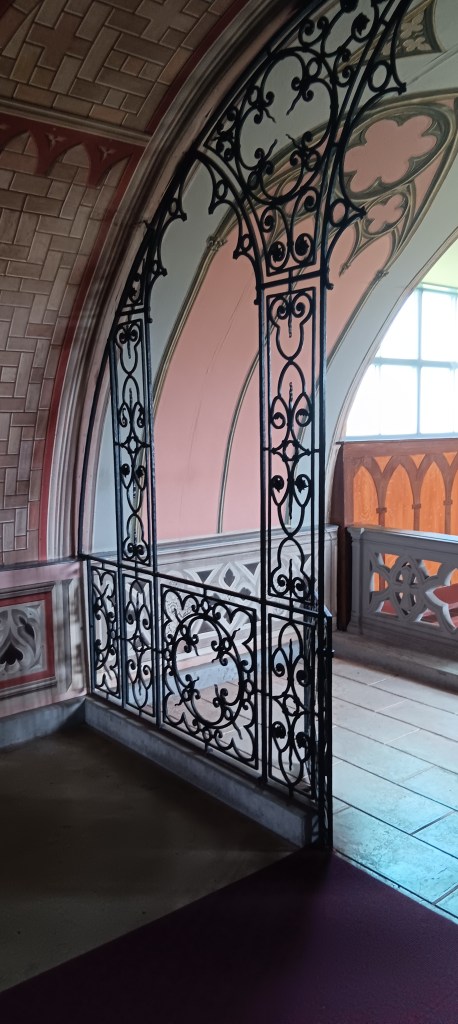
A half hour bus ride to the Italian chapel. Another visitor had obviously read the information pamphlet, so got off the bus at neighboring St Mary’s, then walked, arriving just as I was leaving the chapel. I had asked the driver to advise me, and he’d kindly dropped me off just 150 meters from the chapel. Islanders expect visitors to be self-contained and hardy, but they are helpful and kind too.
The chapel, and It’s story is quite extraordinary. Look it up. I’m sure the Islanders respected the resilience and hard work of the pow’s.

On the way back, coming over a brow, the shock of an oil rig plonked in the middle of a bay contrasted weirdly with lovely traditional white stone farmhouses nestled in sloping acres of green.
Orkney gets on with it’s life, mixing old and new without submission. The lower streets of Stromness make no concession to cars, being narrow and cobbled, but everyone seems considerate. The houses, even newer ones, have no street numbers; many are named.
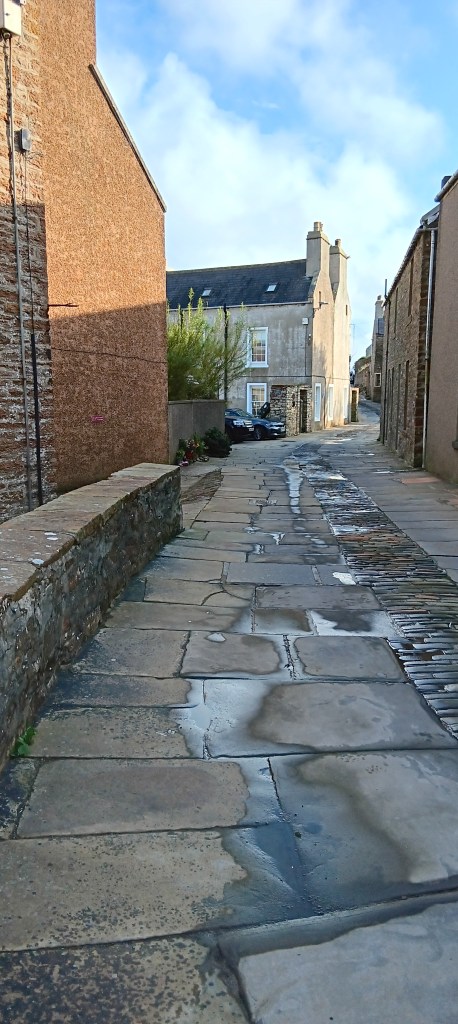

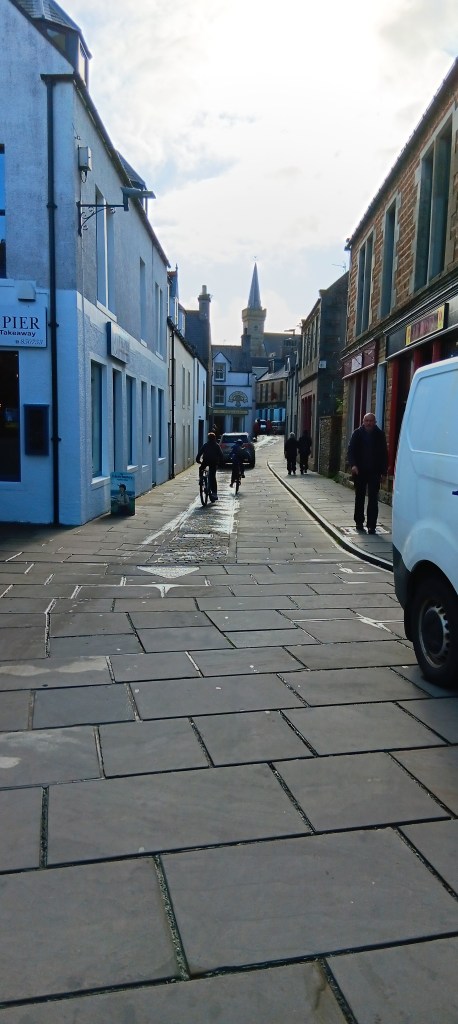
Each time I left a shop premises, the owner said ‘Bye, for now.’
It felt like a lovely promise of just temporary goodbye.
 Stories for you - Enjoy!
The good the bad and the wondered at? What photos?
LikeLike
The Italian chapel looked lovely,I read about it in a Nat Geo ,last century. My daughter Anna also traveled out there, she said the divided huts were animals on one side and people on the other. She did some ancient people studies as part of her degree. Wonderful story.
LikeLike