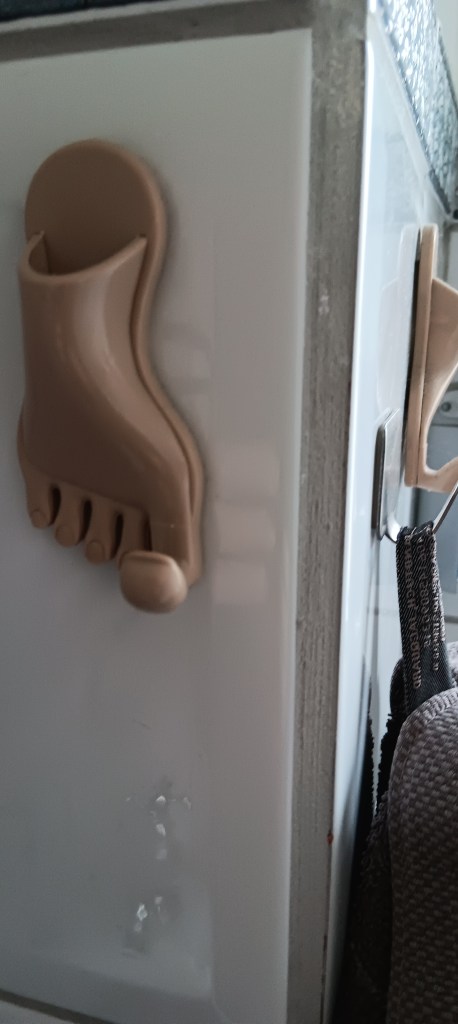
This blog is a little differant; extras from Bavaria which need sharing. First there is the foot, noticed in the bathroom of a friends flat, to hang a towel and store your toothbrush… but would you, really?
The best way to explore a new place is to kidnap a willing local. They add a depth to the adventure, with little snippets of information. Without this, the visitor is in danger of being confined to the superficial, especially if the language is not theirs.
For instance, who would know that the fast-flowing waterway appearing briefly beside the footpath is actually a river running under the town, which has, over centuries, been completely built over. At one time the market hall across the road from this glimpse housed, amongst many things, a butchery who would dump all their waste down through their floor into that same waterway.
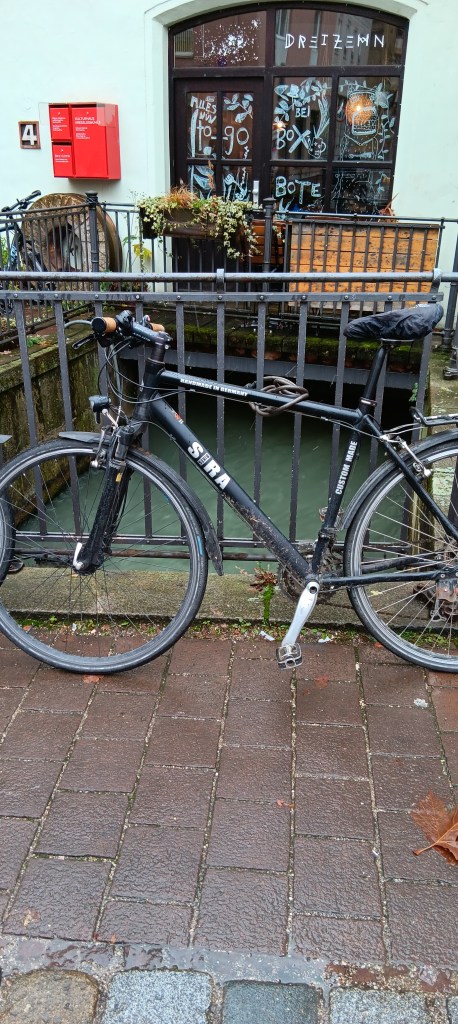
Further on, we discover a second-hand shop with an astonishing array of antique-era knick knacks, from dolls prams to lanterns, hair brushes to travel boxes. There’s a glow of dust, as if inviting the passerby to step into another world. How easy to imagine these doors are truly a pass into time travel.
And speaking of time travel, Augsburg has the astonishing record of providing the oldest social housing project in the world. The Fuggerei was the brainchild of Jakob Fugger, who created the area in about 1520. There are rules for this walled housing estate, most of which haven’t changed in the 500 years since. Rental has remained permanently at one Rhenish guiden per year (less than a euro), plus three prayers per day (the Lord’s prayer, Hail Mary, and the Nicene Creed). .. and the residents must work a part-time job in the community. Imagine if a landlord nowadays put the prayer requirement in their leases!
To be eligible for a home in the enclave, there are strict requirements. Firstly, you must be genuinely poor, generally through no fault of your own i.e. health, victim of crime, abused etc. Secondly, you must have no debt, or credit cards. Thirdly, you must have no criminal record. Fourth, you must have lived in Augsburg for at least two years. And fifth, you must be Catholic. What does that say about the founder’s attitude regarding christian humanity? Jesus made no such distinction.
Perhaps the most extraordinary restriction however is that the gates to the enclave are locked at ten pm every evening.
The Fuggerei houses a church, a well, an administration building, and several small squares. The 147 homes, or apartments, are two-bedroomed, with each having it’s own front door, complete with unique handle so that the resident can locate their door by feel. Each home also has a garden, and garden shed, if on the ground floor, or if upstairs then an attic, so that despite being only about sixty square meters, they have private well-being space.
With such low rentals, the Trust running the Fuggerei do remarkably well to fund the maintainence and services, using a mix of income from the original trust investment from five centuries ago, and tourism. For this place of the poor has become a tourist attraction. Visitors pay 6.50 euros to look through an apartment, and take the tour. Passing by, and seeing residents going about their daily business within the Fuggerei, I could not take a photo of the entrance gates, let alone contemplate paying money to gawk at the place they call home.
In contrast, the churches of Augsburg beckoned. Two ajoining churches is unique, but the story goes deeper than a simple twin build. The churches of St Ulrich and St Afra, built c1460’s, symbolise the peaceful co-existance of Catholics and Protestants after centuries of bloodshed. Each is unique in design, despite being under the one roof.

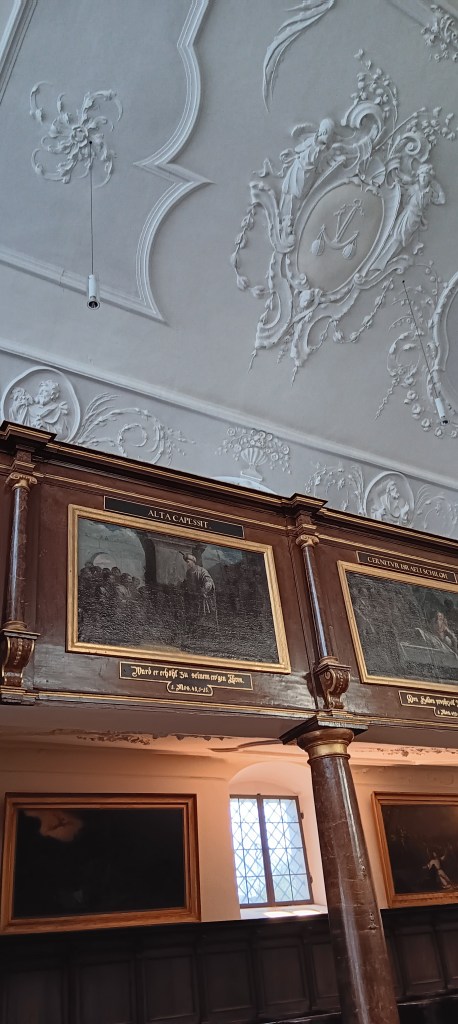

If only the current religiously-based conflicts around the globe could come to an accepting and peaceful resolution such as this.
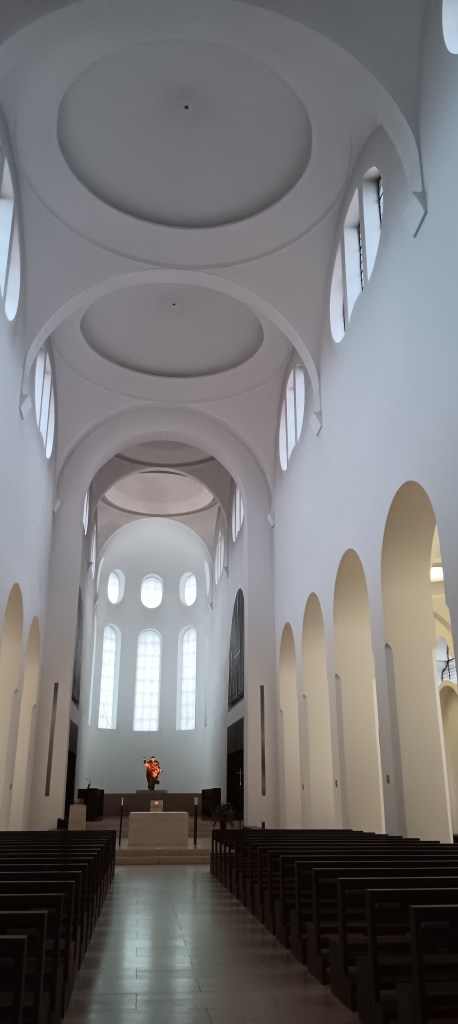
However, another church in Augsburg has not yet managed to create the peace of belonging, in the minds of some. St Moritz, originally built c 1019, and surviving many calamities including fire and bombings, has this century undergone yet another reincarnation, but this time as a minimalist place of worship, which does not sit easy in the minds of those who see prayer and sermons as needing to be augmented with great shows of wealth and adornment.
Yet the building’s apparent simplicity is deceptive, as the renovation involved finding solutions for hugely complex problems ie how to get light to the right places, and acoustics working without echo, whilst keeping the walls white and the surfaces plain. In so large a space, the architect could so easily have fallen into the trap of creating a vast whitewashed barn. St Moritz church is unmistakably a place of worship, full of light, and with few distractions. Whilst it polarises opinions, there’s something thought-provoking about a church which refuses to idolize objects but instead concentrates on the soul.
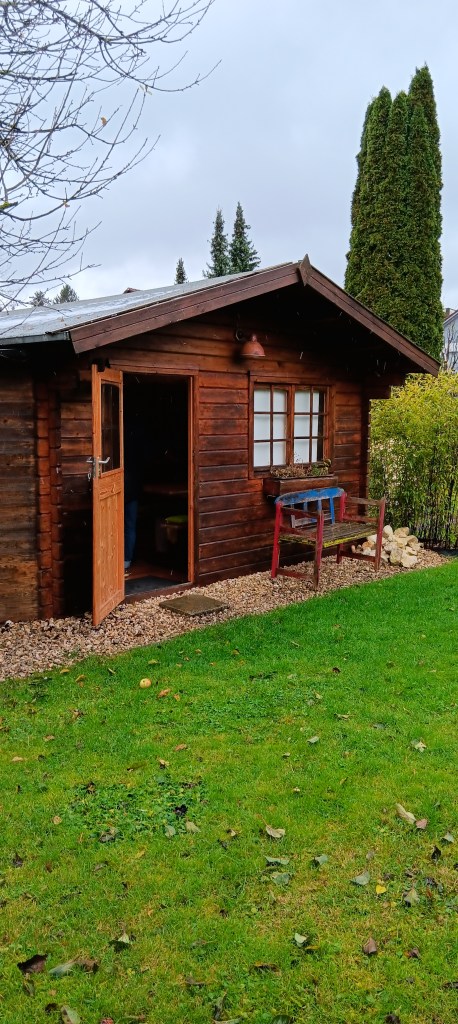
Another spot which touched my heart is to be found out in Augsburg’s suburbs. This allotment, just a short walk from the owner’s home, is a work of love. The garden is so much more than a place of food provision, with trimmings making it an extension of home. A place for family time, where young and not-so-young can play, laugh and share. The wee building is like a holiday cabin, including a family table, where memories gather in safe refuge. Outside, despite the snow, a few tomato plants hung on to life enough for the last of their fruit to ripen, and the trampoline promised a summer only months away. The family had set themselves a project during covid, crafting a wall; what better way to add to their story?



Traveling towards the alps from Augsburg, across a snow-covered landscape, it’s easy to see why farm animals are kept indoors over winter, in vast barns attached to the farmer’s homes. Coming from a place where the stock live outdoors all year round, even in snow, I cannot begin to imagine the intense management and planning required to make this kind of farming work and be economic. But the winters here go to such temperatures that outdoor survival would be unlikely.

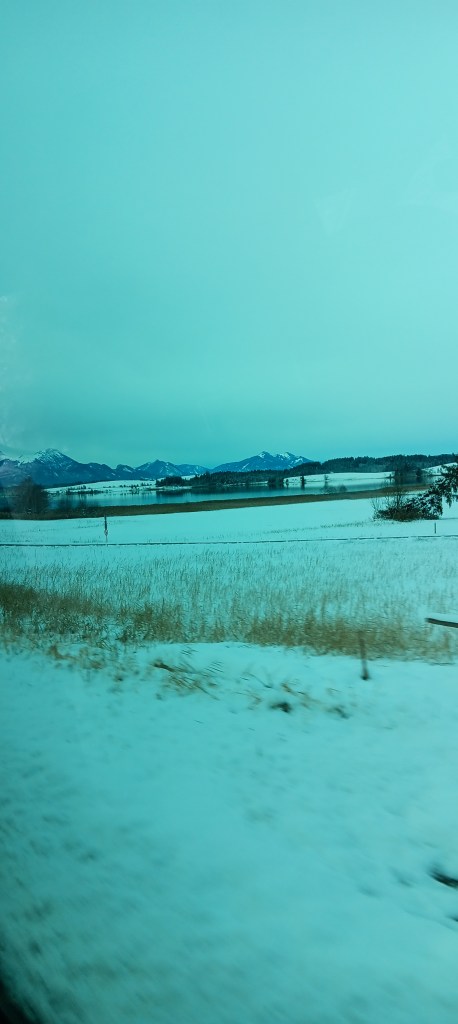
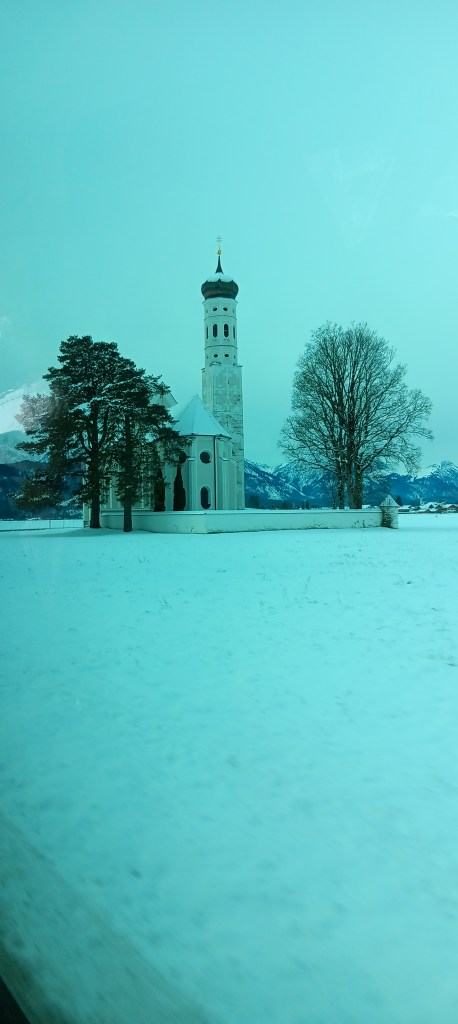
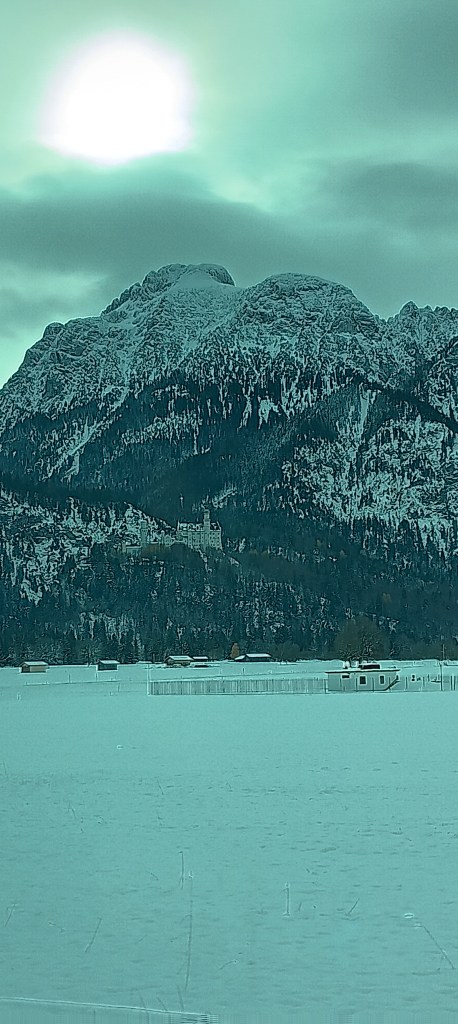
Of course, for the tourist that same weather provides fabulous photo opportunities, from the comfort of temperature controlled vehicles.

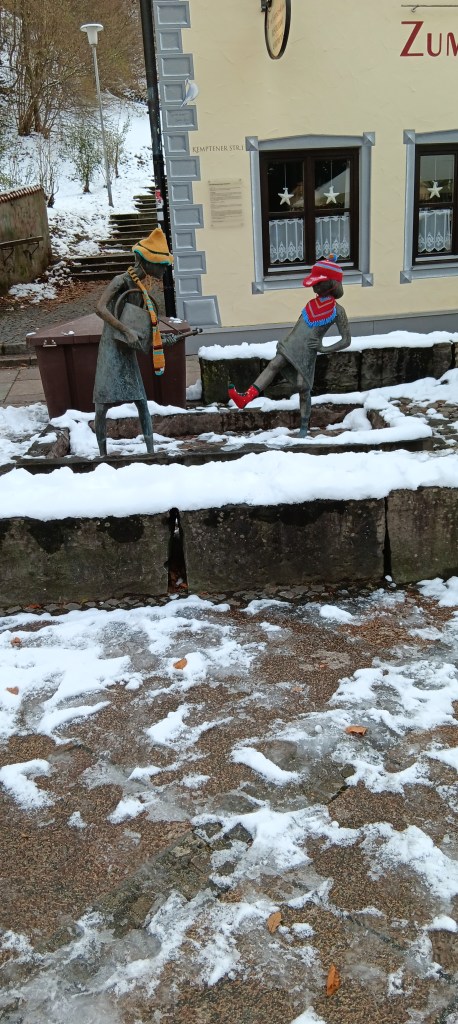
Whether walking the streets of towns along the edges of the Alps, or taking time for the joy of a scrumptiously-hot meal, there’s always something to see, from the children’s statue so kindly dressed in winter woollies, to the extensive list of drinks, including the house specialty home-made by Aunt Paula.




Bavaria is one of those places which registers on most adventurer’s horizon at some point, and deservedly so. Not just for the landscapes, history, and food/drink, but more importantly, for the people. If you can, do kidnap a local, but choose wisely; my hosts were incredibly generous, with both their time and knowledge, but even that would have suffered if not for the ready laughter and genuine warmth.
And to complete my German story, a piece of modern technology I’ve not witnessed anywhere else; how to solve the age-old worldwide issue of dishonest usage of roadside stalls? These 24-hour card-operated boxes provide the solution. You select which box has the right contents for your needs, (in this case freerange eggs), pay your money via card, which unlocks the relevant door for you to take your goods. So there you have it; buyer and seller satisfied. Simple, practical, perfect.

 Stories for you - Enjoy!