Visiting a Bavarian castle, especially in early winter, is to take a trip into the fairyland of our youth.
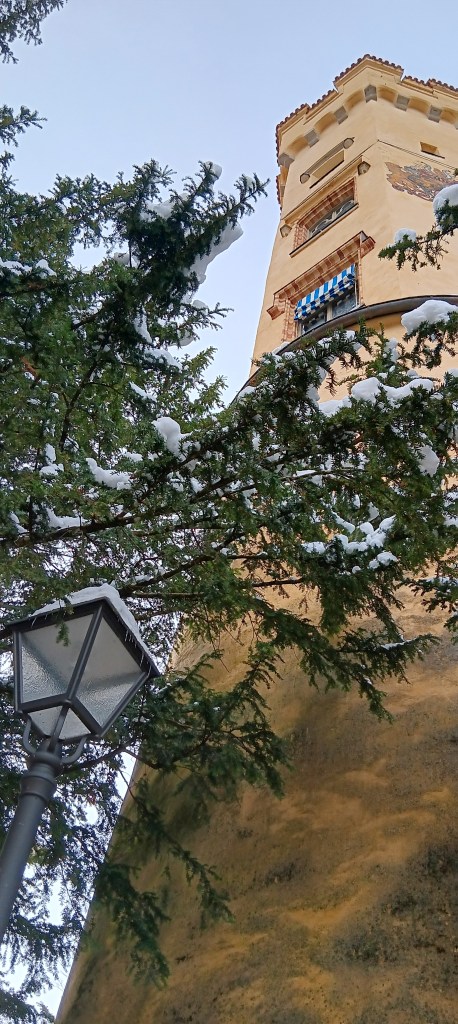
At least, that is how it feels as you climb up to the castle doors. Anticipation of royal rooms, breathtaking views, and historically-based treasure tempts the visitor into a world of fantasy. Stories of battles, feasts, and clandestine relationships await. Even the most level-headed is primed to believe whatever stories are coming our way.
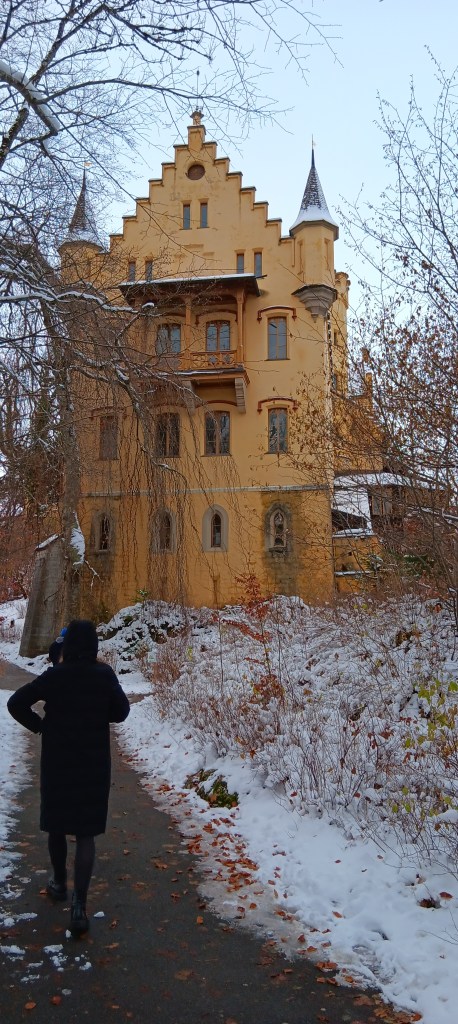
And so it was as I approached the Bavarian Hohenschwangau Castle. The only way to see inside this picture book marvel is by guided tour. But unlike most tours, where the guides are proud to share their joy and historical knowledge, regardless of the skeletons involved, at Hohenschwangau don’t expect the chance to have time to think, or genuinely examine any item or thought.
At precisely the first minute of your pre-booked timeslot, the guard opens the barrier.
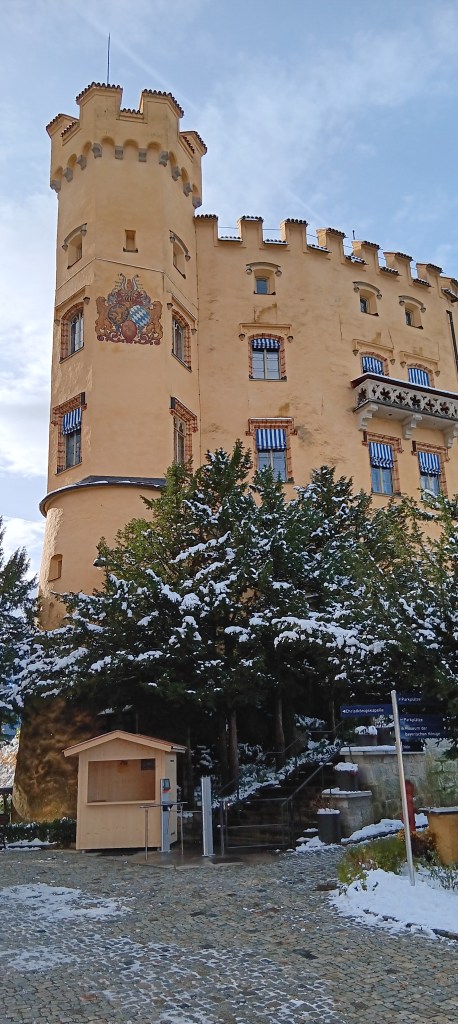
Up the stairs you go, to be greeted by a uniformed woman passing out listening devices. She explains how each room involves a seperate recording, which she will activate at the appropriate time with her master gadget connecting remotely with your device. We are children, to be drip-fed what they want us to know, and when. The guide points out the many signs advising that photography is not allowed in the castle. Initially I thought this was to protect lighting etc, but it’s soon apparent that secrets are closely guarded here.
We move to the first room, the gadget does its thing, and we all obediently listen to our handpiece. There is no time to admire a particular object, or painting. Forget studying the craftsmanship of a piece of furniture, vase, or mural in any detail. Could it be that many pieces are not genuine and wouldn’t stand up under close scrutiny?
As we leave each room, the heavy doors are determinedly shut behind us. Clearly we cannot linger or go back to compare the magnificent view. The tour moves, room by room, in a pre-ordained pattern, whilst we all unquestionably listen to their version of the castle and royalties history. It’s all too easy to believe the romanticism of the stories, where anything detrimental to their preferred view is swept away or glossed over. I wondered what would have happened if a clued-up historian had been in our ranks, to question the myths.
One such story was of the young King Ludwig 11, who ‘unaccountably’ canceled his wedding just a few days prior, and of how there are no records to explain the mystery. But a quick check on Professor Google reveals a wealth of information and historical documents about said Princes homosexuality. Far better, surely, to show that the Prince acted honorably towards his potential virgin bride (unlike how our current Commonwealth King behaved to his), or is the Prince’s sexual preference a source of embarrassment, even in this day and age? Another reason may be found in his letter to his ex-fiance in which Ludwig says that her ‘cruel father’ had split them. Whatever the reason, is it OK to misinform paying tourists?
But the guides are clever in their delivery. Their stories hold just enough intrigue and laughter to keep the tourist engaged, and keping pace, so that in just over fortyfive minutes we find ourselves down the stairs and out the door. There had been no chance to ask real questions, or linger.
There were some highlights which shall remain with me; that the queen, Marie Friederike Franziska Hedwig, would go out walking in the forest every morning, as early as 4am, only returning for breakfast. One whole castle level was solely hers, with the King having the floor above. Was this seperation freedom, or imprisoning? The view from her writing desk encompasses the forest dropping away into the valley, and across to mountains of stunning regality. How easy to imagine her swanning about in royal heaven.
But the gloss presented by the tour fails to mention the queen’s oddities (one son must always be dressed in red, the other blue) and both parents emotional distance from their children. It’s sadly ironic how the King and Queen are treated benignly, almost lovingly, by the tour, yet it is their behaviour which almost certainly caused the terrible fate of their sons.
The king, Maximilian II of Bavaria, was very popular, which possibly explains the reluctance to show him as anything other than perfect. But none of us is perfect, even royalty, so surely this is just another deceit?
The tour took us through his rooms, on the level above the queen’s, where he entertained and lived. Interestingly, beds were shorter than the sleeper as it was considered to be tempting fate to lay yourself out completely flat as though deceased.
King Maximilian had a secret staircase connecting his and the queen’s bedrooms, supposedly so that the servants would not know when liaisons were claimed. But servants knew everything. Castle walls contained tunnels through which small servants would move about quietly replenishing fireplaces without having to enter the Royal rooms, hence the expression that the walls have ears.
The sad story of their two sons were treated almost glibly. The impression I was left with involving Otto, the younger son, was that he was declared insane as a young teenager and locked away. There was no mention that this diagnosis may have been politically motivated, nor of how the princes were not enveloped in love by their parents. Surprisingly, there was also no mention of how King Ludwig 11 was, and still is, referred to by many Bavarians as ‘Unser Kini’ (Our Cherished King), that he had a habit of stopping to chat with laborers, farm workers etc, and was known for generous acts of gifts to those who showed him hospitality.
The guide seemed to prefer to underline that Ludwig was a strange lad, with a fixation on building resplendent castles. His love of the arts, and the fact that he used his own money to build his masterpieces was mislaid from our information. Even his death is not portrayed without an element of duplicity. The case was put that he died in the local lake through suicide by drowning.
A search online shows a very differant picture. Ludwig was creative, and didn’t enjoy large crowds, which would have proved difficult given the demands of royal life. He apparently got great pleasure from trying to build archectural marvels, but none became truly his home. The fairytale-looking Neuschwanstein Castle, which he had built as a retreat and in honour of composer Wagner, was not completed in his shortened lifetime, but amassed huge debt as he added idea after idea.
In response, King Ludwig 11 was declared mad, and the government moved to depose him. But the night before the commission were to serve him notice, he apparently drowned. Terribly convenient. But it’s a flawed romanticism. His ‘suicide’ was in waist deep water, with his doctor also dying beside him, after they were supposedly on a night stroll together. No water was found in Ludwigs lungs.
Visiting Hohenschwangau Castle should have been an absolute highlight, and in fairytale land it is, but in the real world the castle tour and stories are little more than cashing in on the gullibility of tourists. Certainly some of the paintings and pieces in the castle are worthy, and going through the castle gives an understanding of layout, etc. If only integrity was attached.
Outside, the scenery is absolutely stunning; snow lacing rock faces, or waiting in lumps on fir branches to drop on the unwary. How easy to imagine swinging up in your royal carriage through forested road, arriving in splendor to alight amidst eye-watering views. And then to look up at an artists castle, before entering a world of royal state.



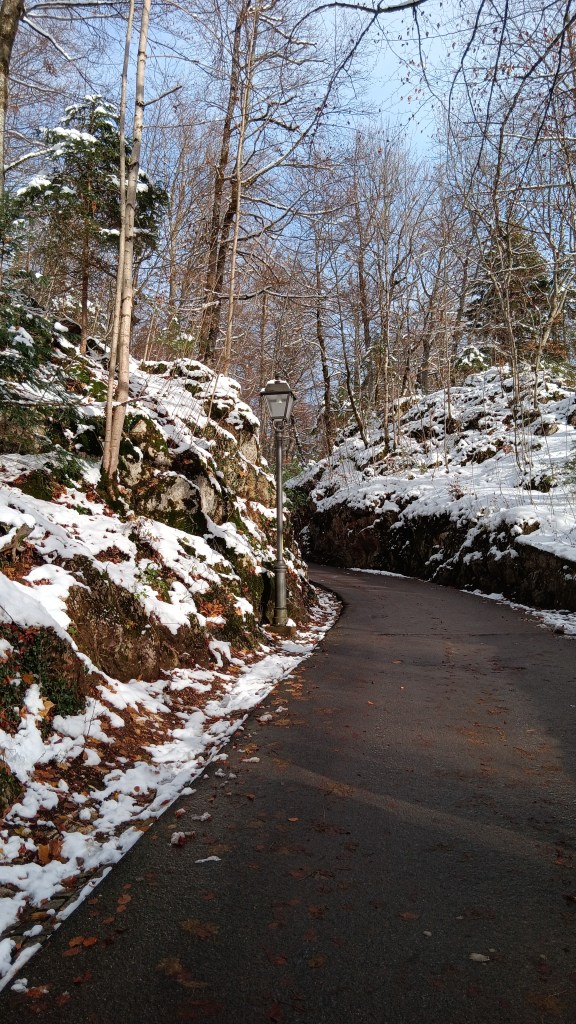

But you would not be expecting a hot meal. Food was prepared in a nearby building, often arriving to the table cold, until the day came when resolutions were found. Modernisation did come to the castle in stages; in his later years, a lift was installed for the male resident to ascend to his rooms.
There are very few photos of the castle interior on the internet; their content is closely guarded so folk have to visit to see, thus guaranteeing income. But this cynicism detracts from what should have been a fabulous experience. I am pleased to have seen the castle, but hold no trust in the stories. There’s also something sad in having no photographic memories of this place; reminders from which to encourage other folk to visit. A sneaky shot from a staircase was all I could manage.

Neuschwanstein castle, seen across the valley, seems to endure more visitors, perhaps because it looks astonishingly romantic, or maybe due to the opportunity to arrive in horse and covered wagon, clopping your way up through the snow to arrive at the castle gates. The attitude towards the castle seems to be that of a wondrous folly.
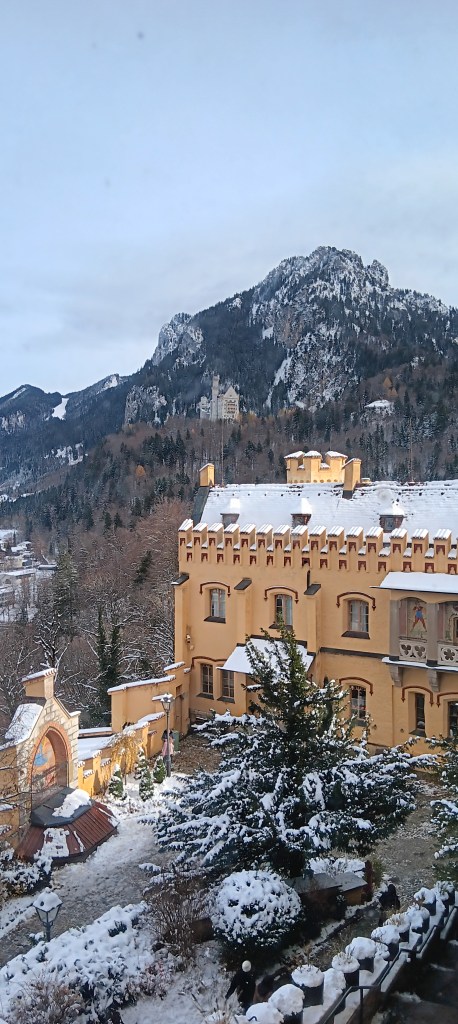


But whatever you choose to believe, the village of Hohenschwangau and attendant surroundings are such treasures, and worthy of your time, not only for the architecture, and murals in the village itself, but also the walks, lake, and sheer beauty of the alps.
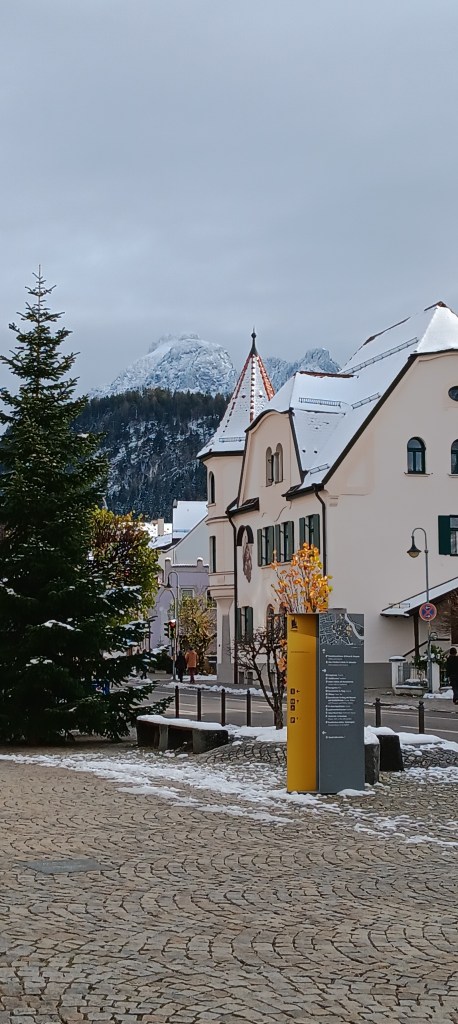

Fairytales and romantically eye-watering beauty all in one.
 Stories for you - Enjoy!