Seventy-five pieces of rubbish litter the moon, including five vehicles. Forty-five of the pieces belong to NASA. In addition, there is a designated orbital band chokka-full of space junk. It’s known as the graveyard, circling 36,000 kilometers above earth, so that pieces don’t collide with in-service satellites. It seems we are happy to trash more than just planet earth.
On a more positive note, here’s some fun facts about our night sky:
- Those comet tails are ice vaporizing from the sun’s heat, releasing gas and dust.
- Venus is so hostile, if man ever lived there he would be up in the clouds, not on the surface.
- And when the media try to scare us with news of a comet coming our way, relax. In 1994 a comet collided with Jupiter, but the planet’s gravity broke it into twenty-three pieces. Jupiter’s gravity is so huge it acts like a vacuum cleaner, protecting earth from most impacts.
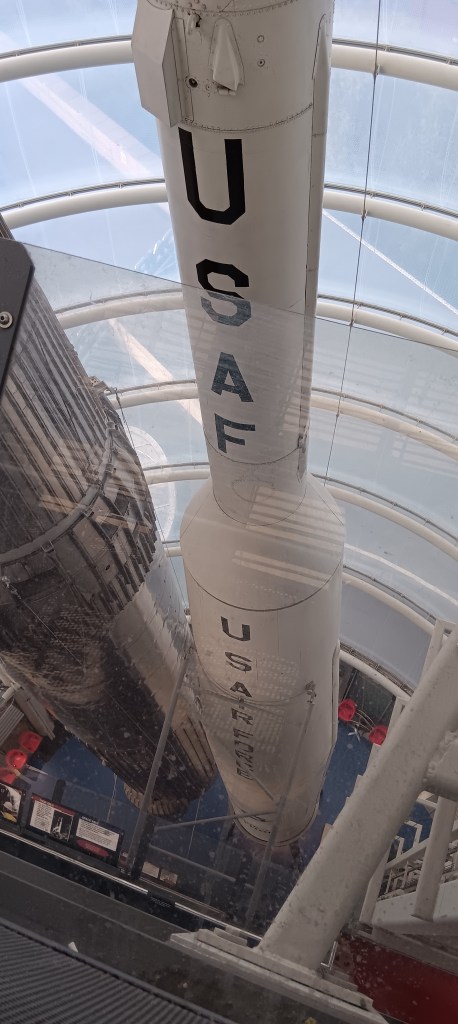
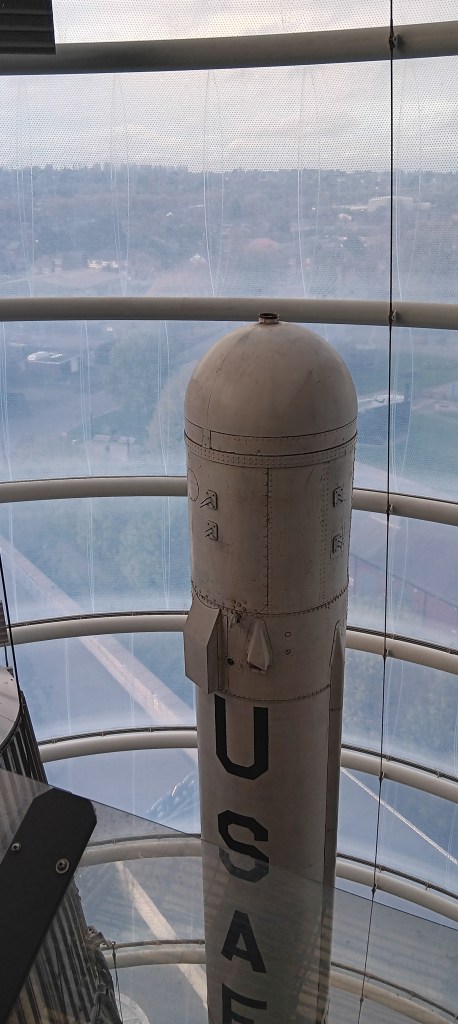
So where is this info from? Not the media, documentaries, or internet. Sure, you can get stuff from them, but it’s only in the National Space Centre, Leicester, that you can wander into a rocket, or sit in a concrete-chaired booth to physically experience the ferocity of a rocket takeoff. The noise, even without g-forces, makes those chairs tremble. It’s fortunate that astronauts have the kazbek-u shock absorbing couches with bespoke liners for launch, docking and landing, to help their bodies withstand the g-forces.

The Space Centre and the nearby university’s space programme collaborate with NASA, ESA and five other space agencies. The operations control centre for Beagle 2 on Mars was here. Best not mention that Beagle 2 broke down…
More fun facts:
- On the moon, Ed Mitchell was able to throw his javelin further then Alan Shepard could hit his golf ball. Visit the centre to find out how he did it.
- Snoopy is NASA’s safety mascot. No idea why.
- Satellites don’t track your phone; it’s the other way around… your phone collects signals. That’s why ‘no signal’ is a thing. Conspiracy theorists wouldn’t like that. But speaking of satellites, they are much smaller than I imagined. This example is barely 2m in each direction.

What was impressively big though was the space centre. Four storeys to explore, but don’t panic; there’s a lift.

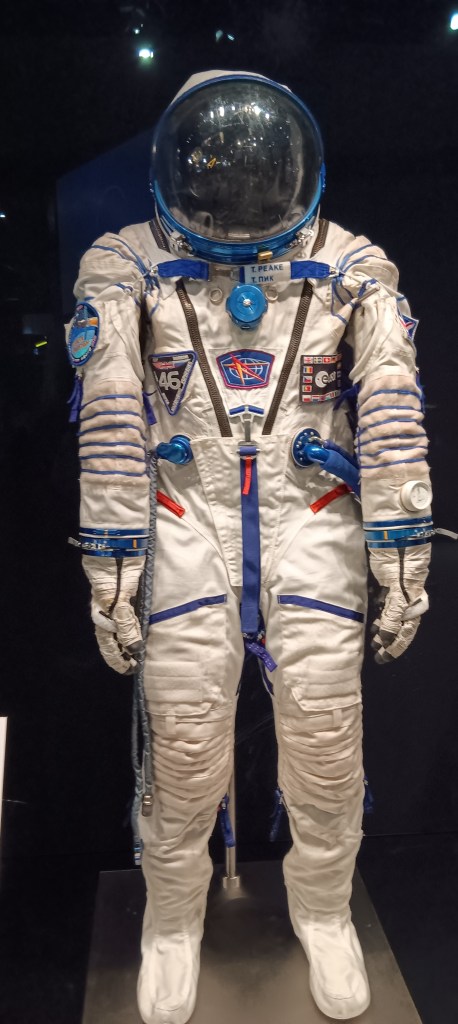
Astronauts suits are a bit special. There’s the launch and landing suit with emergency pressure and oxygen, instigated after a crew died in 1971 when their spacecraft depressurised.
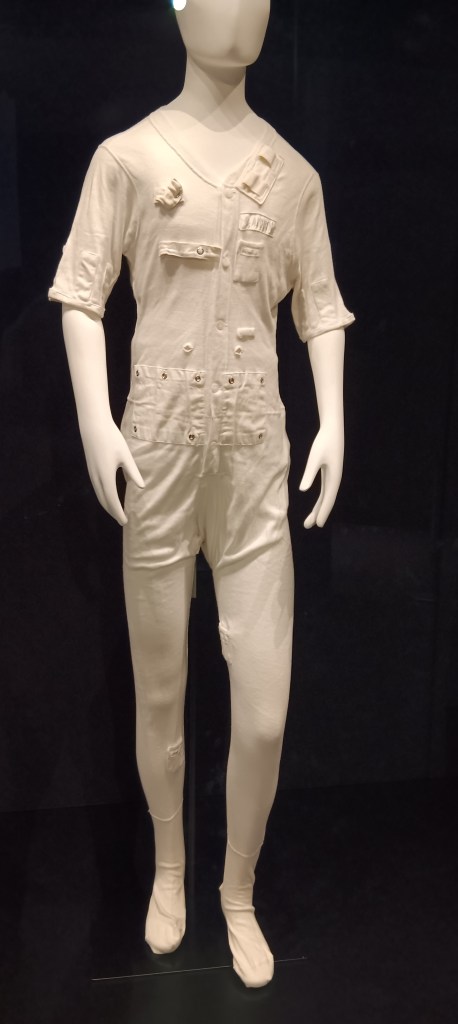
Then there’s the Apollo constant-wear garment, worn by Buzz Aldren and his companions on Apollo 11. It absorbs sweat, has toileting openings, and special sensors for earth-based doctors to monitor health.
Astronauts wear a cooling garment containing liquid under their suit when engaging in space walks. The liquid is cooled in their backpacks. The suits have eleven (!) protective layers in total, which enables seven hours outside, playing golf or working maybe?
Here’s another bunch of fun facts:
- Earth-landing tyres are filled with nitrogen. At speeds over 250 miles per hour nitrogen is more stable, and during descent nitrogen can cope with going in just minutes from minus forty degrees Celsius (in high altitudes) to 54 degrees on landing.
- NASA had thirteen women pass fit for astronaut duty, during the preparation for the first moonlanding mission, with most scoring better than the men, yet NASA sent an all-male crew, and canceled the women intake. What if a woman had walked on the moon first? How did Neil Armstrong feel about the exclusion? It would be another sixteen years before a woman got to go, in 1983. Ironically, when dogs were sent, in the trials before human space entry was approved, they sent bitches, for two reasons… better temperament than male dogs, and it was easier to design their spacesuits!
- And what do they call a haircut performed in space? A crew cut, of course!
At the Space centre, there’s an incredible array of related activities and exhibitions. Sadly I missed out on the ‘highlight.’ The centre is so noisy that announcements cannot be heard, so despite having paid for a planetary show, I never heard the countdown, realised too late, and the staff wouldn’t let me join late. No offer of a refund either. Noise and flashing lights are a real issue at the centre, and I’d be wary of visiting if you are sensitive to either.
Having said that, the place is a remarkable visit.
The bedroom on the Columbus Module shows how the astronaut straps themselves in for sleep.

Standing on the glass window, watching the earth passing by below, plays with your mind, even though your conscious self knows you are safely in Leicester. However, for the space programmes there are more serious factors they have yet to overcome:

Astronauts toilets act like a gentle vacuum cleaner. Urine is then treated before being recycled into water and air.

One of the requirements for space missions is honed reaction times. The Space Centre has a challenging reaction wall to try. It’s about two metres by one and a half meters, with large buttons which light up at random. On the first level I got 39 buttons in one minute, but on level two only managed seventeen. They don’t tell you what a reasonable score would be.
One experiment on show is a sealed orb which has a completely self-sustaining world inside it. This orb has been working for years, and is the basis for any future world’s mankind may establish on other planets. Look closely and you may spot the little shrimp-like creatures who live, breed and die here.

Astronauts get no sense of speed from the normal methods of wind, noise, or feel, so the sight of orbiting earth every ninety minutes is their only natural indication. Once astronauts have spent time aloft they speak of having a better appreciation of earth and humanity, but also of the need to care for what we have. Maybe our world leaders need a free trip?
And as for that graveyard orbit? It’s becoming over-crowded and problematic, needing missions specifically designed to deal with it. Just like here on earth, no-one wants to pay for cleaning up the mess. Mankind is great at creating rubbish as a by-product of our activities, but how would you rate us in regards to that thing our parents taught us…. cleaning up after ourselves?
 Stories for you - Enjoy!