Falconry. Now there’s a word to evoke images of leathered-gloved longhaired heroes, masters of round-eyed feathered hunters.
Of course, the reality is different, but no less spectacular. If you’re lucky enough to visit the Isle of Wight’s falconry on a cold wet day, there’s no other tourists to hamper the conversation, but even in full summer with enthusiastic crowds this place would certainly be worth your time.
The birds are easily seen, with signs explaining a little about them. Don’t be dismayed by their being loosely tethered. In the wild these breeds perch on average 90 to 95% of their time, conserving energy and watching for food to wander into their patch, so sitting for hours is part of their natural day. The birds need tethering so as to protect themselves from the hazards of aviary netting, which they so easily damage themselves on.
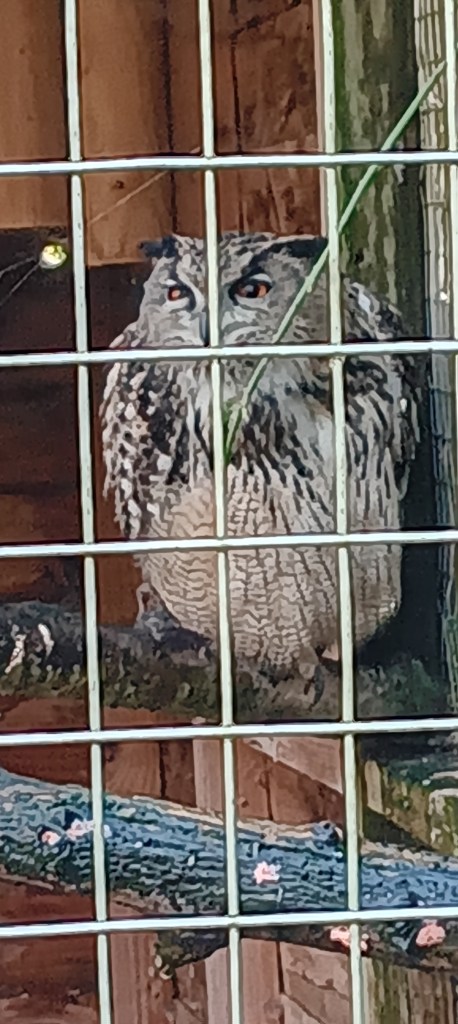
And then, when the falconer takes them out, watch them soar, free and loose. They could simply fly away, yet they choose to return, not just for the tasty morsels on offer, but also when no food is immediately available. Their speed is astonishing; they can have almost disappeared from view, then suddenly here they come!
The falconry is occasionally contracted by the railway line to free the area from vermin, using these birds because their hunting skills are intact, and they are an environmentally friendly solution.
Odd facts emerge from the falconer: mice urinate every third step, inadvertently leaving a trail for their predators (we won’t mention the hygiene in our homes).
Yellow-irised birds are day hunters, whilst those with black irises are night hunters.
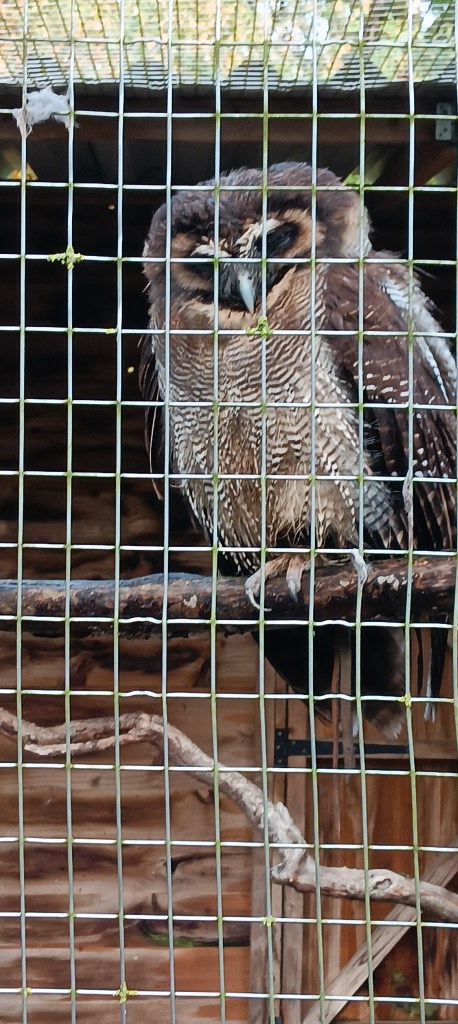

Most of the species of owls, hawks, eagles and falcons on show are under threat, with the main causes being loss of habitat, accidental electrocution, second-hand pesticide poisoning, and persecution due to outdated beliefs. Ever noticed how few declines of species are natural rather than human-made?
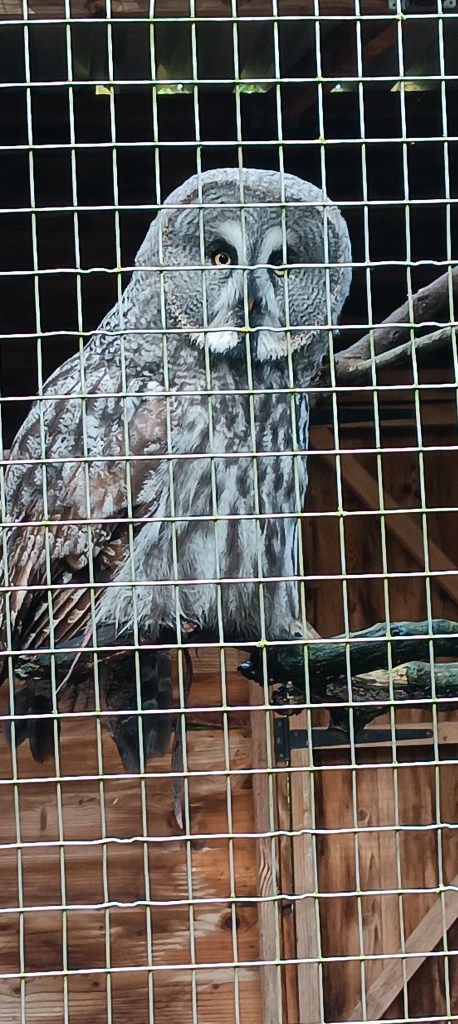
Some birds have such remarkable senses that they can detect lemmings hiding under three feet of snow….
… and the Eurasian Eagle Owls will work together to bring down a small deer, with reptiles and fish also on the menu, along with the usual owl prey.
As an aside to the birds, the falconry also has a couple of other animals. On the day I visited a skunk was fiercely guarding it’s pumpkin treasure, and a young skunk was enjoying a feverish exploration of the yard. Whilst smaller than I expected, they are certainly full of character, and sport an incredibly long fluffy tail.


Watching the birds in action though was the absolute highlight of this place; so absorbing that I forgot to take any photos!
To hold out the leather-gloved hand, watch with bated breath as the bird comes in, then feel it’s remarkably light weight settle so close to your nose is an experience like no other.
Unsurprisingly, the staff and birds are in hot demand for shows elsewhere, and television adverts, both of which sometimes involve the falconer being on horseback.
Falconry; give it a go! With that glove on, as the bird takes flight, you may indeed feel as though you too are a longhaired hero with super powers!
 Stories for you - Enjoy!