There’s a couple things that stand out about BBC Cardiff. Actually, more than just a couple… Their building is in the top 1% on the sustainability register. Not only is the roof covered in solar panels, and all rainwater collected for use in the building, but staff are actively encouraged to use eco-friendly transport. The building is very close to bus and rail, and the basement has large bike storage.
Security is tight, but inside…. wow!
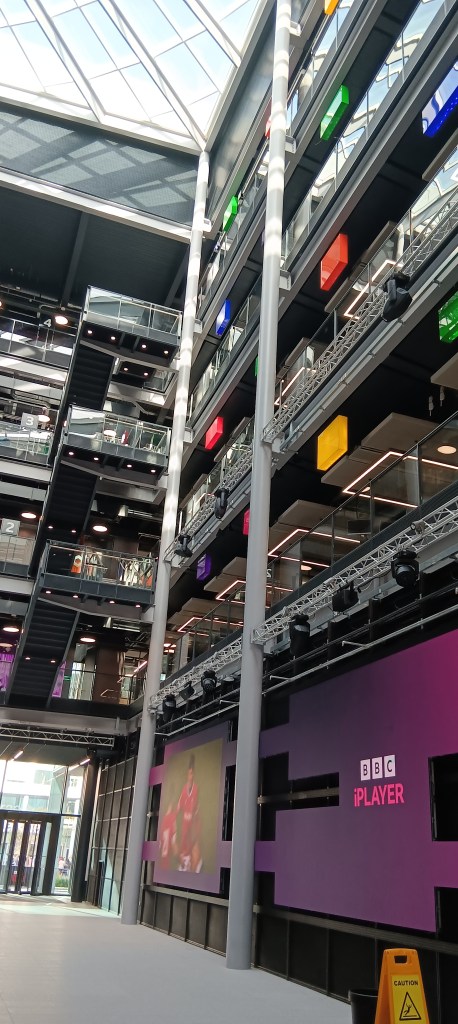

92% of the Welsh population tune in to the BBC. Not bad for an organisation who turn 100 November 2023. They have a history section about themselves:

Someone must be something right, especially as the public soon recognize any errors. A listener wrote in to complain that the sound of pouring supposedly hot water during a podcast was actually that of cold water! The sound effects folk did some tests, and discovered that cold and hot water do indeed sound differant.
BBC have sound rooms for recording radio plays etc and podcasts. The ‘dead’ room is so lacking in noise feedback that a hand clap sounds flat. When they record, any background noises are left to be added later. To create the sound of bones breaking it’s not quite legal to do the real thing, so they snap celery sticks. And the title of the person who creates those sound effects for TV? A foliartist. Such folk know details, like that a person’s voice changes subtly depending on whether they are sitting, in bed, or standing.
The building is designed for professional excellence, and it really shows. The live newsroom has only robotic cameras, and the news reader controls the speed of the auto-cue via a foot pedal. The reader has constant chatter in her ears, but spare a thought for the weather presenters who have no auto cue at all; they have to learn the information off pat beforehand.
Also spare a thought for the Sign Language folk; they get the news script about fifteen minutes before broadcasts, and have to quickly work out how they are going to get the point across when there’s no sign language word for the topic, whilst bearing in mind that children may be watching.
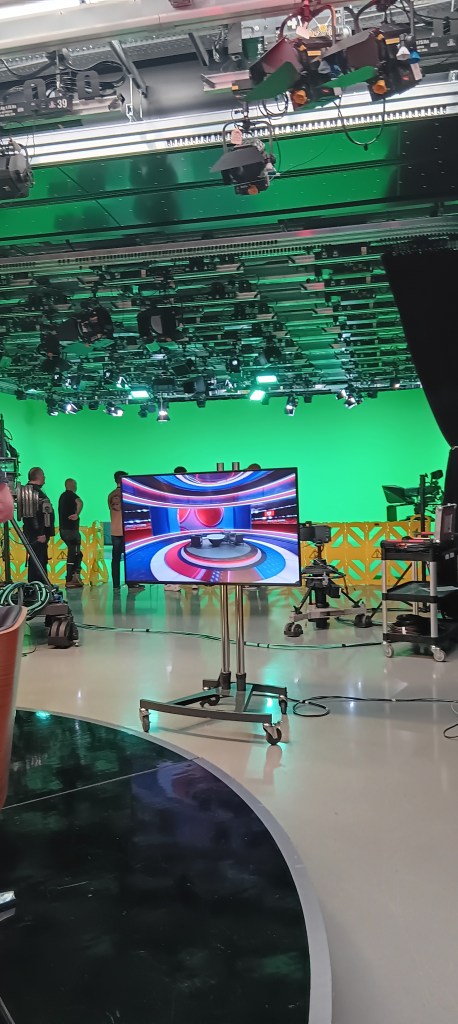
There’s so much which goes into a broadcast. Grading is the process of removing logos, making the sea more blue, etc. The studio for live shows is usually green, without all the colour we see on our screens. This photo shows the studio (behind the yellow fence. You can see one corner of a chair), with the foreground screen showing what we would be seeing at home if it was on air at that moment.
The biggest surprise is that BBC Wales TV doesn’t pre-record the junctions; those bits where they tell you what’s coming up, give warnings, etc. The folk who do it are working with a myriad of screens and information so they can tell you what’s what in real time. They do ten hour shifts, for continuity. What makes their job harder is that some programmes, like Eastenders, keep everything so secret that announcers may not be told anything until an hour or two before the episode is aired.
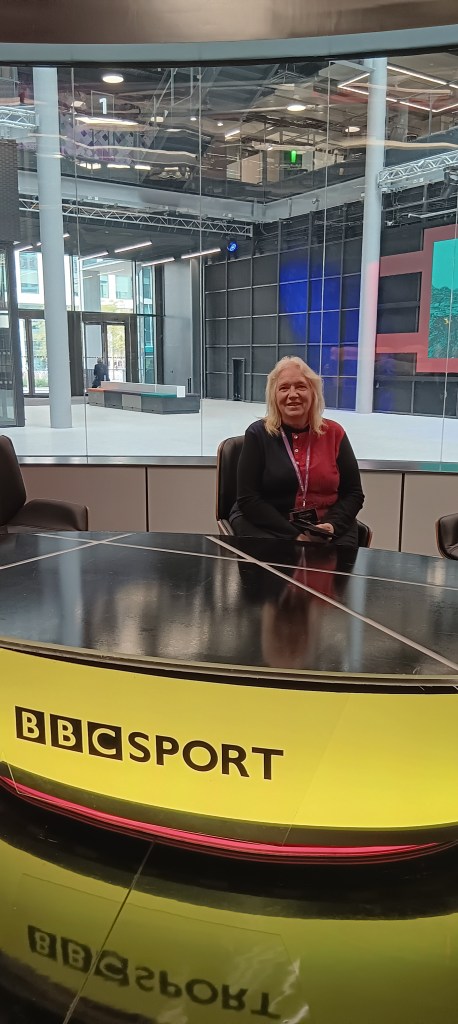
So after the incredible tour through the building, and meeting folk we’ve seen or heard on the BBC, muggins had a go at commentating on a rugby game for a very long two minutes. Not a game involving players I knew; sadly it was rubbish! Oh well, back to the day job…
 Stories for you - Enjoy!