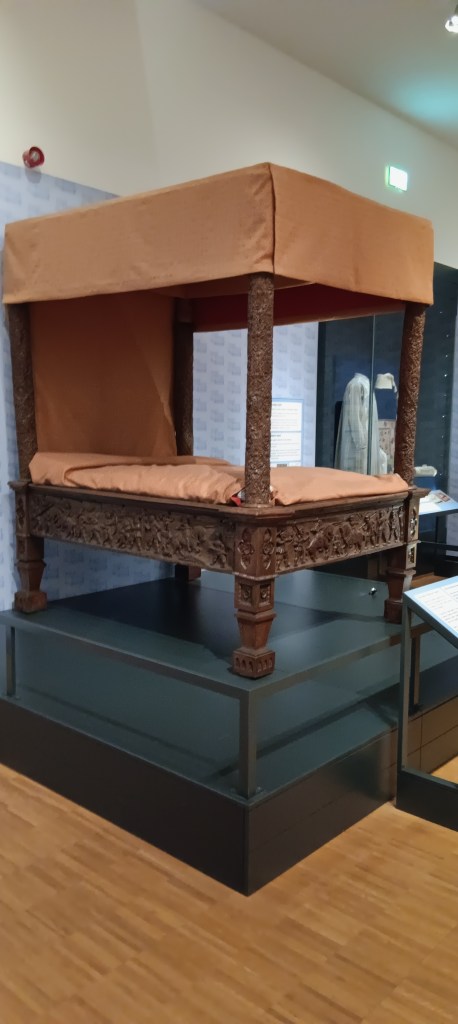
Have you considered decorating your bed and placing it on show? Why not? Sir Rhys ap Thomas had his four poster carved and sited so all could see his wealth c1520.
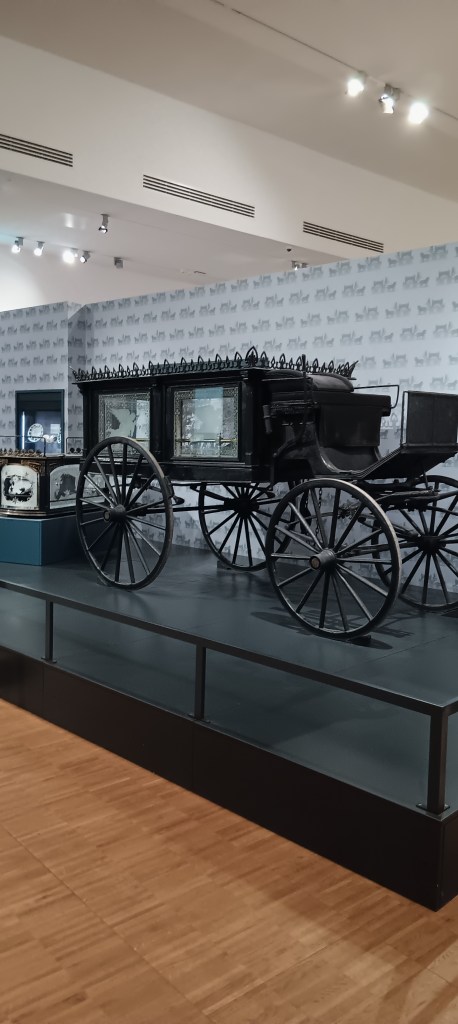
Something that was right to have on show, though you’d be hoping not to have need of it, was the horse-drawn hearse from Berriew, in use until 1910.
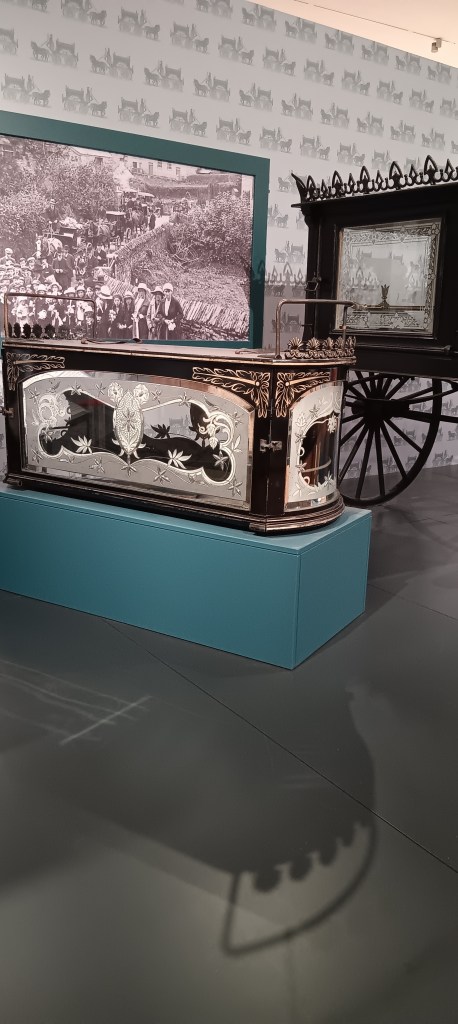
Just as elegant, but one you’d never ever want to see used, this child’s hearse from Wrexham, 1900’s:
What’s also not right to see, a caravan of a type you remember from your childhood! In a museum! This one was purchased in 1950 for 600 pounds; the price of a small house back then.

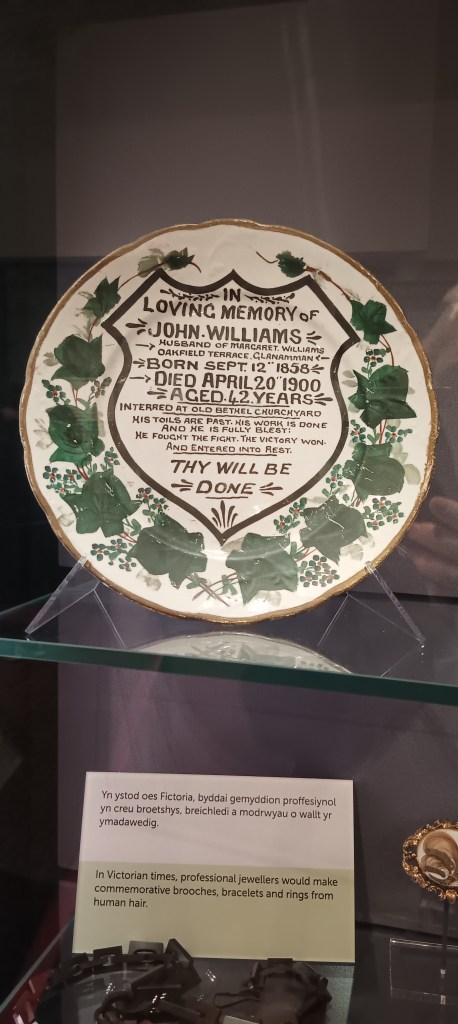
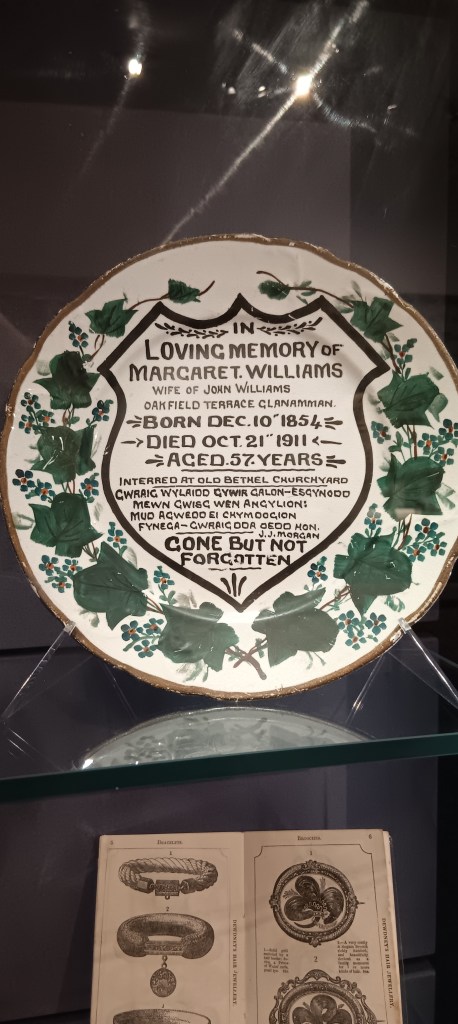
At one time it was fashionable to gave plates made to remember loved ones:
In 1921, this coffee machine was imported from Italy. Innovative because it could make four cups at once.

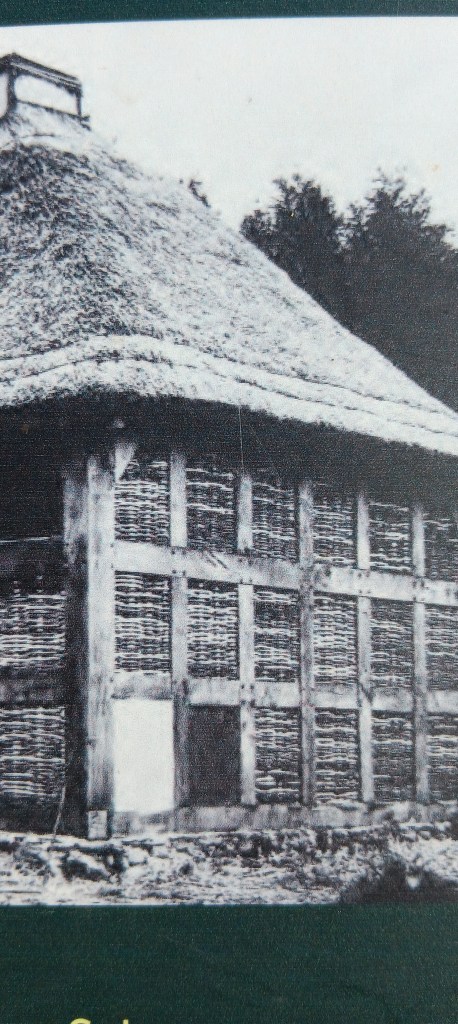
But coffee was ages (literally) away from the Iron Age i.e. c300BC, when wealthy folk lived in two adjoining large (15 meter across) circular thatched clom homes. Clom is a mix of clay, stone and straw. When the folk at St Fagans Natural History museum rebuilt one, it took 300 tonnes of clay and earth. Sleeping didn’t look like it was too comfortable on the hips, or back for that matter. One or two animal hides wouldn’t soften much.

Someone who was a lot more comfortable, but at everyone else’s expense; Llyweln Fawr. He ruled by traveling around his many medieval courts, like this one pictured from Anglesey c1250. At each site his tenant farmers would have to feast him. His wife, Joan, was King John’s daughter, Joan. Being English, she struggled at first in a nation where the customs and language were unfamiliar, but learned to adjust. She didn’t have google translate either!

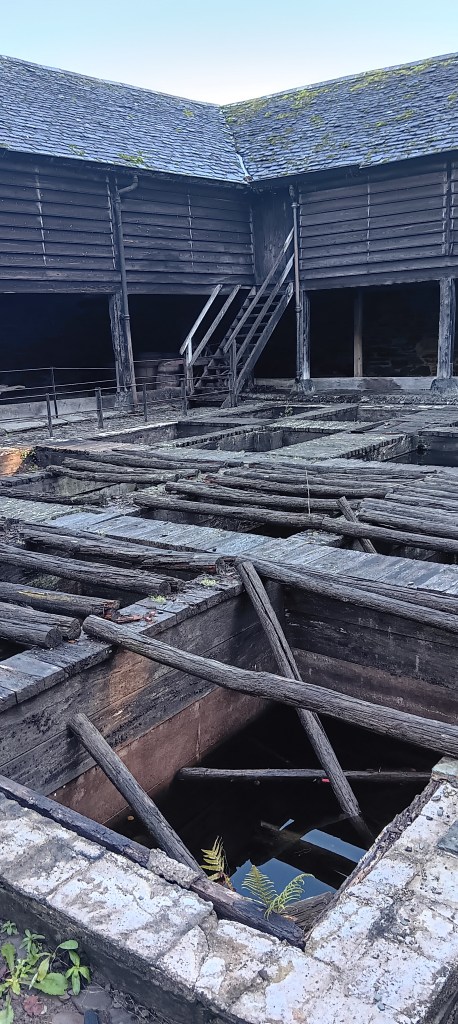
It’s not just humans who can adapt to changes to their environment, as seen at St Fagans 1790’s tannery, which they had shifted to their site. Back in it’s working life, hides took eighteen months to tan, using a mix of chicken and dog poo. After being rebuilt at St Fagans the tannery had some use, but was closed, leaving the pits full of water. And then came the surprise. Newts moved in. Not just the more common variety, but all three. The squatters have taken ownership, so any thoughts of using the area for anything else have been shelved.

Another shelving, but not St Fagans: in the 1920’s depression, one Thomas Llewellyn, owner of Gwalia Stores in Ogmore Vale, permanently shelved all debts owed to him by struggling members of the community. Imagine the media reaction if a store did that today. But of course, stores don’t have that insightful relationship with their customers, in these days of cash and card.

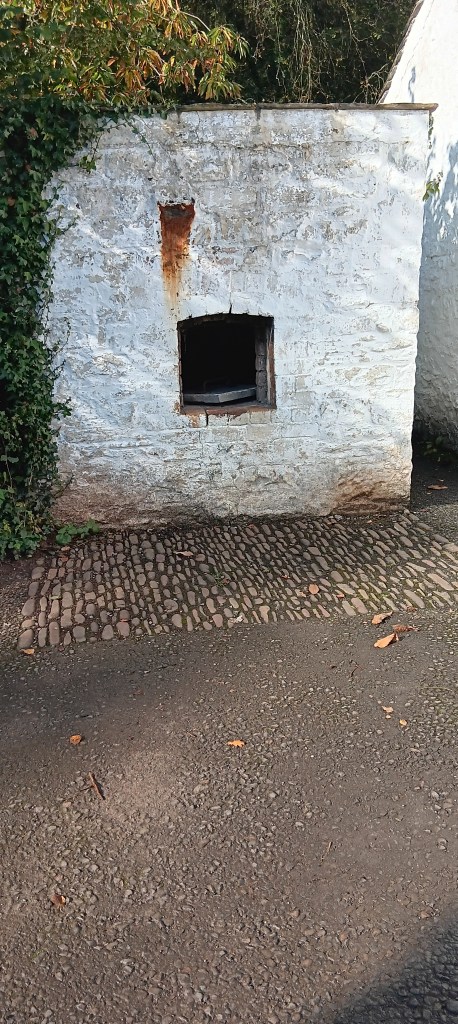
Most of us have heard of communities around the world where the women meet at the village well to collect water and catch up. But did you know that in the early days of terrace housing, landlords would supply a bread oven for every so many homes? Each household would have a set day for their baking. The one at St Fagans came from Poplar Place, Georgetown.
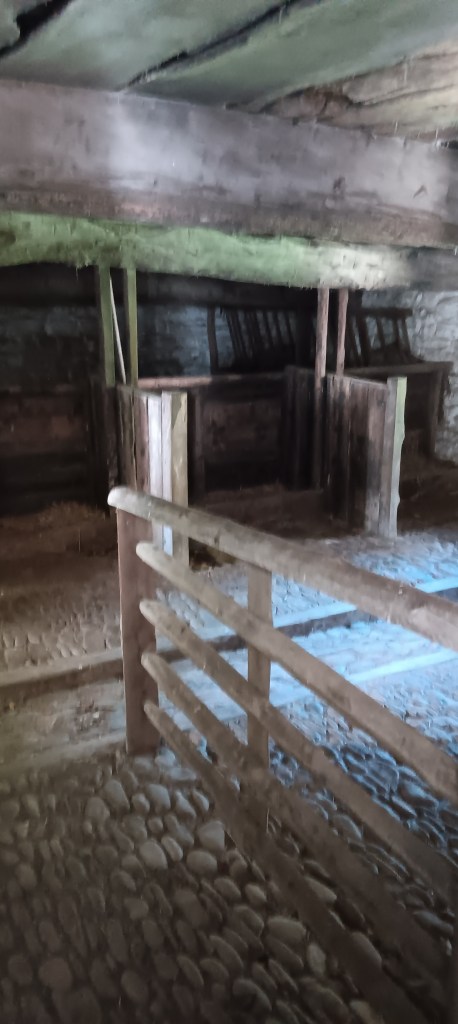
St Fagans is special. They have brought historical buildings from all over, rebuilding them with integrity, not in a line or village, but spread out as small-holdings etc. Visitors will see the fires burning, and often volunteers settle themselves down for the day in the houses to answer questions. There’s even the Cilewent Farmhouse from 1470, with a single front door for both human and animal. Inside, humans lived to the right, and in winter, animals lived to the left, with feed storage seperating the two sections. Imagine what health and safety would have to say about that.
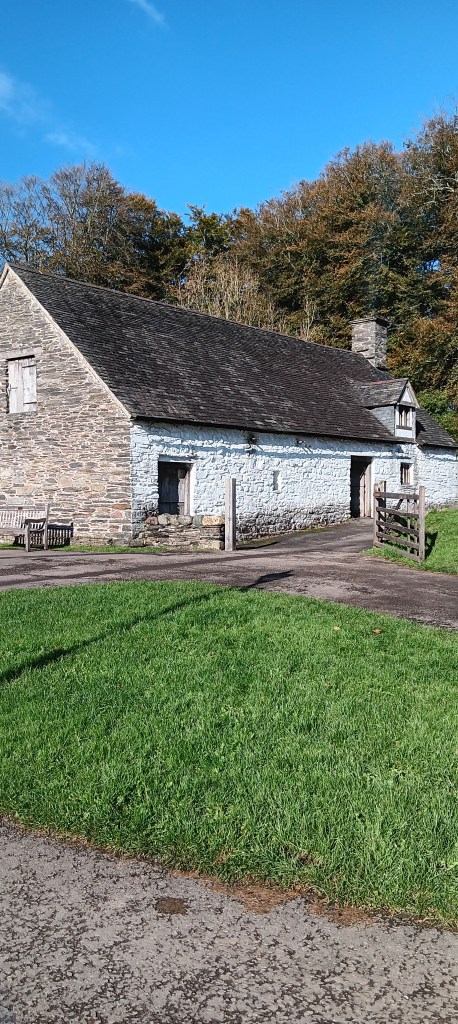

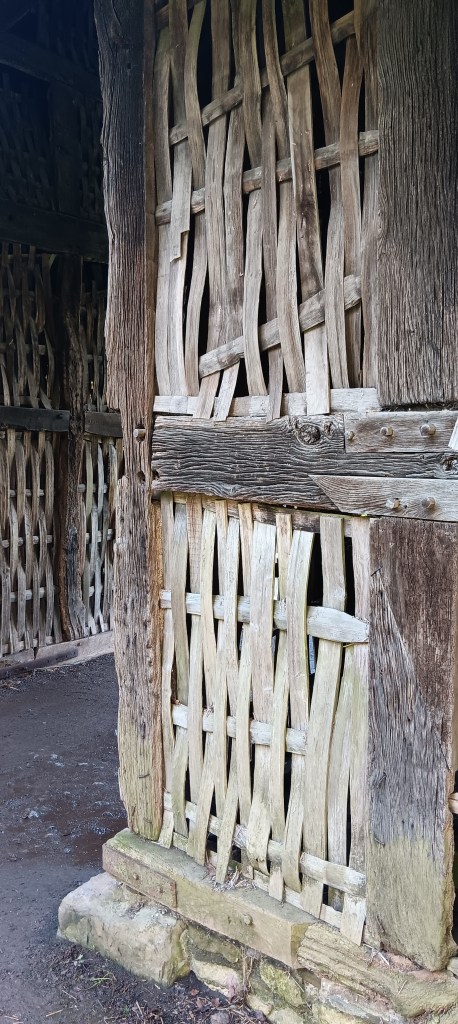
The 1688 Abernodwydd farmhouse from Llangodfan, originally built with square wooden framing, has sliding shutters, but no glass. The owners are believed to have been wealthy, given that the house had two downstairs bedrooms and two side workrooms.

One of St Fagans features is the terrace row where each dwelling is forty to fifty years later than the one before, ending with about 1960. (Again, that shock of seeing childhood memories in a historic setting). From coal to electric, hard wooden bench to settee, washbasin to kitchen sink, and shared sleeping space to seperate bedrooms.
A tourist, spotting a coal range, commented that the lady of the house wouldn’t be able to nip out when the range was on. But she is wrong. The users were very adept at stoking for a quiet fire, enabling pots to be left to simmer. The range temperature could be altered by different materials and amounts of burning material. The user soon became experienced at organising the temperament of their range.
Another feature of St Fagans is Pen-rhiw chapel c1777. This chapel belonged to Unitarians, who believed that worshipping should not include showy adornments or gold. They also believed in education, so the chapel would be used as school during the week. The pews were made by each family as they needed them. Many famous folk were Unitarians, including Benjamin Franklyn.

What year would you think cock-fighting was banned in the UK? The cockpit at St Fagans comes from the Hawk and Buckle Inn, c1660. But the Animal Protection Act of 1849 (Yes, nearly 200 years ago!) put an end to such activities.


There is so much more at St Fagans Natural History Museum, but you’ll just have to go and see for yourself. Things like the working displays, bakery, castle, and mills. It’s free, and there’s a bus from Cardiff, so no excuses!



 Stories for you - Enjoy!