Those old porcelain pieces you’ve kept just because they were handed down, and guilt prevents you chucking them out… have a look at their bottoms. No, not for dust, but at the makers mark. If any say Wignoria, then you’ve got a Worcester piece from c1750. It might be worth a few bob too. And even if it’s not Worcester or Wignoria, check it out anyway, for insurance purposes, or leaving to your favorite, (sorry…. most interested) family member.
Before places like Worcester started making porcelain ware, pre 18th century, it was only made in the East, hence the Asian influence in decorations. Who hasn’t been served a piece of cake or slice on a dish of Willow pattern at a cafe somewhere (or at grannies house)?
Worcester porcelain has been around for over 250 years. The original material used was a soft paste, meaning teapots were liable to leak, and cups could crack from the heat. Bone china was made up of about 50% animal content. Due to the care needed, some pieces took days to decorate.
Men and women worked in segregated departments, but the latter only received half pay. All staff worked 6am to 6pm, six days a week. Children’s hands were needed for delicate painting. This was before education was compulsory for children, and for the family it meant another pay packet, however small. Young boys, despite strict workplace rules, would get fined for playing the flute, being ‘saucy,’ or letting off fireworks!
Then Worcester made a discovery. A new recipe for creating more delicate, slightly translucent, porcelain. More importantly, it didn’t crack from hot tea. This was cause for celebration (or at least a cuppa), because tea had replaced ale as the UK’s national drink in the 1700’s.
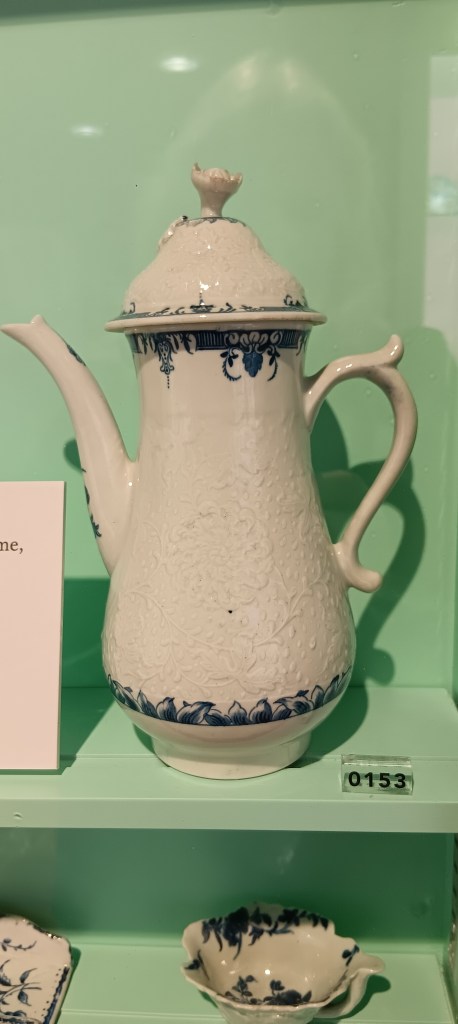
Not that this particular pot would have held much!
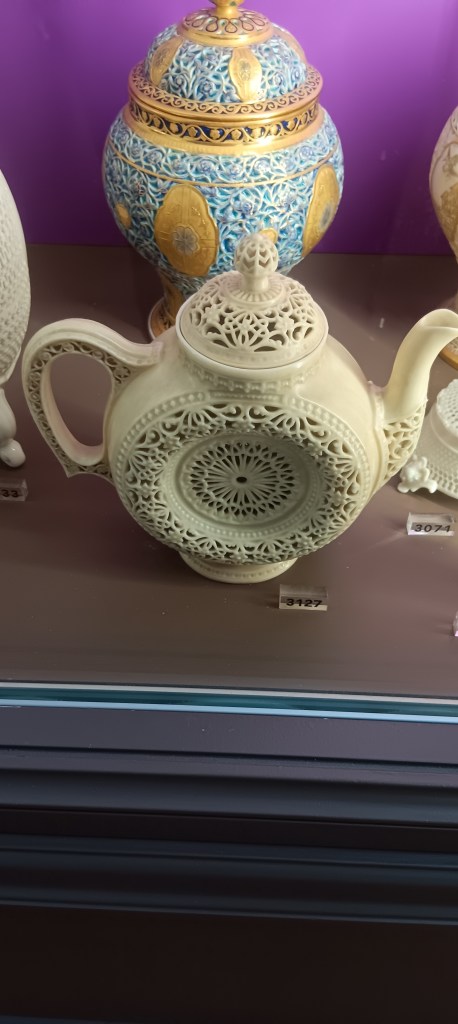
Sometimes, to get the pattern or image required on a piece, they would fire the piece, then add decoration, then fire again, decorate again etc. Some pieces would get fired up to ten times. Since the artists were employees, they were not allowed to put their own mark on a design, so many names have been lost to history. Who knows, if your ancestor worked in the Worcester factories, maybe they were responsible for something magnificent!
Staggeringly, there were approximately ninety differant skills required to make early Worcester. But from 1852 the approach to training apprentices shifted from just learning the existing crafts. Worcester management wanted the images on their porcelain to be true-to-life, so enrolled their apprentices in the Government School of Design, to study anatomy, botany, still life, geometry and perspective. Apprenticeships took seven years of study, all on half pay.
At the height of their production, Royal Worcester had 700 employees, producing around 2500 decorative lines.
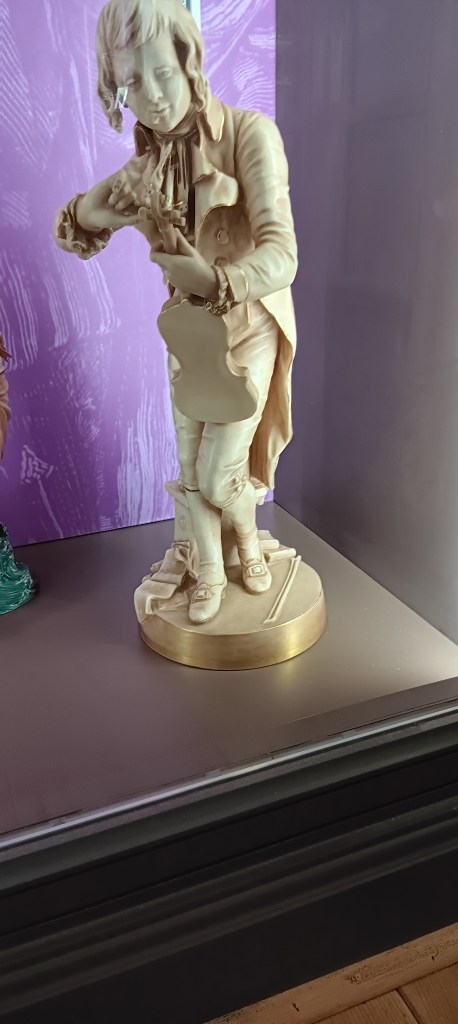
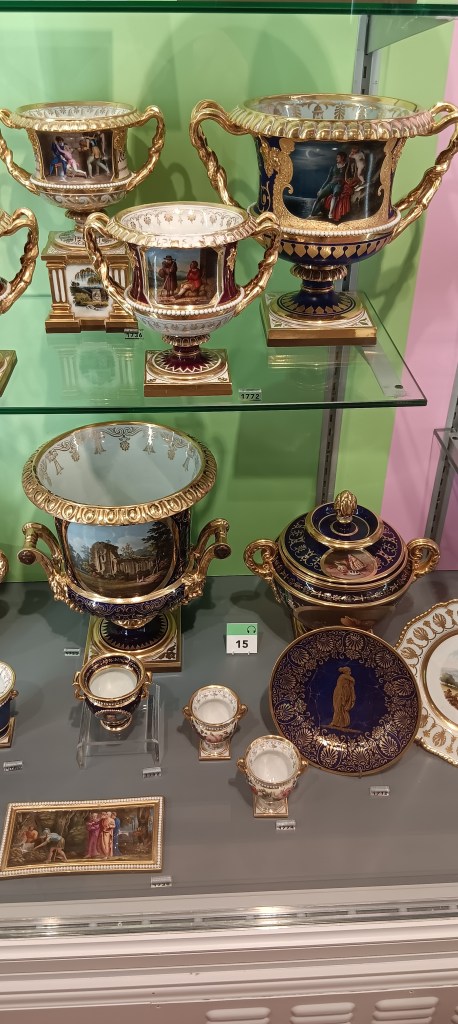
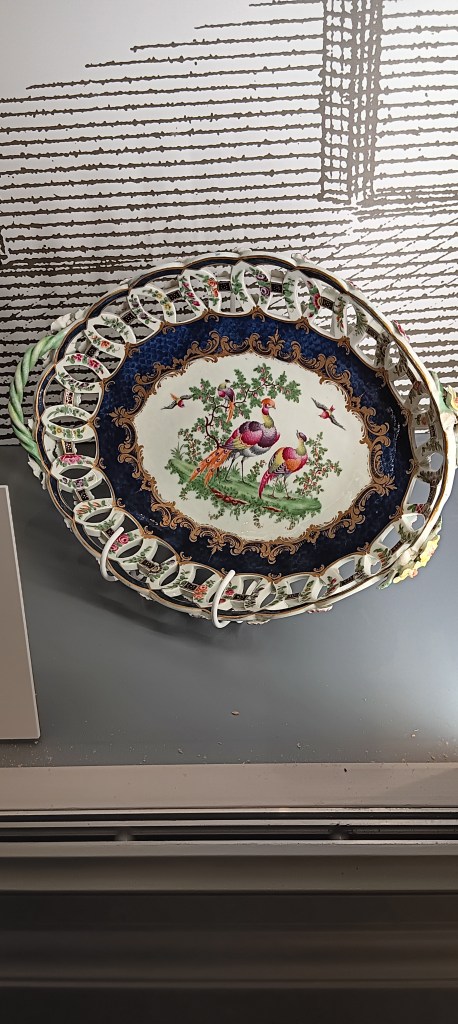
There were also the more personal pieces:

Clearly Benjamin Franklyn was either sure of his ground, or very brave:

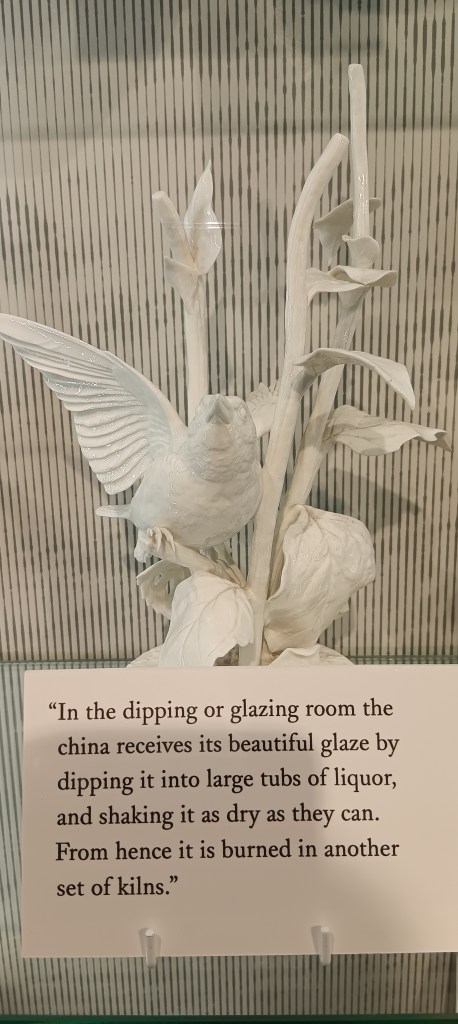
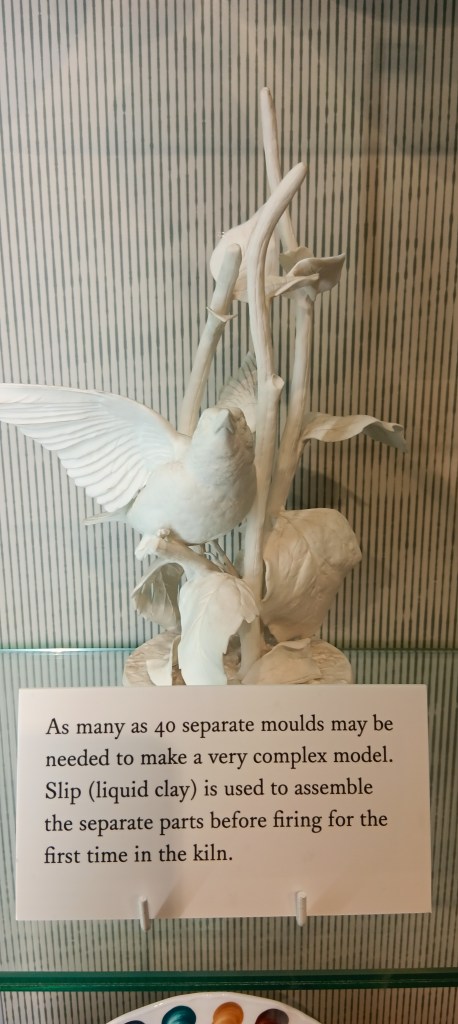
Below, the photos have been swapped; the first is the finished product.
Eventually the factories closed, but a wonderful treasure in the shape of the Royal Worcester museum takes the visitor on the journey through the various stages of porcelain fashion, as produced under the company label. And in one room, a portrait of Henry Sandon, who many will recognize from tv’s Antiques Road Show. He was curator of the museum for sixteen years, and is now Patron.
So why is it ‘Royal’? On the wall in the museum are several signed certifications of the Worcester factory engaged to supply porcelain to British royalty, earning the right to add ‘Royal’ to their name.
But how is it that in the museum’s gift shop, cups and other objects are sold as ‘Royal Worcester’… yet made in China? When the UK factories closed, is that not the end of Worcester as we knew it? And why is the museum selling imported tat when they could be selling local Worcester craft on commission, celebrating the on-going talents residing right there in their own community?
We look back at when Worcester porcelain began, and shake our heads at the ethical practices of the time regarding child labour and pay discrimination. How will future generations judge our insistence of selling cheap importations under the banner of previously well-respected names? The gift shop stuff, sadly, is neither royal, nor Worcester.
 Stories for you - Enjoy!