In the calm of Sunday morning Worcester, two walkers came across an older man crumpled up against a low wall. How easy it would have been to assume just another drunk, or worse. But these Samaritans checked the man was okay. He wasn’t; even pacemakers can go offshore sometimes. The ambulance siren shattered the early mornings peace, but in doing so hopefully saved the patient from an early resting in peace.
Across the river, a Rectifying house:
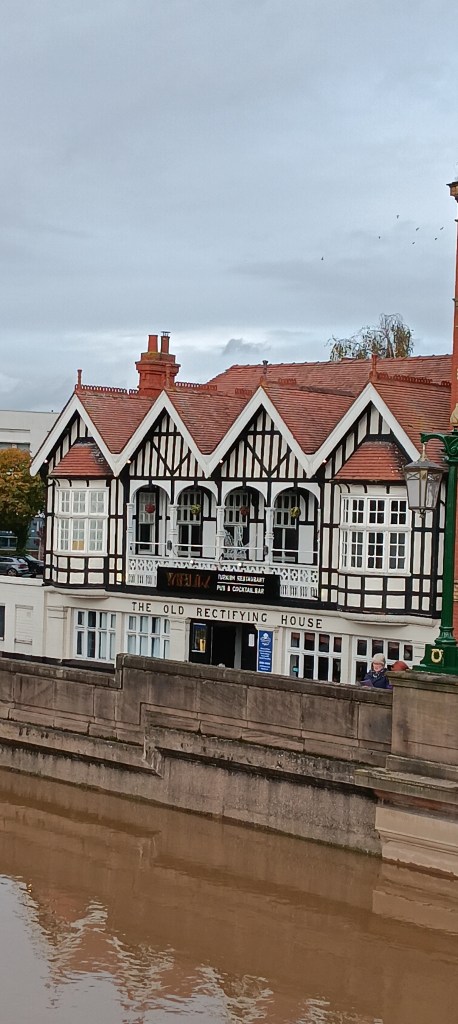
Was this where the badly behaved had to undergo some torturous treatment? The answer is simpler… one of the last stages of gin-making is the rectifying, correcting it for taste etc. Not as exciting, but probably better appreciated!
Cyclone Babet had impacted the local rugby club grounds; look closely:


From a distance, the sight of a stone needle piercing the sky promises a cathedral, or at least a church of significance, but no.


The church was deconstructed several years ago, leaving a beautiful community garden, centered on Glovers needle, so named to honour the glove makers who used to abound in the area.
Just around the corner, what must surely be the world’s shortest escalator:

There is delight in finding unexpected treasures:

Street after street have proud nameplates on their terrace houses, placed there by the original masons.
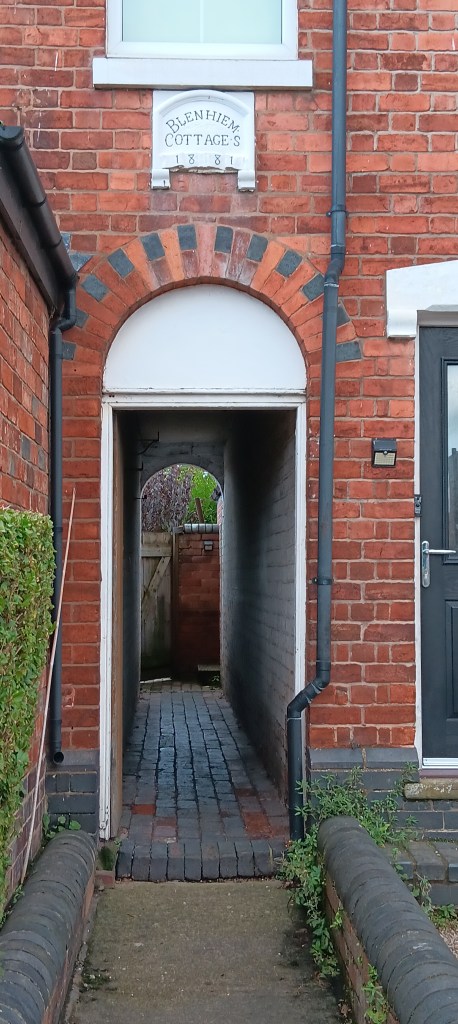
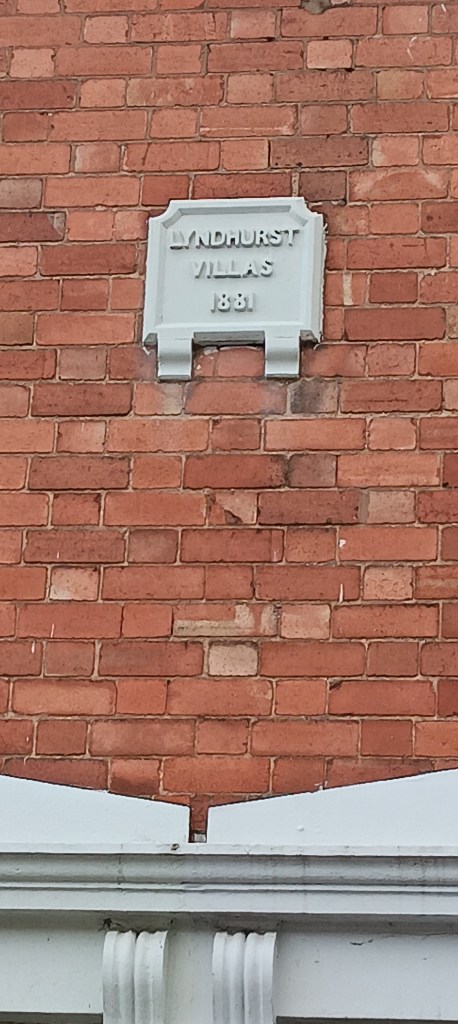
And then there’s Friar street.


Not only is this a joy to stroll along, especially on a Sunday morning when no-one’s about, but all of the businesses and the two visitor attractions are closed. How lovely that this street has not succumbed to the seven-day mantra.
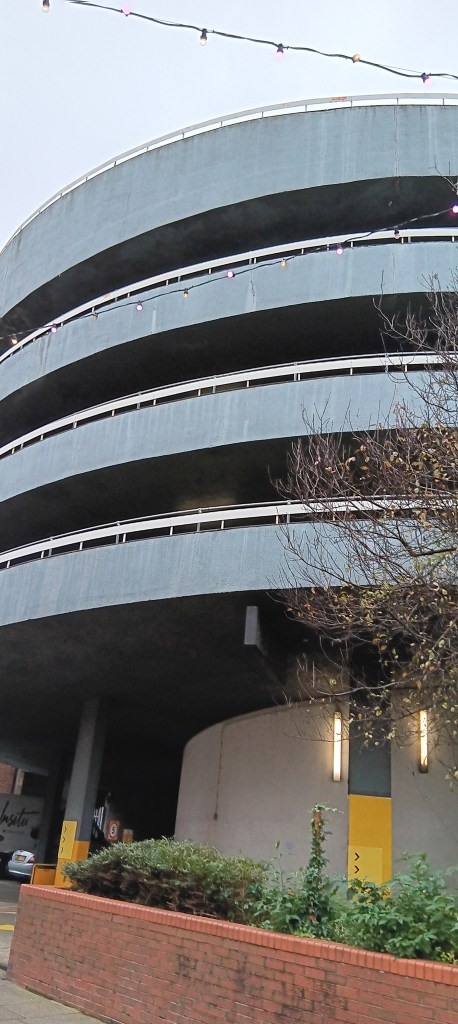
Along with the incredibly-shaped black and white buildings, many of which really don’t seem on the level, a parking building oddly appears to sit quite comfortably (though other viewers may not see it that way.)

At 9.30 the peace is replaced with the full cry of cathedral bells calling parishioners to worship. The sound is deeply moving. Why don’t the city traffic lights all turn red when the bells are pealing, to enable the sound to be heard in it’s purity?
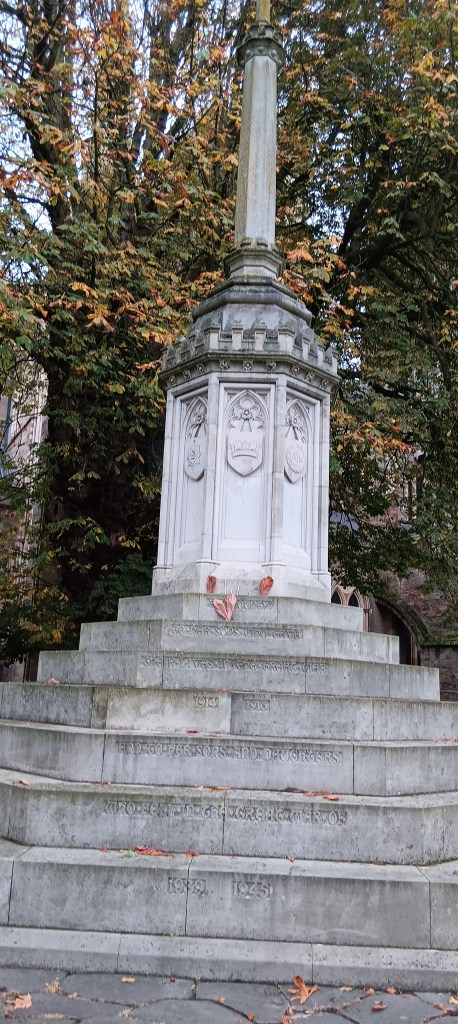
A wee lass of about seven was arranging fallen autumn leaves, and flowers, on a memorial, in great concentration. She kept checking and altering until it was perfect. Climbing down, she then skipped to rejoin her parents. What satisfaction must lie within.

Inside the cathedral, the memorial to Margaret:

She was survived by four of her children, and her husband, David Rae esquire.
In the crypt, antiphoner manuscripts from 1230ad are on display. Antiphoner is the term to describe when a song is divided into sections sung alternately by groups of choristers sitting on opposite sides of the Quire.
In the Bible, all Christians are saints! Who knew? But nowadays the term is used only for those considered especially close to God. How is it that modern man thinks he can not only alter the meaning of God’s word, but also judge who is, and therefore who isn’t, a saint?
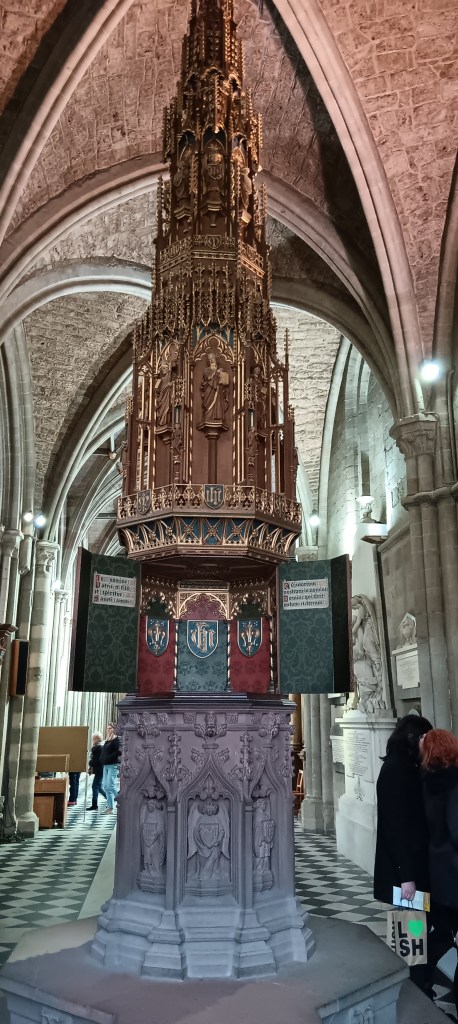
The cathedral’s original baptismal font:

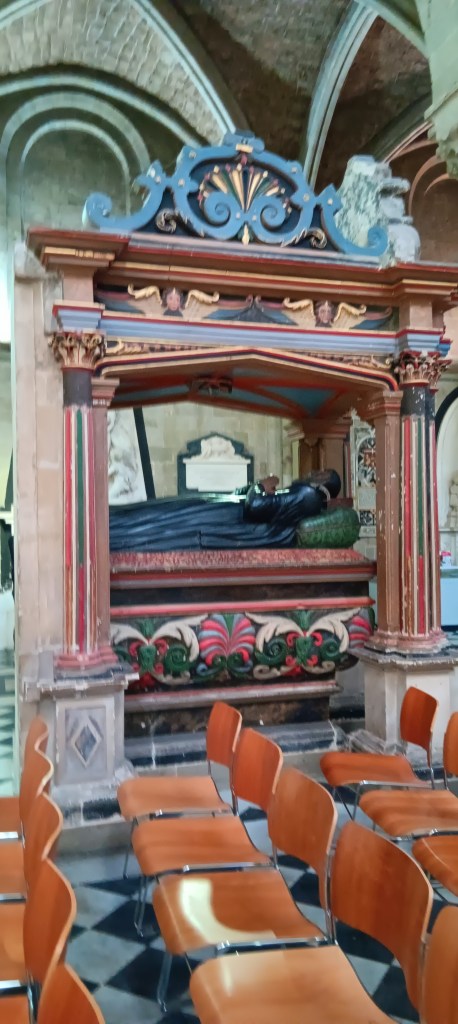
This bed post is not where the gentleman’s body lies, but a depiction of it for admiration purposes. Was this the deceased wish, or the family’s expression of something?
Within the Cathedral walls, a lovely refreshing surprise. The Garth (graveyard for folk important to the cathedral, like previous Dean’s etc).

But just what is a Monks lavatorium?

Not a toilet as we know it, but a place for monks to wash their hands before dinner.
Cathedral bells which have needed replacing are on display. The previous 6th bell has the inscription ‘This work may Jesus complete and favour with goodness.’ This particular bell is just one of three left in the world which were made by Stephen Norton of Kent c1370. To get a sense of size, note the ballpoint pen placed at the bell’s base.

And now for the tricky/challenging bit. In any cathedral, or even in non-religious settings, centre stage is for the person or item held in highest regard. We put our best on show, and the also-rans somewhere else.
Centre stage, where no-one can miss him, lies King John. This is the King who’s behaviour has been microscoped and possibly imagined by the Robin Hood tales, but who history never-the-less shows to be most unpleasant. King John himself was so concerned that he be judged badly for his worldly deeds, he tried to buy himself some insurance. To borrow the words of someone I met recently, ‘it is much easier to ask forgiveness afterwards than to change the behavour you enjoy.’
King John’s insurance took two forms. Firstly, he made his last Will as a generous man would, gifting to lesser folk as a charitable act. Secondly, he ordered that he be buried at the cathedral, in the hope that the high ranking churchmen already buried there would intercede for him.
In this era, when we are removing statues of men who history shows were morally challenged, it feels obscene to have King John front and centre in Worcester Cathedral.
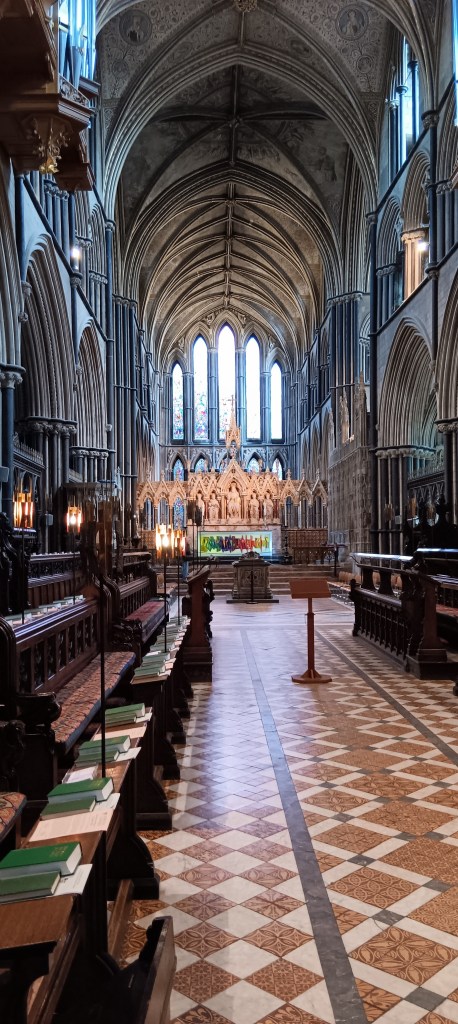
His tomb is a great tourist attraction, but this would still be so if he was to be shifted to another less-central part of the building.
And therein lies the problem. Due to the UK’s rules regarding historically important monuments, the church would find it hugely difficult, time-consuming and expensive just to go through the paperwork involved in shifting a less-than-desirable centrepiece. Then, assuming they received such approval, the enormous cost of re-siting a nearly thousand year old tomb would be a huge challenge.
Cathedrals receive no Government funding, yet must maintain their buildings and treasures for the nation. They may be asset rich, but it’s assets they are unable to realize. The tithe plates at Sunday services remain the basis for funding. Small wonder that so many are caught in dilemmas about whether to charge sight-seeing tourists, and how that fits with the commitment to keep places of worship freely available to all.
Apparently there are those from the Cathedral who are uncomfortable with King John’s presence as centrepiece where all things are sacred. How sad it is that the church can do nothing to make their space truly upholding of Christian beliefs.
Visiting Worcester Cathedral was a wonderful and awe-inspiring experience, until King John’s tomb. That he lay there in all that glory felt obscene.
A few days later, when talking to a Minister from another area, but of the same faith, who kindly gave me additional background for this piece, I joked that what the church needed was for some vandals to deal with King John’s tomb, as has happened to some public statues. The Ministers response was to hold up crossed fingers.
 Stories for you - Enjoy!