With two hours to kill before being able to check-in to the accommodation, and a suitcase in tow, there’s only really two choices; find a Costa Cafe (they have free wifi), or visit the museum.
Worcester Museum has basically four sections, plus a kids work area, cafe, and the obligatory gift shop.
The first section is currently dedicated to Peter Collins, Worcester’s … actually, no, you’ll need to read the seperate post about him on this website!
The second area is a temporary exhibition on graffiti. Everything from Banksy to local teenagers, and, extraordinarily, examples of the forgeries alongside the real deal. Who knew there is a whole industry based on forging graffiti?
In the third section, walk through Worcester’s proud military history. The stories, both visual and audio, have detail most folk would never have known previously. For instance, forty men, mostly from the West Indies, served as drummers in the Worcester 29th Regiment, c1770. They were paid slightly more than ordinary soldiers, and held a higher status. The regiments colors of red and yellow were reversed for the drummers, making them easily recognizable.
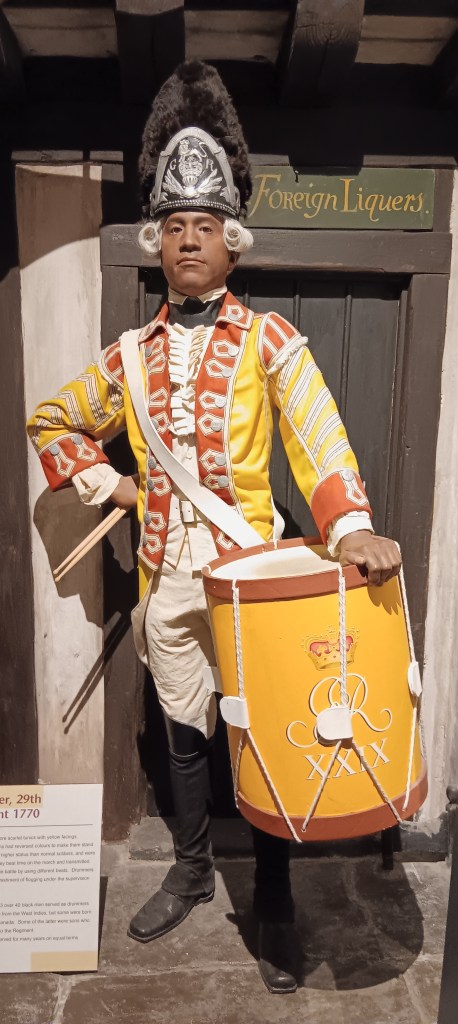
The beat of their drumming transmitted orders to the soldiers, through altered tempo. The drummers were a proud group, and their position often became generational, with sons following fathers into the profession.
But there was another part of their job; they were responsible for carrying out the floggings. That can’t have been good for race relations!
Speaking of corporal punishment, soldiers wives could be subjected to caning, if found guilty of theft etc. From at least 1694, and possibly earlier, wives only received half rations, but that was better than remaining in Worcester; those left behind were totally reliant on community charity for survival. Yet the choice regarding following their man was not theirs. The army decided, and that was that. This didn’t change until about 1860.
The last section of the museum showcases the usual bones, clothing, local history and artifacts. Naturally there’s a cabinet dedicated to the sauce, but more surprisingly, a replica pharmacy previously owned by one Thomas Rowley Hill.
Also in the last section, the critically endangered Scottish Wildcat. There are less than a hundred left in the wild, due to disease from feral domestic cats, and loss of habitat through deforestation. In-breeding with domestic cats isn’t helping. There are now breeding programmes to try rebuilding the population.
Hedgehogs are also showcased here, as an endangered species! From a population of over fifty million in the 1950’s, they now number less than a million in the UK, due to modern gardening, loss of hedgerows, and the extensive use of pesticides. If only they were endangered in New Zealand, where they thrive by feasting on native birds and insects, many endangered, who have no defenses against them.
But there is good news: the European Otter was brought back from the brink of extinction in the 1960’s/1970’s through a campaign of cleaning up their waterways. When humans make the effort, nature does respond.

Worcester museum; two hours used up very nicely indeed.
 Stories for you - Enjoy!