Waking up in a palace, then drawing back heavy red drapes to reveal church spires poking skywards from the tree canopy across the valley, feels surreal. Pouring hot water over instant porridge in a cup is a great leveller!
So is missing the first bus. Especially when it’s linking up with a train connection you need. But when things appear to be going wrong, something always turns up, as long as you don’t panic. The driver of the next bus, thirty minutes later, told me I didn’t need to connect with the train; his route included Comford, even though it’s not on the printed timetable!
At Comford I walked to the industrial period’s first ever mill, built beside the Derwent River to manufacture cotton. Sir Richard Arkwright wanted to hide his revolutionary ideas from prying eyes, hence the (then) remote site. Of course, being remote, there were few workers available locally. His solution was to build a whole village, including shops; Comford was the first housing estate, with most of the homes still in full use today, long after the mills are gone.
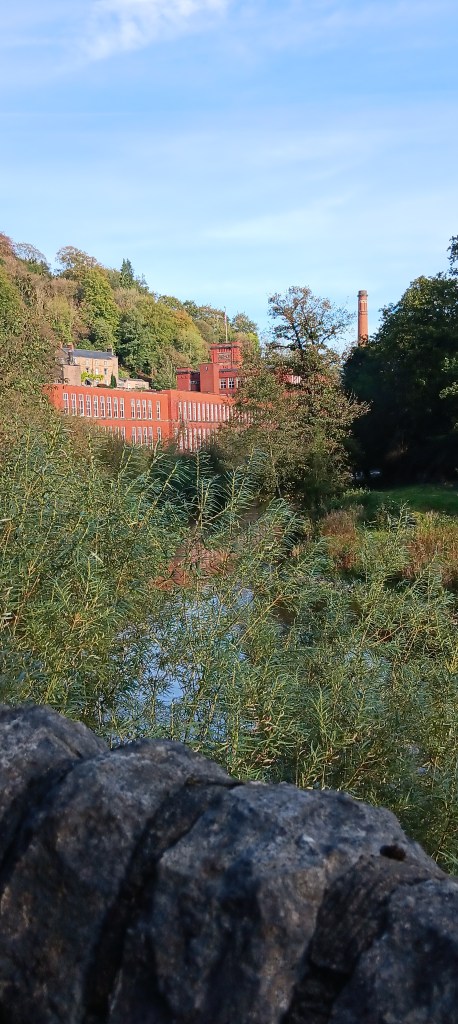

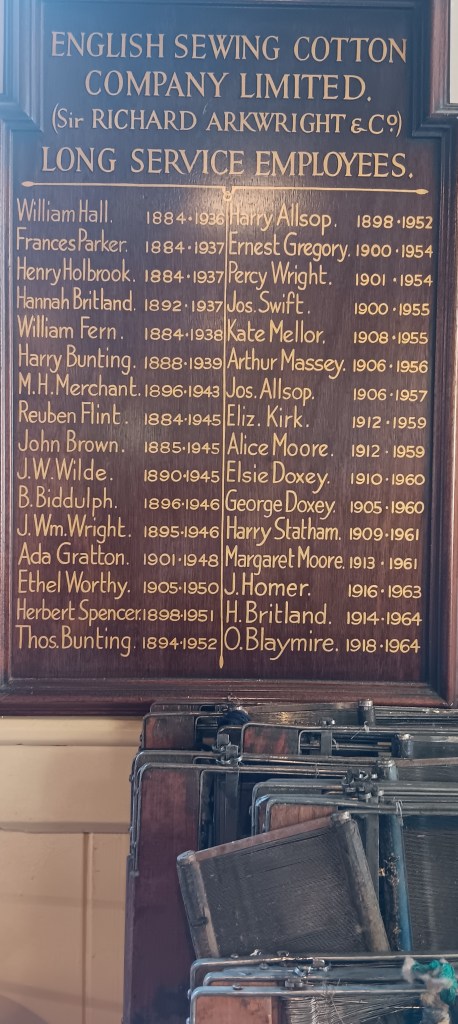
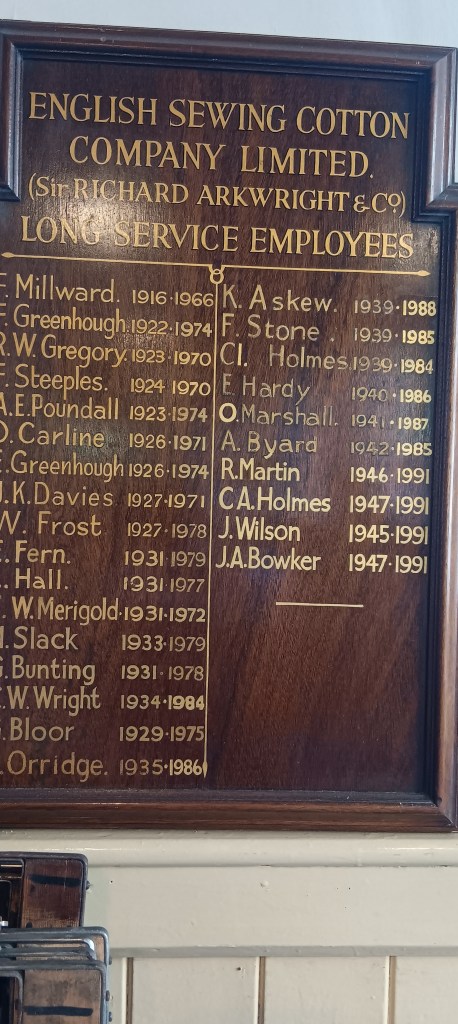
Looking forward to the guided tour of the hydro cotton mill proved to be forlorn hope. So frustrating to be the recipient of misinformation about tour times. Hang around for three hours, or move on? The on-site cafe gave me time to think, but more importantly, also an opportunity to study their extensive collection of memorabilia from the mill.
On the wall, the honours boards:
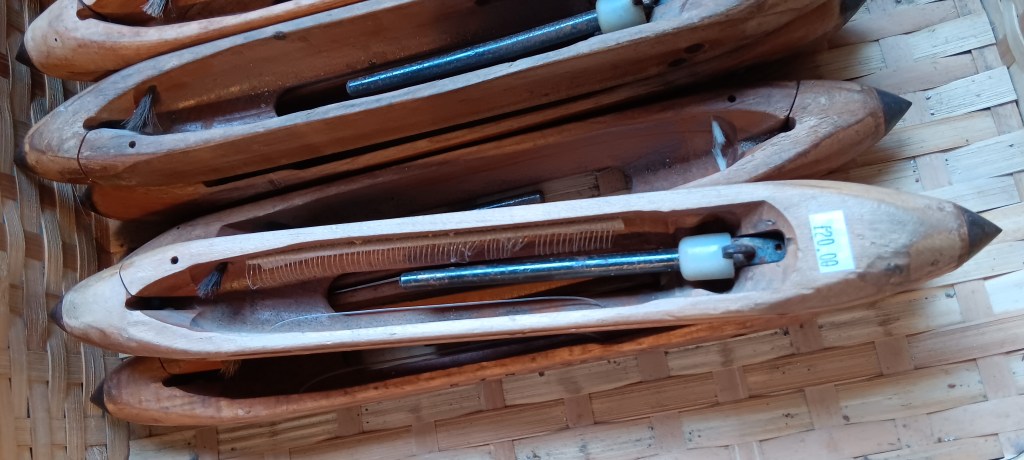
And examples of surprisingly heavy shuttle clocks.
Another customer was having a coffee before joining her friends for spa treatment. She is part of a group that began at antenatal classes. Nine couples, all now grandparents, who still meet regularly and several times a year go away for a week together. They don’t agree on everything, including politics, but they laugh, have fun, and care.
Outside the mill, a short lane led to this pot.

Opposite, a board advertised safety courses being held that day, but was that really the best venue?

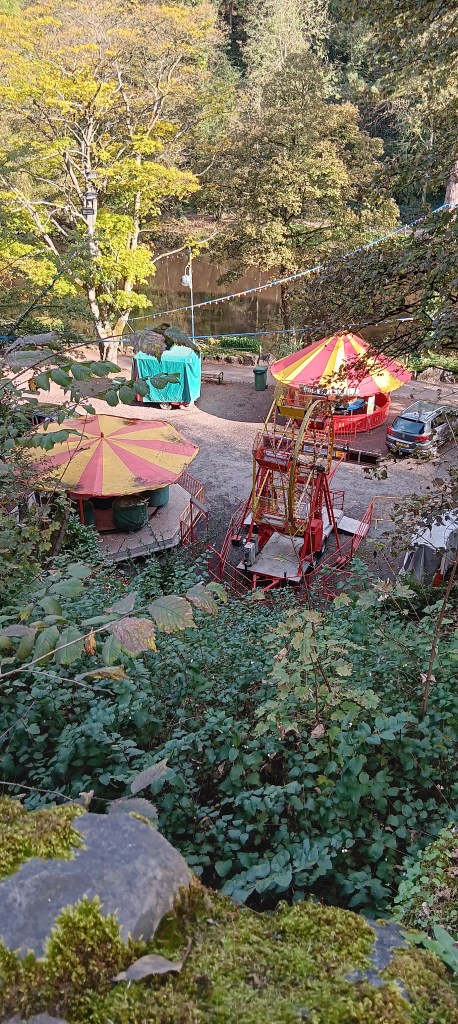
Continuing along the path above the river, a fair ground revealed it’s unlikely presence through the trees.
More common, another church spire.

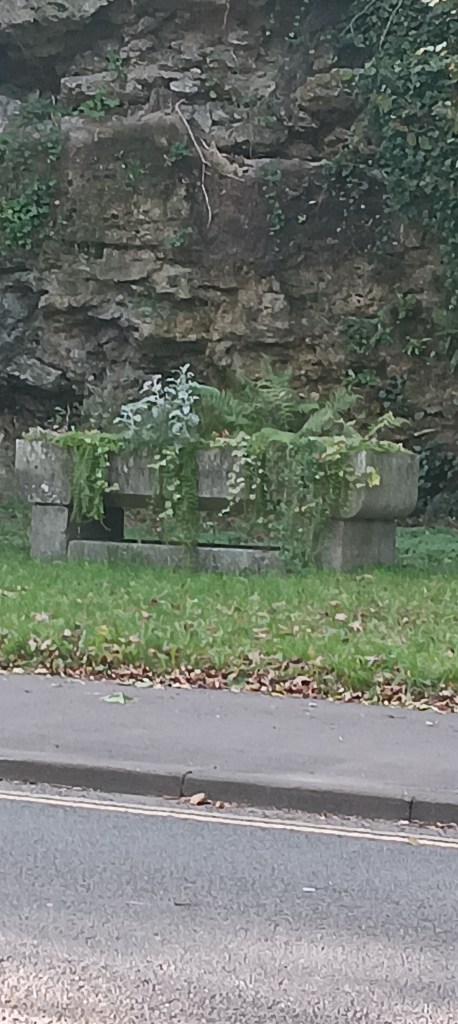
Everywhere in the Peaks District, signs advertise photo opportunities. They’re not wrong … even if I have no clue as to what the trough/bath/tub was for, especially as there was no sign of a water supply.

Further on, Matlock Bath came into view. Just inside the Lead mines museum, a poster apologises for the closure of public toilets. Signing the attached petition for their reinstatement seemed sensible, but didn’t help my immediate issue.
Walking through the village, fish & chip shops and icecream stores outnumber everything else. Miles from the sea, Matlock Bath is a seaside town set in the forested Derwent Valley. Motorbike riders make pilgrimages here, for the fish and chips apparently, in such numbers their parked bikes often block the traffic.

Ten minutes more walking, and my immediate needs are finally met. And that’s when I discovered a whole new adventure waiting just metres away… but had I packed my brave boots?


At the top, the Hill of Abraham. A playground for young and old, set in the Savage garden, and welcoming tourists since 1780. Even Queen Victoria made her way up there, but not by cable car!
For ladies, the donkeys were rented down in Matlock Bath for 6p. At the top, guides took the Victorian elite through the lead mines by candlelight. Thank goodness it’s electric now! There are 175 steps, sixteen of which go down…I know you can do the math. The roof is low in places; if the person in front of you says ‘ow’, bend lower. Listening to the health and safety talk, I checked my brave boots. Zipped up tight, we were off. Wet floors, heavy rock bulging overhead, and the possibility of bats all added to the adventure.
Lead was mined here from 1670 until 1705. It was used as a sweetener, sprinkled liberally on the foods of the Roman elite, and thus given much credence for bringing down the empire. Could vaping be our new lead?
Calcite was mined here too. Used by Vikings on cloudy days to locate the sun, it’s reflective properties were highly valued.
Emerging high up the hill, spectacular views beckoned. Peak district in autumn; each village is as pretty as the last, and from the tops your eye is drawn across to grand buildings, forested areas, and more.
Back at the viewing tower, built not for defense purposes, but unashamedly for tourists (check out the date):
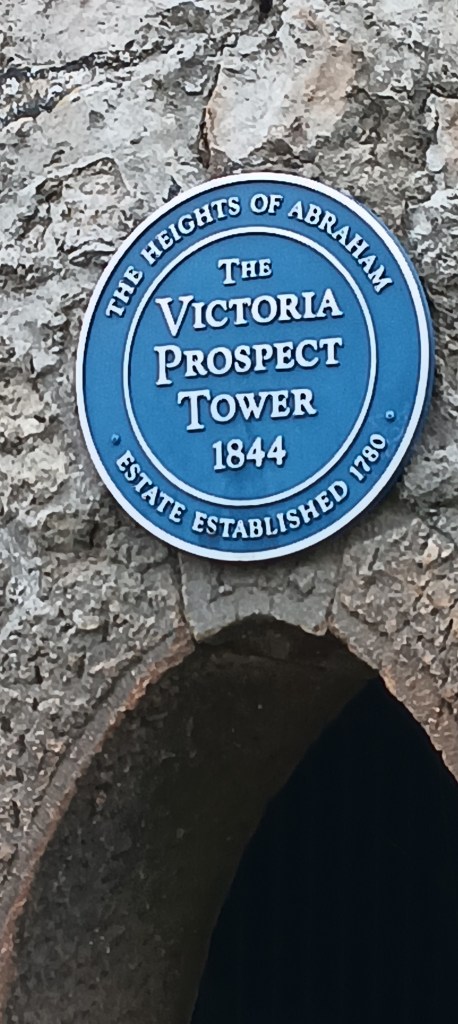
Two folk in period costume were moving about, shedding light to anyone interested on what early tourism to the site looked like. The gent told of the property’s development in the 1780’s, whereas the lady was stuck in about 1845, exclaiming about her experience…. The right to take exercise had only just become acceptable for women, after a lengthy campaign, so she felt she must partake, without complaint, even when she didn’t feel like it, in order to avoid giving ‘those men’ any chance to comment. Getting to Matlock Bath, her steam train went 35 miles an hour! She was relieved her organs had stayed in her body, and the cows in the fields had not been knocked over by the passing train’s force. She shared a little tip; when the train enters a tunnel, a lady should quickly put a hat pin between her teeth. Thus, if a gentleman should try to kiss her, he’d get his just desserts!
The lady lamented the advent of the steam train, as it brought the common people to Matlock Bath, lowering the tone somewhat. But the opening of a walkway for entering the mines gained her full approval, since being lowered straight down 125 feet by rope and bucket was not the most dignified for a lady.

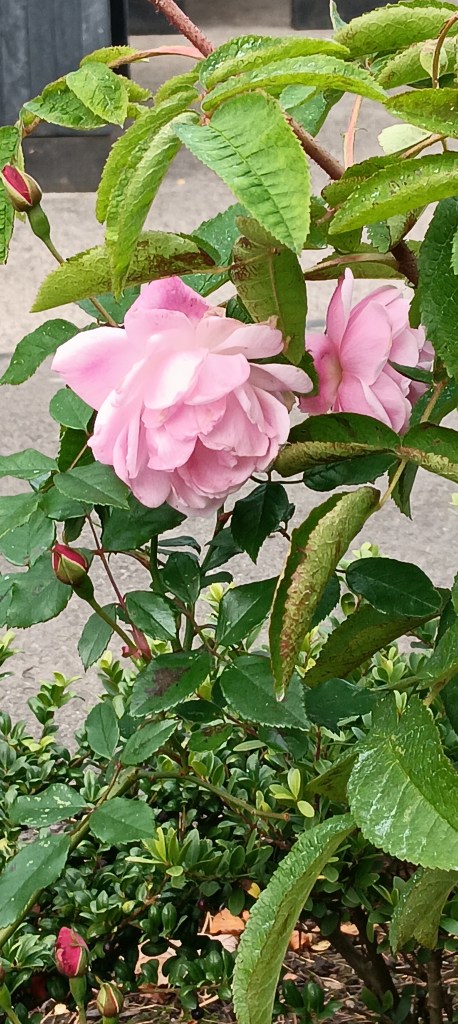
She did approve of the rose garden, showcasing the first east aisian cultivar ‘Old bush rose,’ which reached Europe c1750, and by 1825 was in almost every English cottage garden. This style of garden had replaced the native wild-looking fashion known as the ‘Savage garden.’
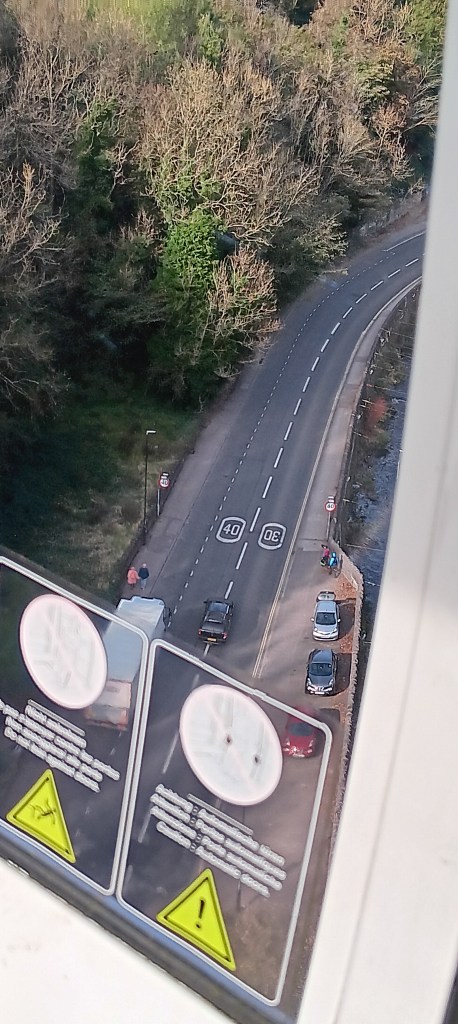
Rapidly losing favour with me was the prospect of returning down the cable car. A storm was looming, and the brave boots tremored watching the buffeting trees. But when an elderly man waves his arm to get on, embarrassment guides your feet. Why do cable cars stop at the halfway mark? Is this some narcissistic revenge on tourists? Swaying in the ‘breeze’ hundreds of feet above ground, encourages the passenger to read the ‘what to do in emergencies’ sticker. It says to stay put. Was there any other option?
Back in Matlock Bath, time for mushy peas. Visiting the UK must include trying foods which make no sense. Foods like mushy peas. But the takeaways in city outlets had looked grossly fatty, and research online had evicted any thought of sitting on Blackpool pier with fish, chips and mushy peas.The prices quoted were fishy indeed!
But if bikers make a pilgrimage here for fish and chips, they must be special. I chose the outlet with the most bikes parked outside. Such a good choice; I’m a convert! Mushy peas are indeed a delight.
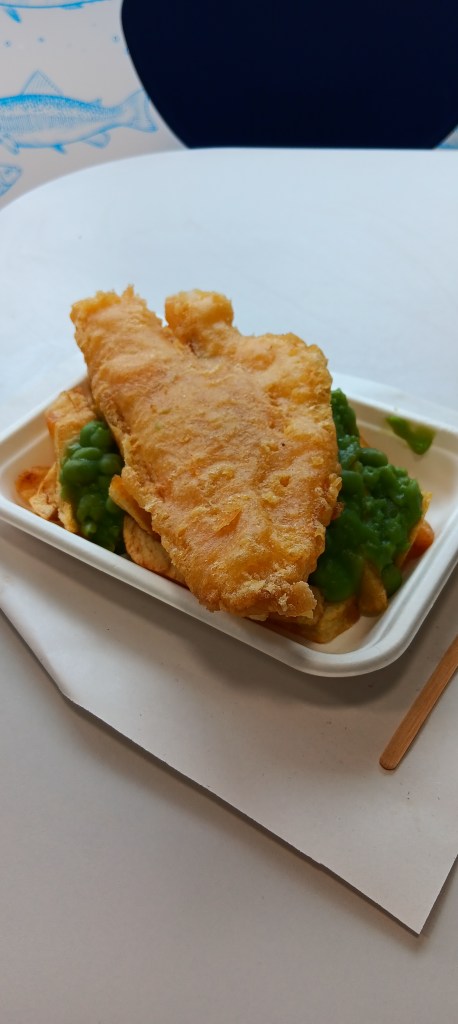
I am told that this area uses a special oil for their fish and chips, hence the crisp light batter.
So, a day which started with instant porridge, missing the bus, and wrong timing, turned into adventure and surprise; thank goodness for brave boots!
 Stories for you - Enjoy!