The People’s History Museum, Manchester, takes an unusual look at the city’s humanities journey.

I was fortunate enough to visit when Pauline Omoboye was reciting her work. Do watch it on Facebook, (it’s more meaningful hearing her)… it’s on the One Manchester banner. Extraordinary woman.
Manchester has strong humanity forces, starting with the arresting sculpture outside Picadilly Station of soldiers returning from the world wars, having been blinded.
Inside the station, a man advocating for the Blind foundation. His sister is blind, and each October he works the stand, educating passers-by and getting them interested in sponsoring guide dogs, or supporting all of the other work the foundation does to enable independence. Each Guide dog costs the foundation 70 thousand pounds, but that includes food, vet bills etc for the dog’s entire working life. The foundation, recognizing few can afford such amounts, has set up a weekly lottery with tickets set at just one or two pound. An organization which began for returned servicemen now covers all vision-impaired.
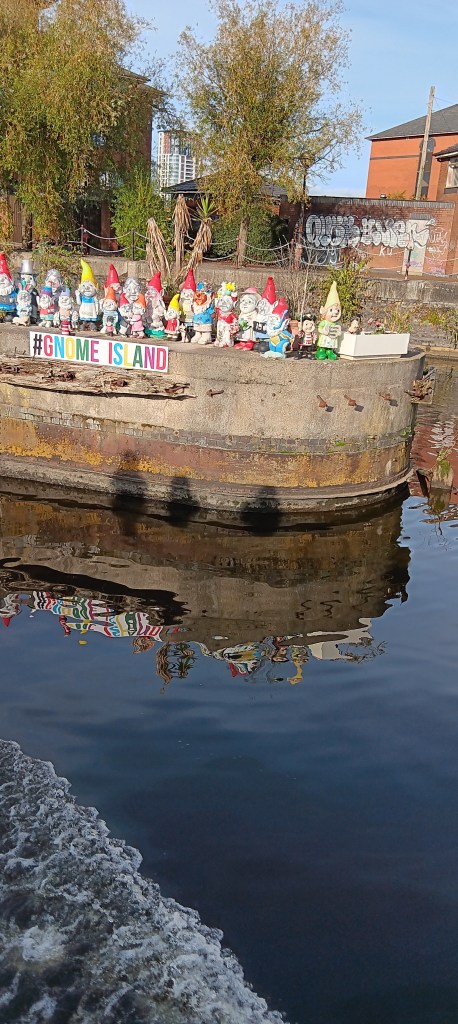
Manchester also has an unusual little community who reside on their very own island in the old docks area:

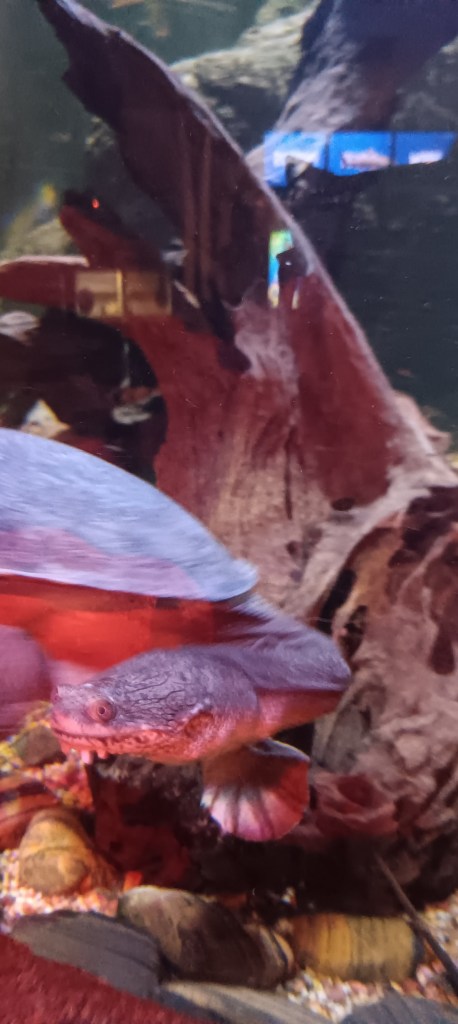
A visit to the much-hyped Sealife aquarium would have been wonderful if I was under ten years old and never seen fish in real life. It would have also helped if I hadn’t read the hype, given that most of the ‘stars’ didn’t exist. However, the moray, and the weird turtle that looked more moray in it’s front half, did impress.

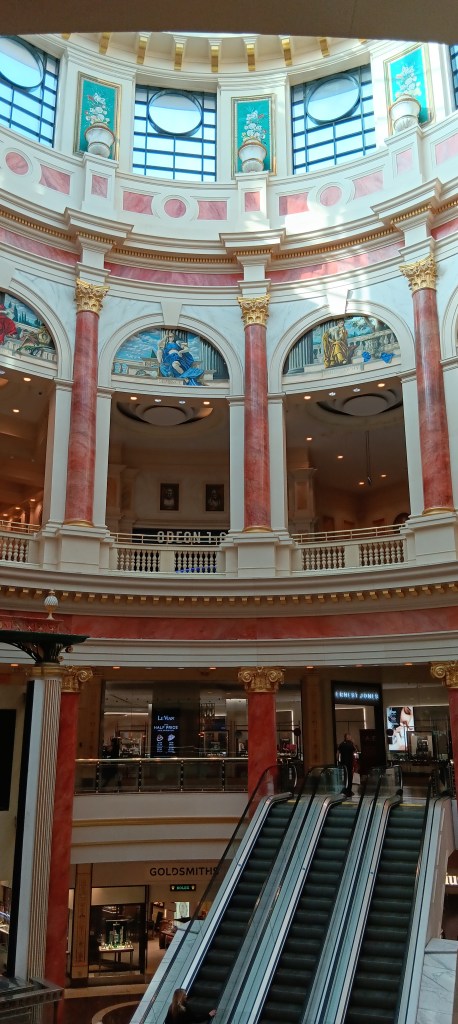
The aquarium is part of the bizarre complex, aka shopping mall, known as the Trafford Centre. Check these out:

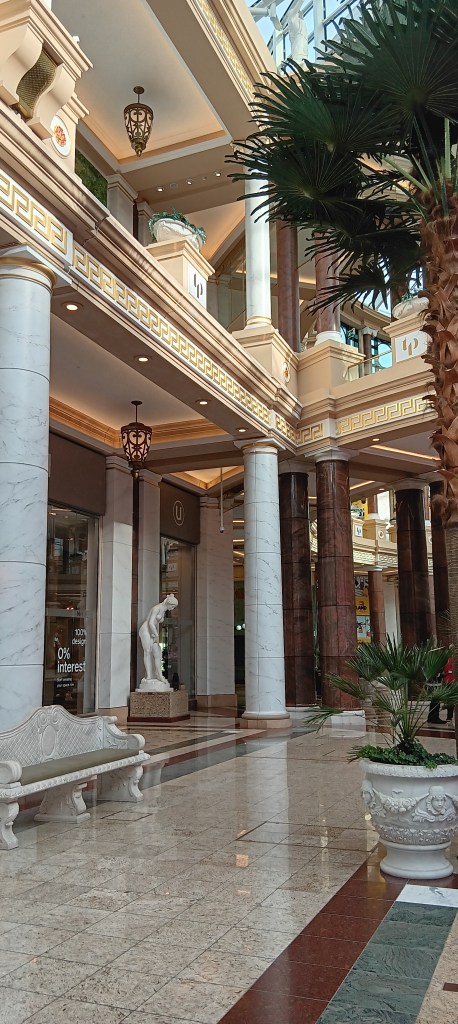
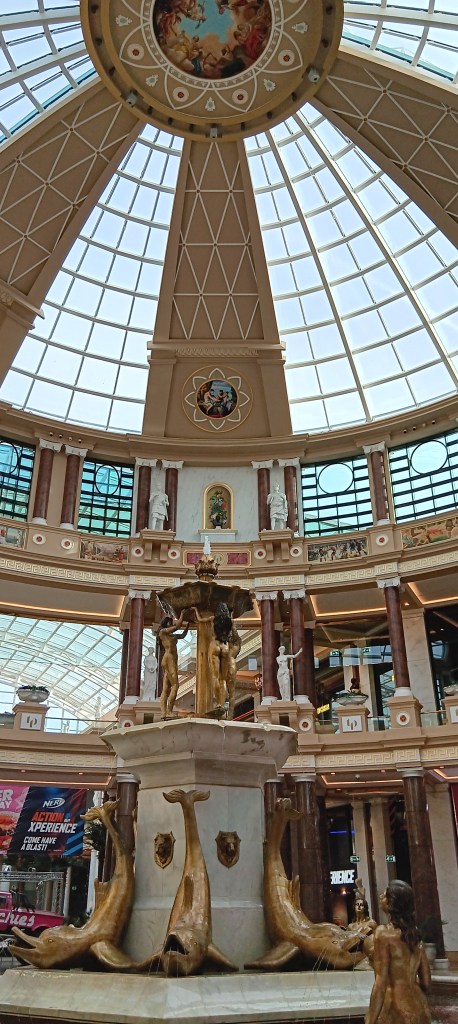

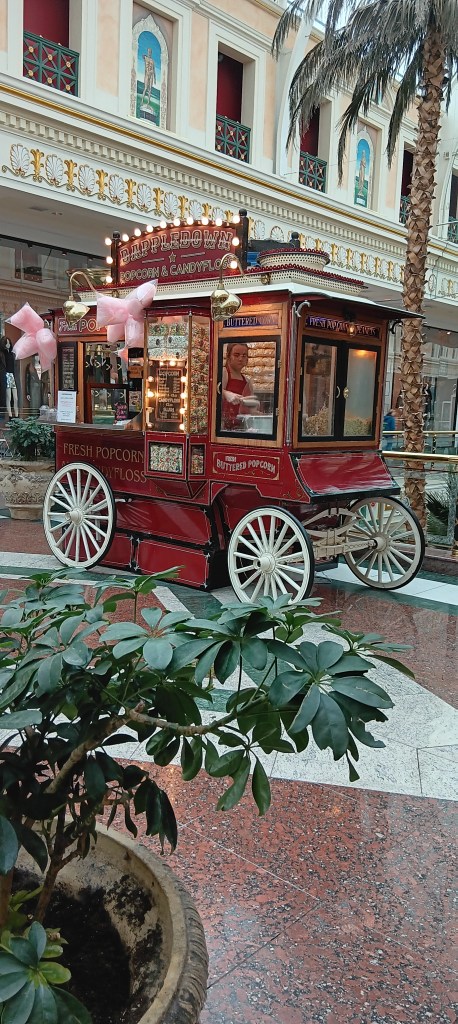
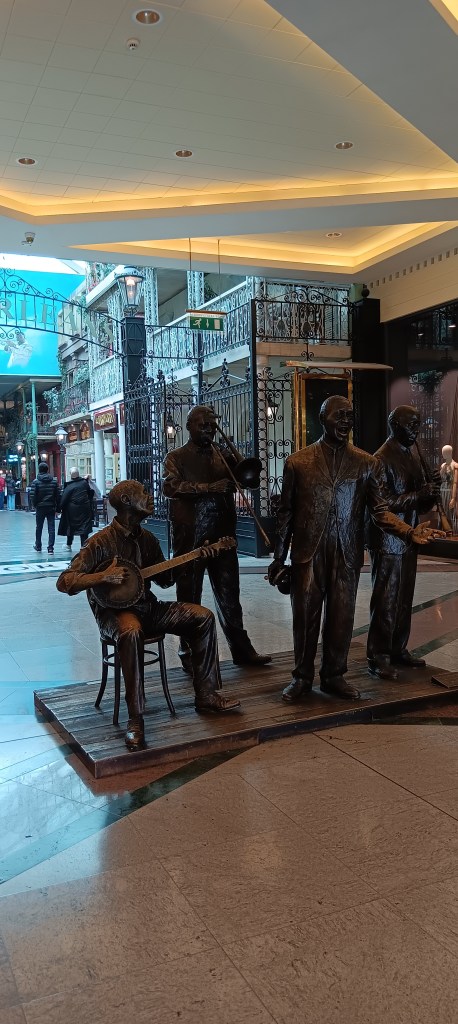
And then, upstairs, go past a statue of New Orleans musicians and into the two-storeyed French Quarter (remembering you’re already upstairs!). There’s a feeling of disorientation… a French street in an Italian Plaza, in a UK city mall. Makes perfect sense.

What also felt off: I got the bus back to Picadilly Gardens, which is the main bus transfer station, and stood on the pavement outside a shop to google a couple of things, as well as send a message. Then I went up and around to catch the free bus. Waiting for that bus to move, the air was suddenly filled with sirens. Lots of sirens. The bus moved, we went around past Picadilly Gardens, and there, right where I’d been standing, a bus parked in the shop’s front window. I read later that 12 pedestrians and passengers were in hospital, one critical. There but for the grace of God…
Another lucky escape: walking to the store from the airbnb, footsteps caught up with me, but then kept pace about a metre behind. Feeling uncomfortable, I turned and asked ‘you alright?’ in the best Manchester imitation I could muster. The woman, about thirty at a guess, immediately turned and walked back the way we’d just come! Dodgy as.
The airbnb host commented that I had told her a lot of things she didn’t know about her city and country. But that’s not fair. Residents usually go everywhere with a purpose. Few have time, or energy, to simply wander around, nor to strike up conversations with complete strangers. But everyone has a story, whether it’s the parents raising three teenage girls, or the young man who was in trouble in prison until something changed. He spent the final two years of his sentence learning to read and write, then volunteered back after his release, to help other prisoners. He studied and achieved the qualifications required, and is now on the prisons payroll, mentoring inmates, including teaching reading and writing.
This building must have a story:

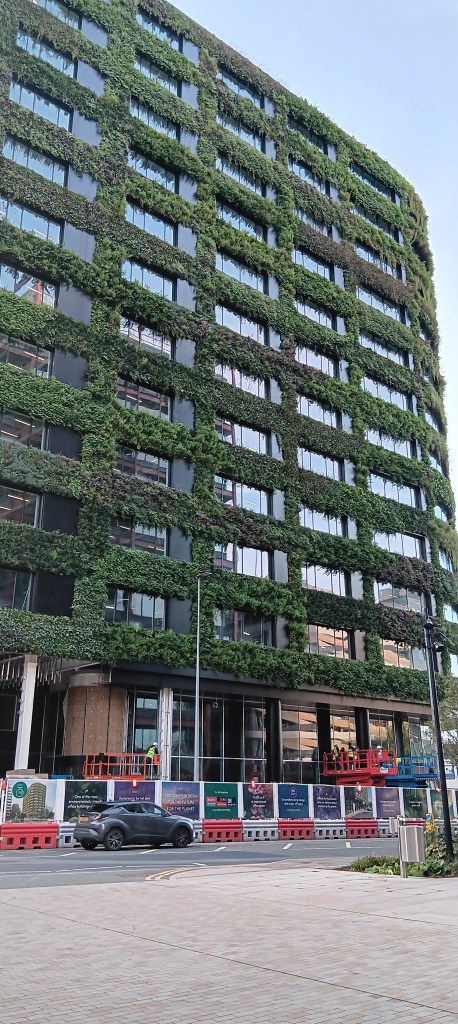
Another building, one of four in a suburban block, each angled slightly away from the others so there’s no sense of a compound. Parking is behind, in numbered parks set in small groups with plantings between. There are mature trees scattered about the lawned open space. Each building has a key entrance and a lift. Eight two-bedroomed apartments to a floor, four floors. A space-effective way of providing ownership. Check out the windows; inside, the rooms feel almost cottagey, and therefore cosy. My host loved hers, quite rightly.

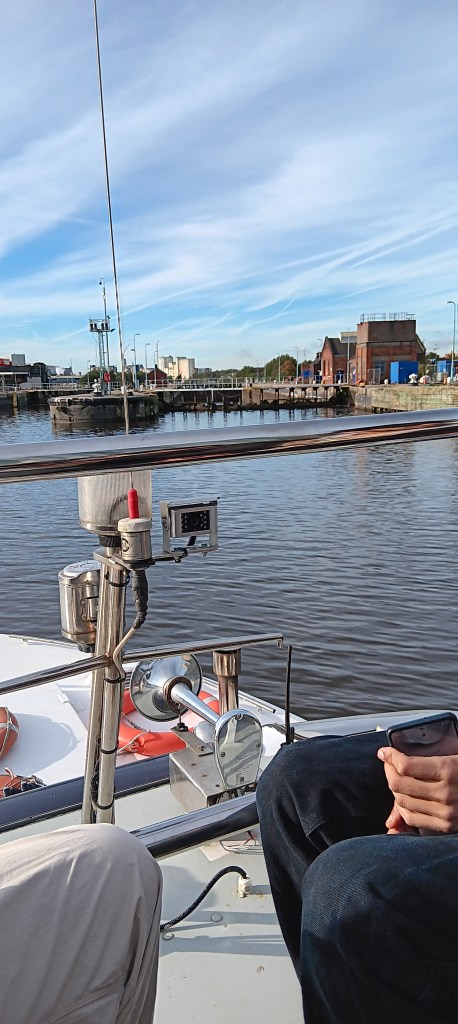
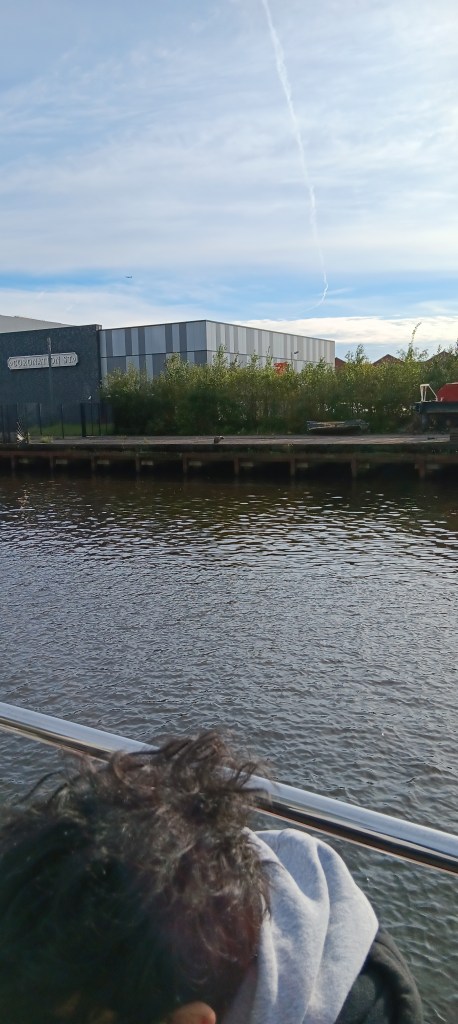
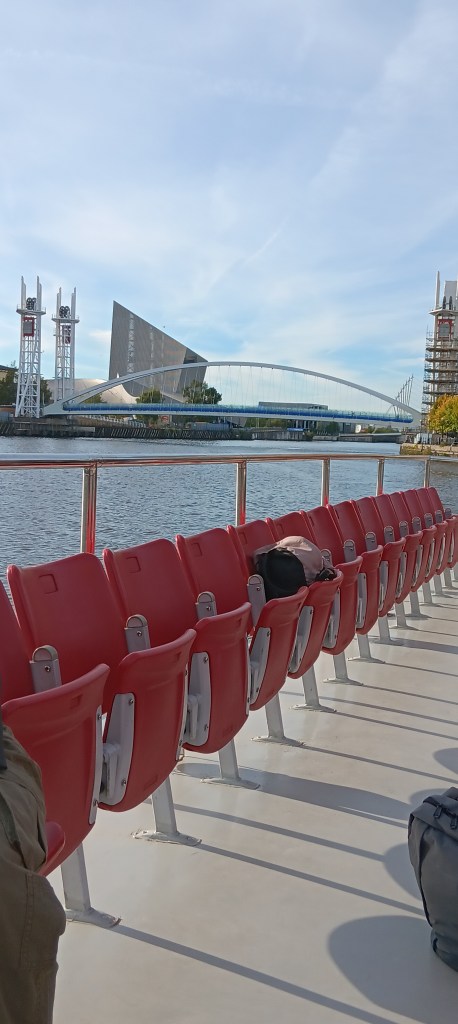
The river view of Manchester, where ships used to bring and take trade the world over, gives another perspective. Canals, quayside and docks were built when labour was cheap, and lives even cheaper. Hundreds of men, mostly sappers brought in from places like Ireland, died whilst building the port and canal area.


Manchester has come so far since then, but their museum reminds us that our ‘civilized’ society still has work to do to ensure every person, regardless of diversities, can boldly go where others do.
 Stories for you - Enjoy!