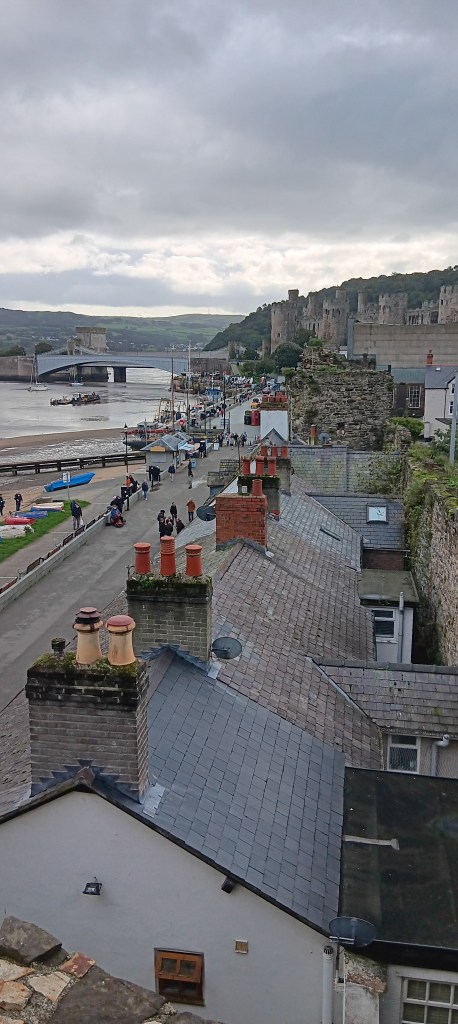
The walls of Conway castle, Wales, were built in 1234. Oh, to weather that well!

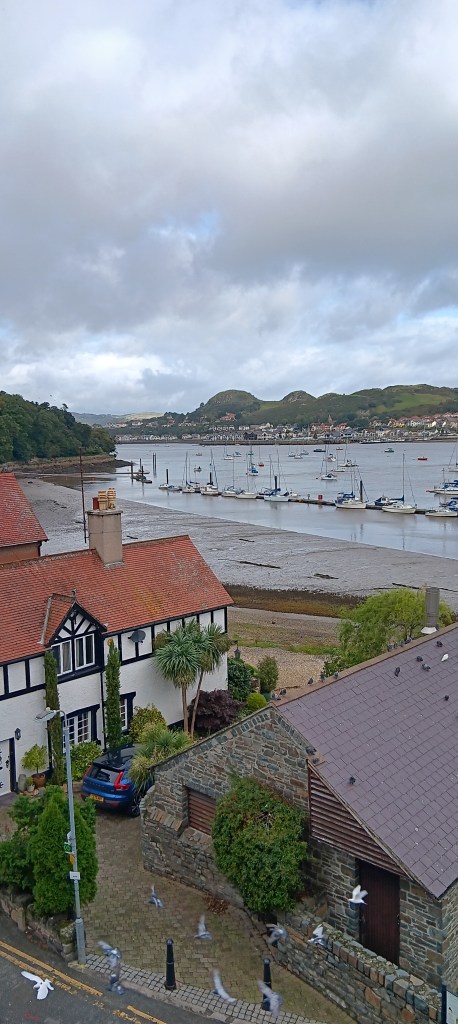
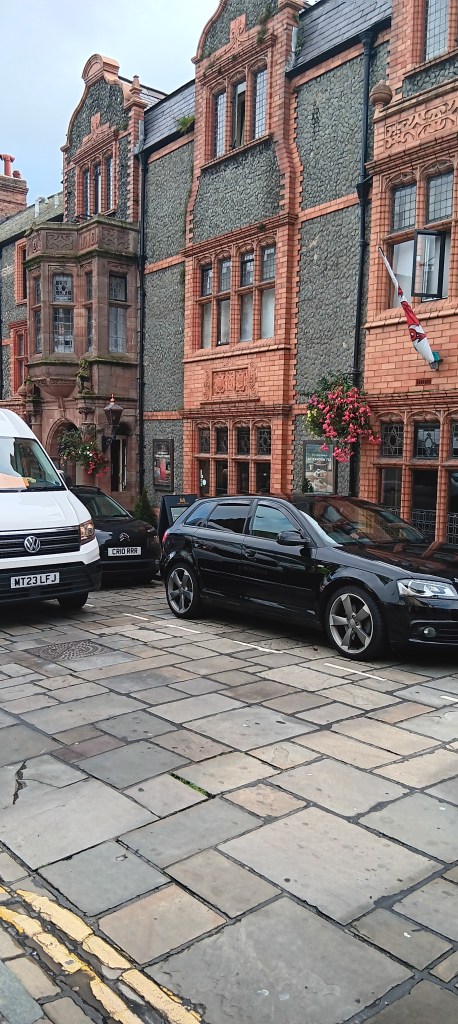
Conway’s architecture is wonderfully random.


As I stood in a Conway stŕeet, the unmistakablebeat of horse hooves behind. A white-grey horse trotting with intent, pulling a black lighter-weight gig. Two gents, one in the driving seat and the other hanging on from the rear foot plate, their high viz vests flapping over light shirts. Both in workmens dark trou, and berets. Catching my eye, both men doff their caps as they pass by, and I raised my cup to them in salutation. And so it was; a brief connection, over in a beat of a horse’s feet. I don’t know their story; neither where they came from, nor where they were going. (Nor why they chose this tourist amongst so many).
However, another story I do know. The village of Llanberis, in Wales, built a huge model of King Arthur’s sword, for the princely sum of $17000. The official reason is to raise awareness about King Arthur, but the cynic might think the good people of Llanberis have hit upon how to stop being a drive-through.

At Parc Padarn, high in the remote Mt Snowdonia region, it’s no surprise to find a slate mine. However, the Diving centre on the other side of the road is unexpected. Behind the trees is a lake, suitable for dive training. From the novice to the ship-wreck researcher, the dive school offers bespoke training. They have been so successful that two other sites have now been established also. But it still feels odd to come across a dive school in mountainous Snowdonia!
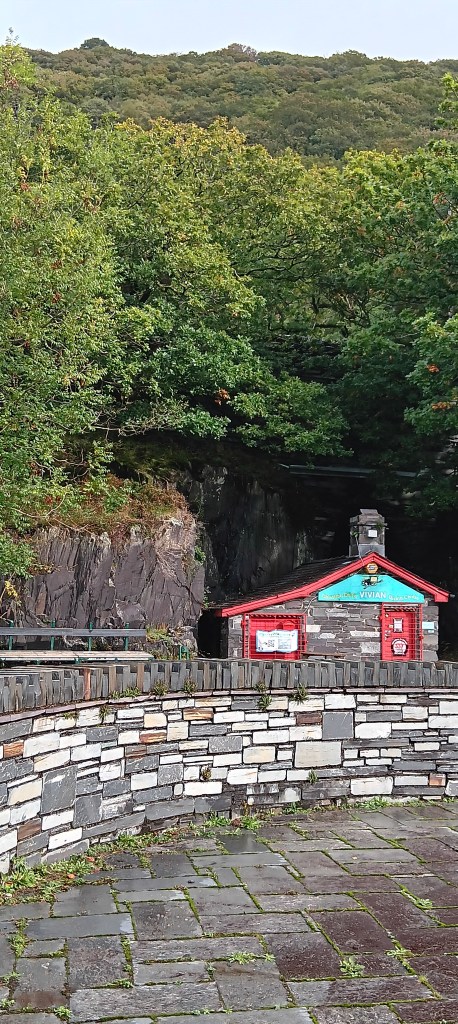
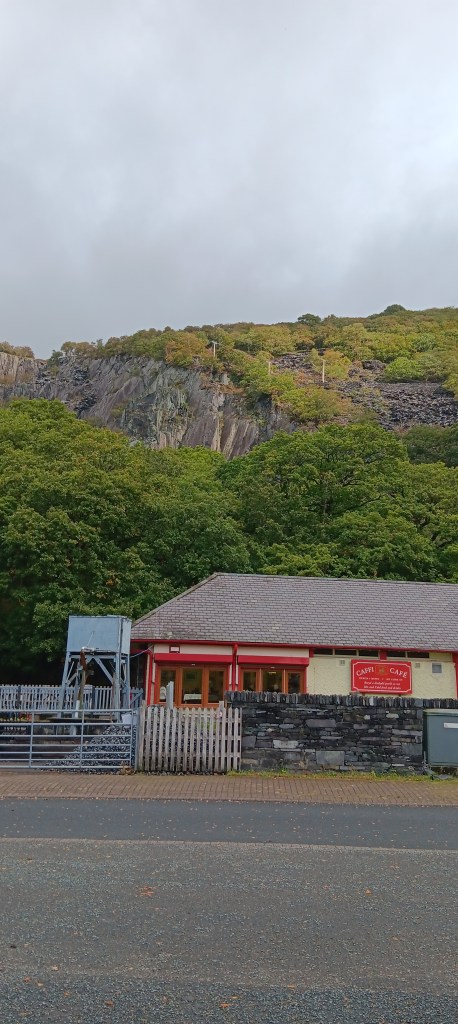
Nearby, the National slate museum.
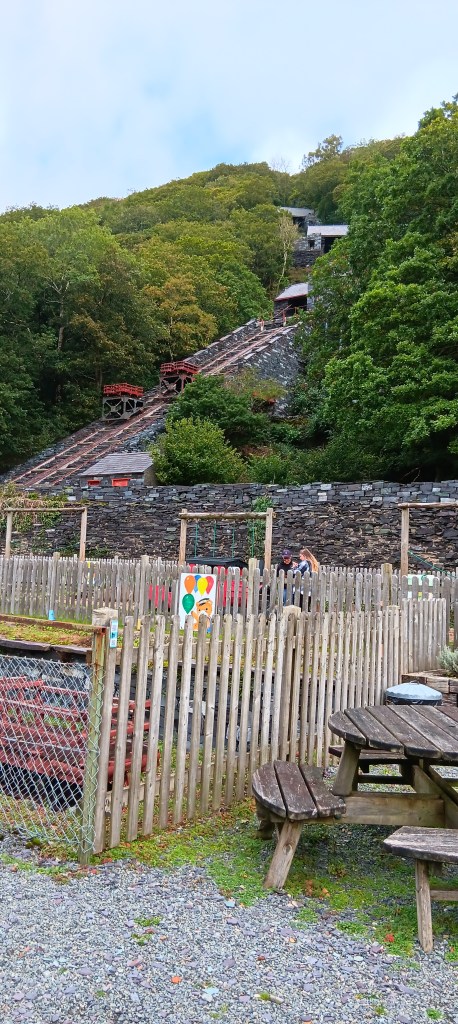
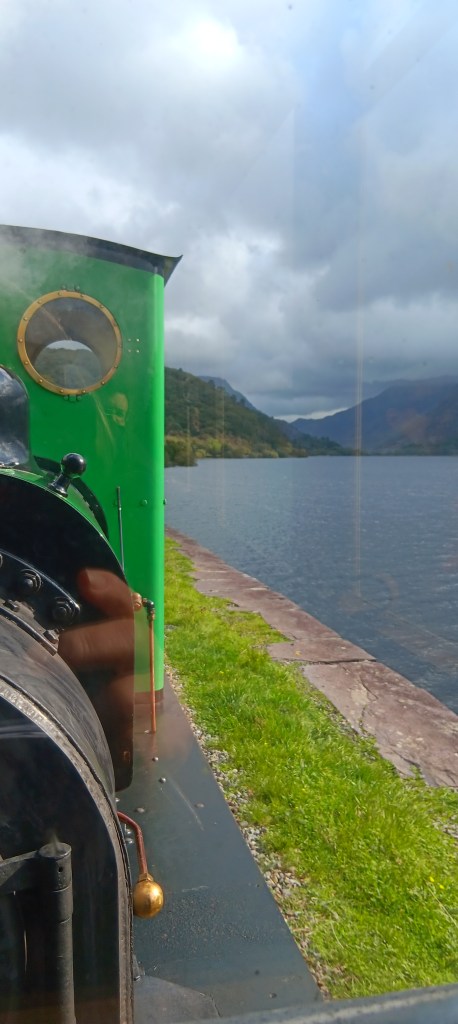
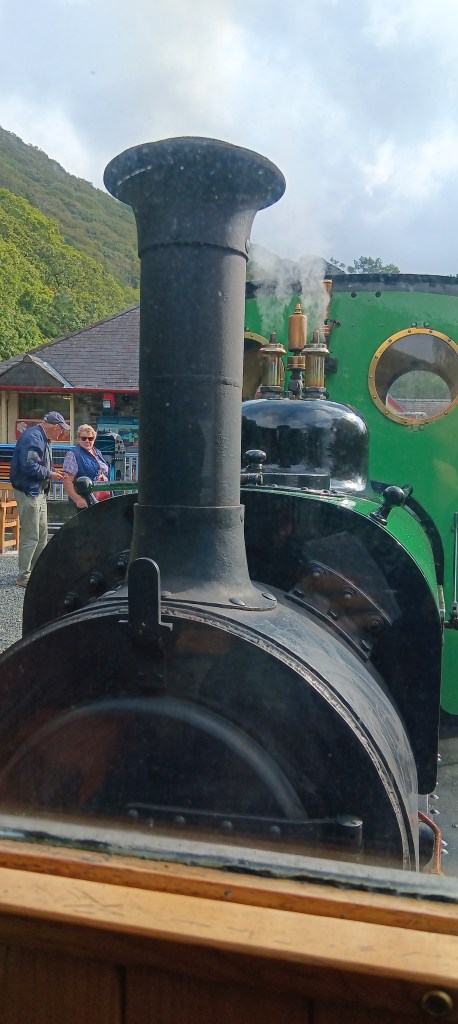
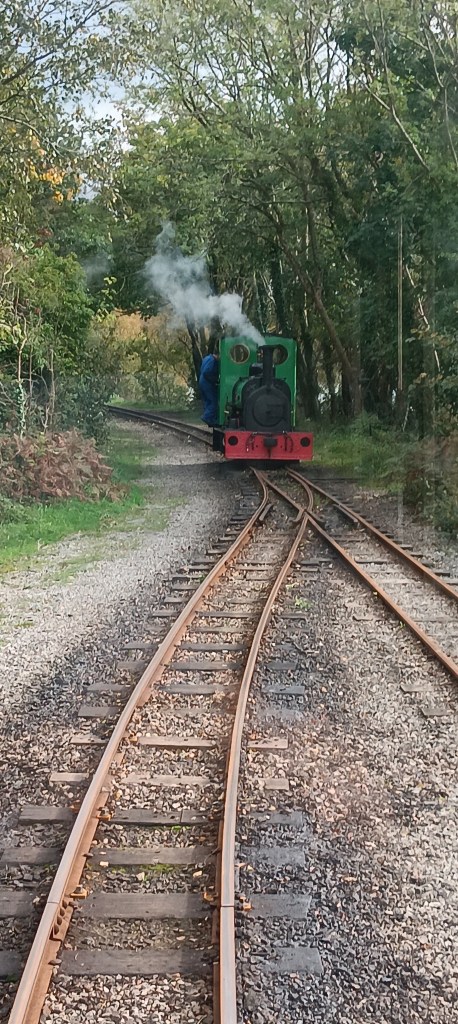
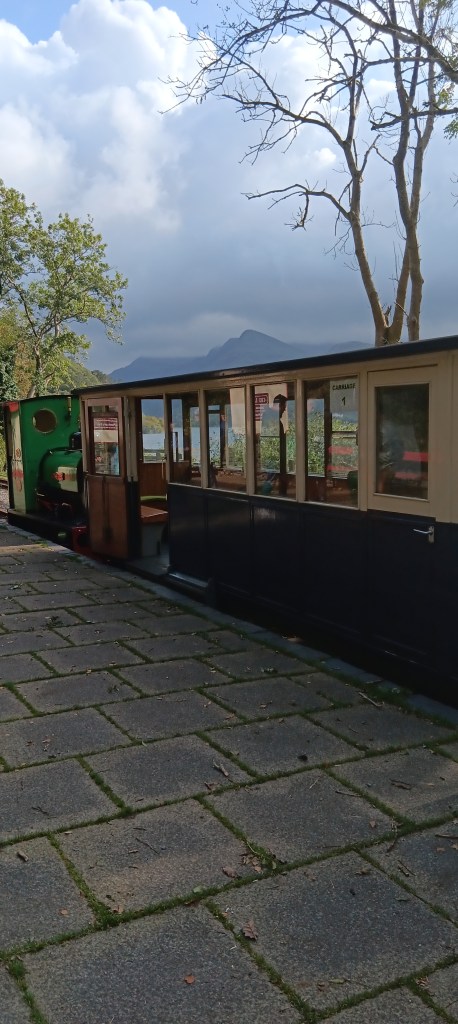
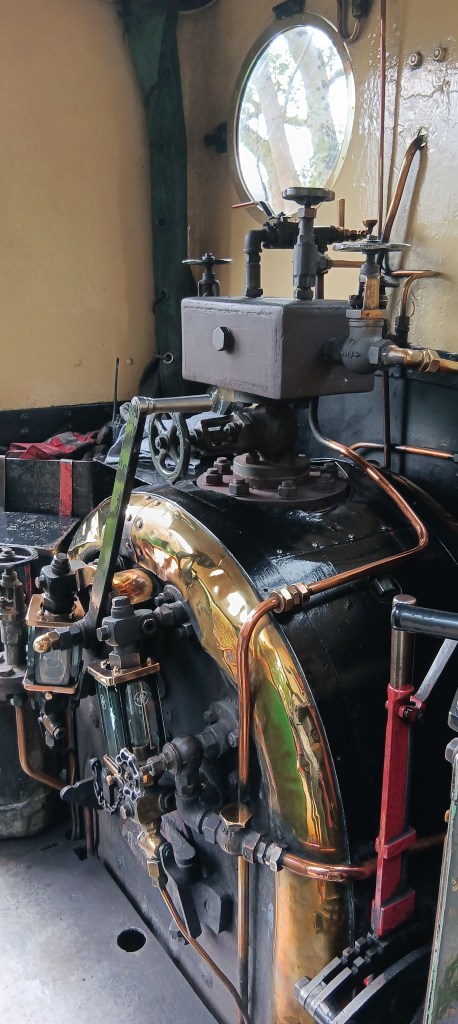
And, of course, a chance to ride behind the 101-year-old steam train which originally pulled slate wagons. The younger females in our group swooned over the spunky young driver, admiring how he handled the engine with confidence (or was it the mix of good looks and boiler suit?). Then up the line we went, to collect more passengers. A few minutes later, passing our original starting point, there was general dismay from the girls as that same young man was seen entering a cafe! Who was driving the train? How could he be in two places at once? Didn’t he care about them? Maybe there were twins! Eventually the girls worked out the drivers had swapped at the pick-up. But their disappointment soon vanished into the clouds as the excitement of steaming along the lake took hold.
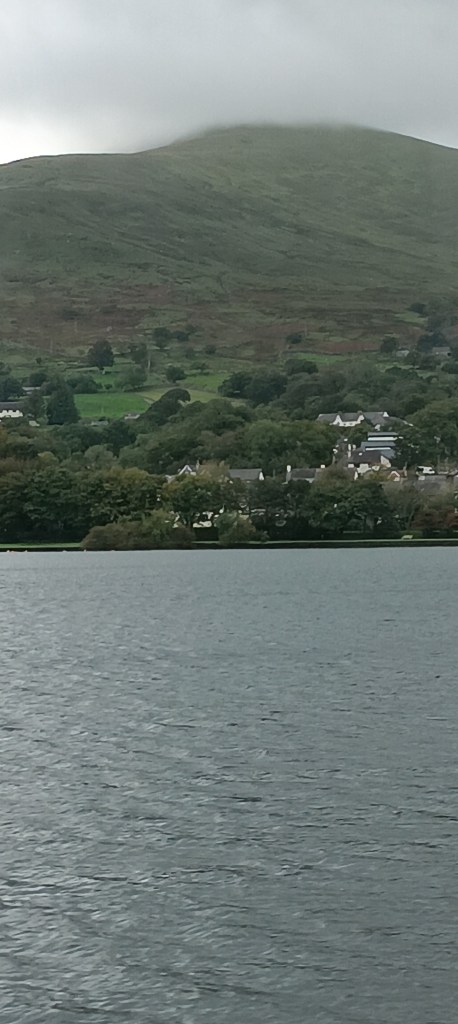
In the early years, the slate workers cottages were also slate. Nothing like taking the job home with you.
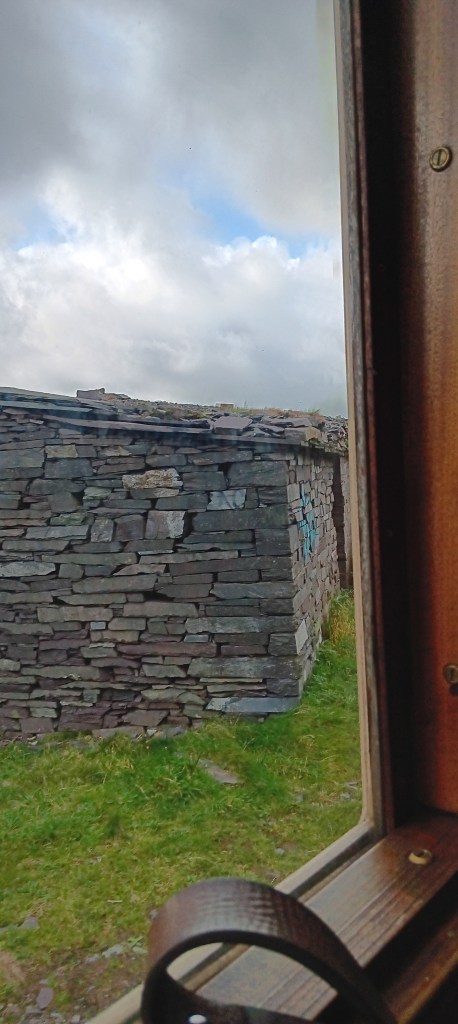
But even here, modern activity has found it’s way in; did you notice the graffiti?
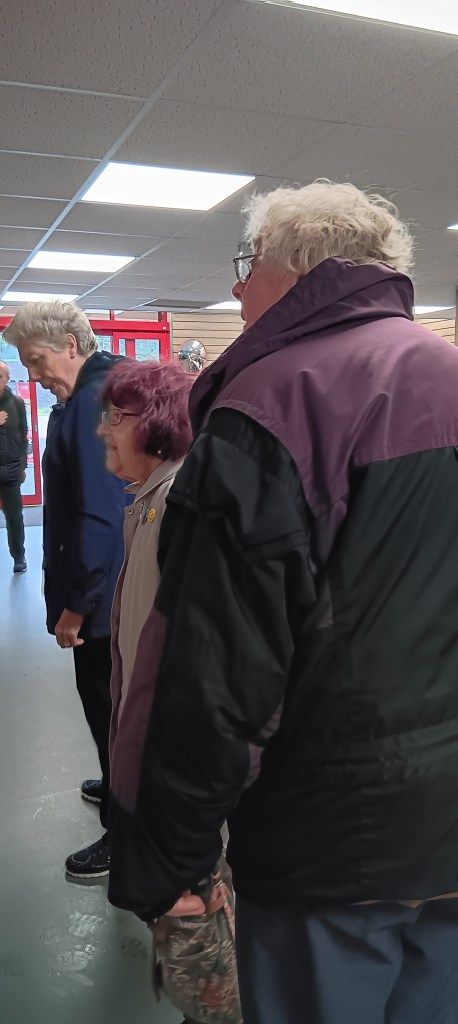
Speaking of change, does this husband buy a new matching jacket each time his wife changes her hair colour?
On the pass just beyond Llanberis, ten-inch square holes are built into the stone walls which line the downhill side, to allow water (rain or snow melt) to get away off the road, such is the sheer quantity there.
On the other side of the pass, most bus passengers were jostling for the best position from which to photograph a stunning rainbow, until someone noticed a sign advising the protected area right by the road was an adder breeding ground!

In highwaymen days, travelers in this area would have dogs running alongside their carriages. These dogs were trained to protect the incumbents from any attack. The dogs were no singular breed, but had to be biddable, tough, and fast. But they, along with highwaymen, have long since gone.
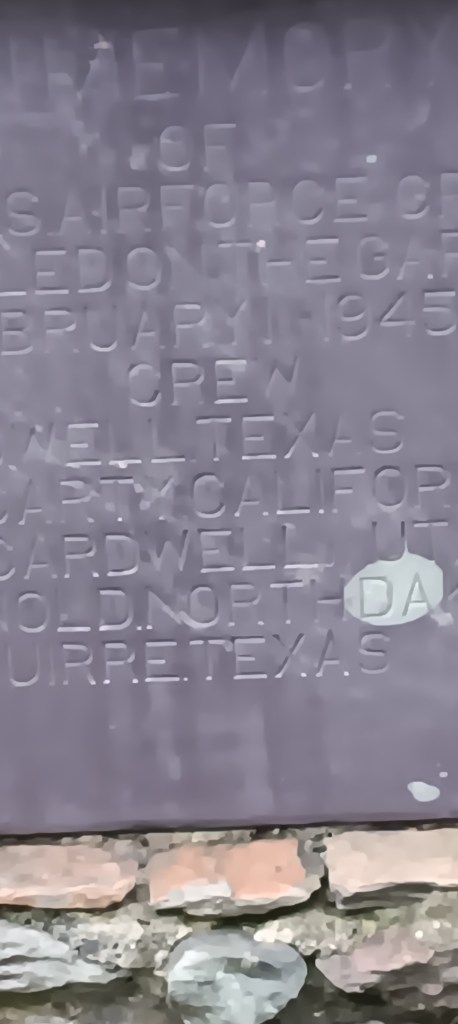
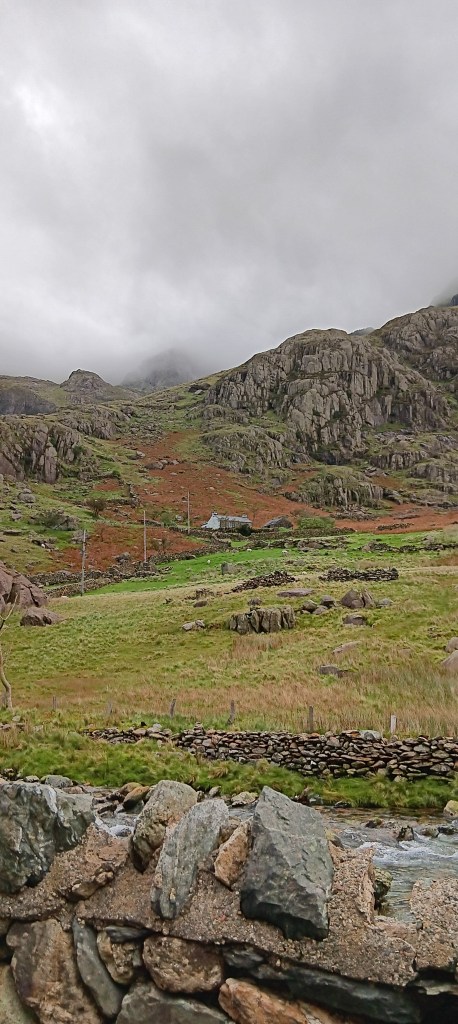
As are the American airmen who lost their lives in the area during WW2. The memorial plaque sits high in the hills, facing vast rock outcrops littered with waterfalls, hardy grass outcrops, and even hardier sheep.
Snowdonia, with it’s moody clouds, ever-changing mists, heavy grey rock, and shards of sunlight, makes it easy to believe in the myths which belong here. That folk have managed to live, and farm, in such places, reflects true resilience.
On the way back, a diversion to Llandudno, where the foreshore buildings can only be painted from a very tight pallette, to retain the historical picture that tourists expect.

But leaving north Wales without mentioning the Welsh pasties would be a crime. The best was in Conway; soft pastry, packed full of vegetables in meat, and slightly spicy. It’s easy to see why this was a farmers or wall-builders hearty lunch. That they have stood the test of time, and still serve today, is a testament to their quality, just like the walls of Conway.
 Stories for you - Enjoy!