Inverness to Thurso and on to Stromness left so many questions!
As the train travels north, the scenery transforms from rich farmland to the endless pink heather of hard ground. Writers and poets have used words like ‘bleak’ to describe the miles of flowering groundcover, but I saw vast areas of natural beauty. But then, my cosy little train of 2 carriages was speeding toward a warm hotel, which will be an improvement on top bunks in hostel dorms.
The first section of the journey was commuter country. We left Inverness at 7am, stopping every 10 minutes or so for workers to go about their business. None seemed particularly interested in the huge warehouses of whiskey, with masses of faded barrels stacked high, inside and out.
On an Invergordon pier rested half a dozen huge round things. Maybe 15 meters long, several meters across at the rusty end, and probably 2 meters wide at the pointy end. What were they? Being the only person in my carriage meant no-one to ask. And that turned out to be the first of many unanswered questions.
In the middle of somewhere, with not a house or road in sight, a Scottish and a Ukranian flag flew proudly together on a hillside, from an oversized bean tripod. Why there, and by whom?
Further on, a huge statue dominated the landscape from atop a ridge. Why the good people of Golspie think it’s okay to have a 100-foot memorial to a man who was notorious for his role in the horrific Highland Clearances beats me.
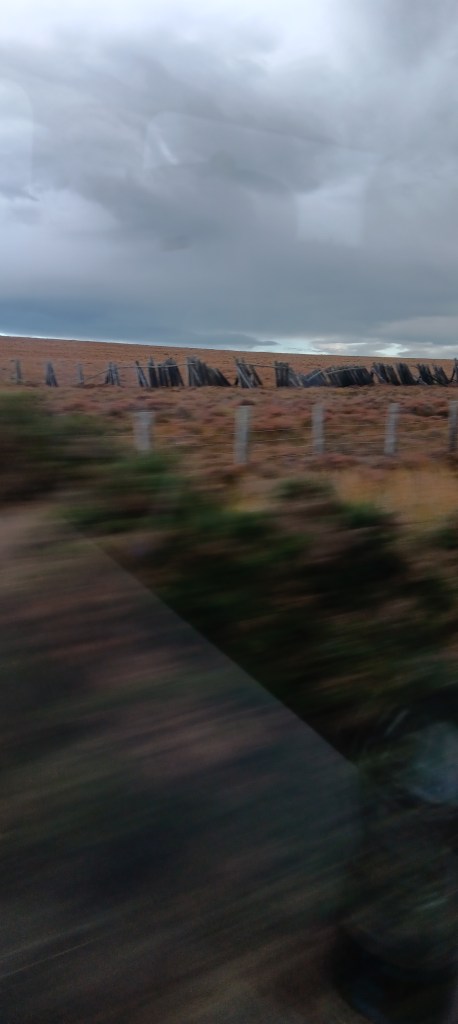
Running alongside the train lines in the heather-covered plains further north, long sections of old timber fences have been replaced with standard post and wire. Where did the timber come from for the old fences? There were no trees. But maybe the purple expanses are the result of mass tree clearing in times gone by? Which leads to my other question; where were the animals? Not a bird, sheep, cow… nothing for miles and miles.
The train guard came through and noted in his little black book which station each passenger was going to. Further north the train only stops at requested stations. At Georgemas though, the train driver swapped ends of the train; then the train started going back the way we’d come! I knew I hadn’t missed my station, but it was still slightly disconcerting.
We veered off onto another line, and ten minutes later reached Thurso. Whilst we alighted, the train driver swapped back and resumed her journey forward.
Thurso is just 8 minutes drive from Scrabster, where the ferry runs from, but the bus is unreliable and there was only one already-booked taxi! I quickly nabbed him for a second run, then a group of three asked if they could share. The taxi driver was in great pain, having just come out of hospital with broken ribs and a punctured lung. When asked how tourists cope when he’s not available, he just shrugged! Could the two hours between train and ferry be to let passengers walk the miles between, luggage and all?
The ferry to Stromness in Orkney was a complete surprise. It has a dog lounge. Five dogs enjoyed it’s hospitality with their owners. Most other folk spent the 90 minute journey partaking in the bar or restaurant. A mere handful of us braved the outside deck, to watch the black atlantic waters spray and swell, to taste the sea air, and listen to the engines roar. Why do folk drink and eat their way through ferry journeys?
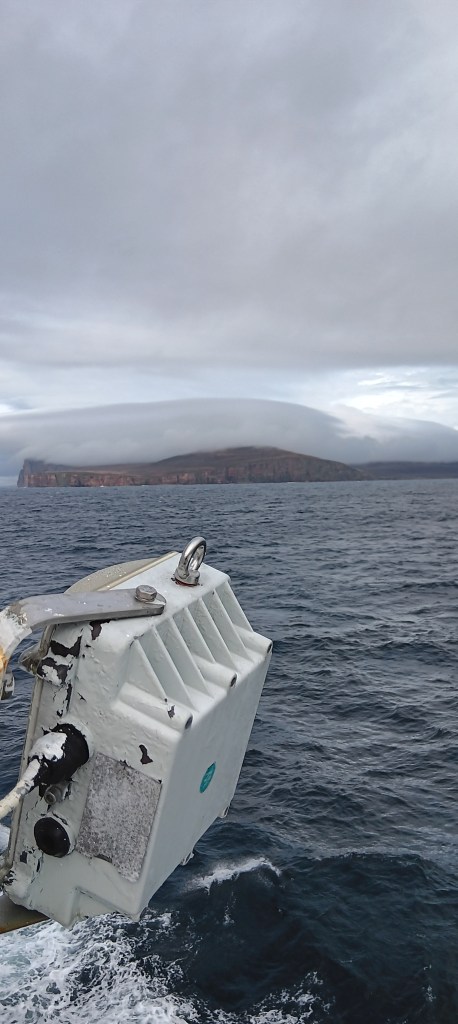
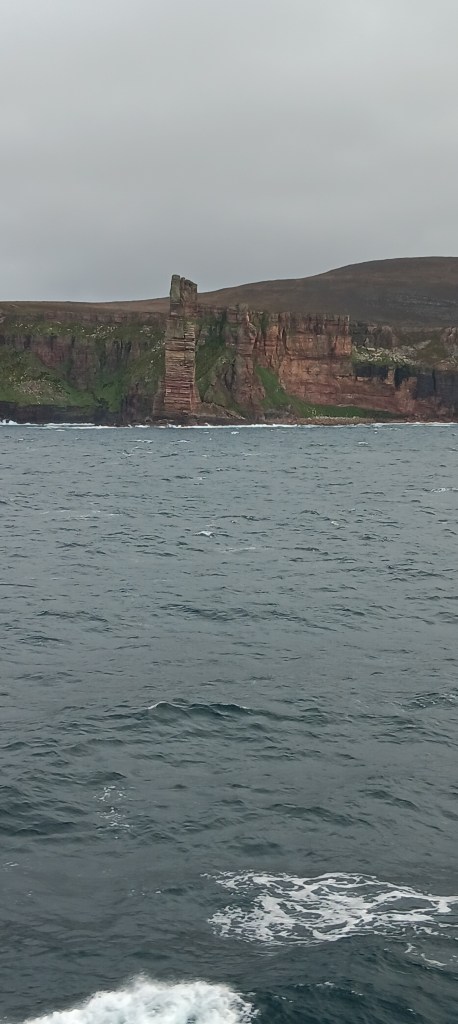
And how come one pinnacle on the Orkney coast stands out on it’s own while all it’s mates are connected in a line?
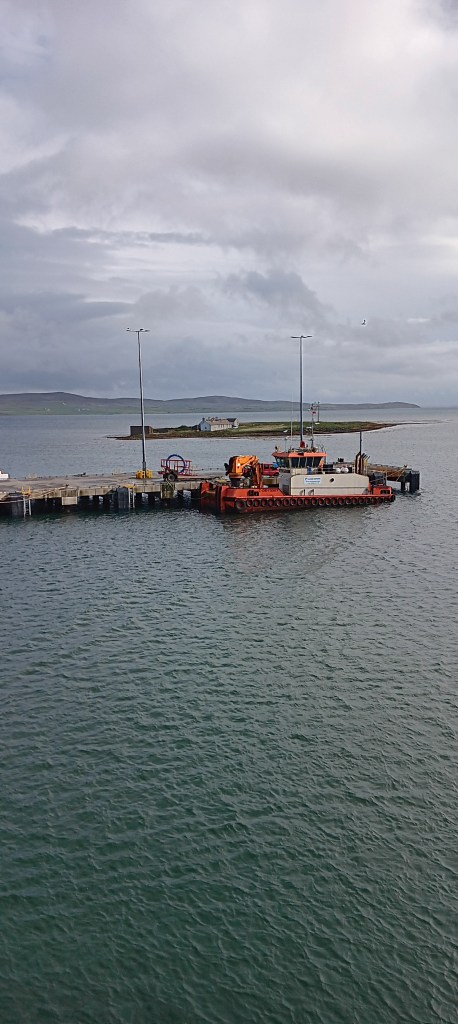
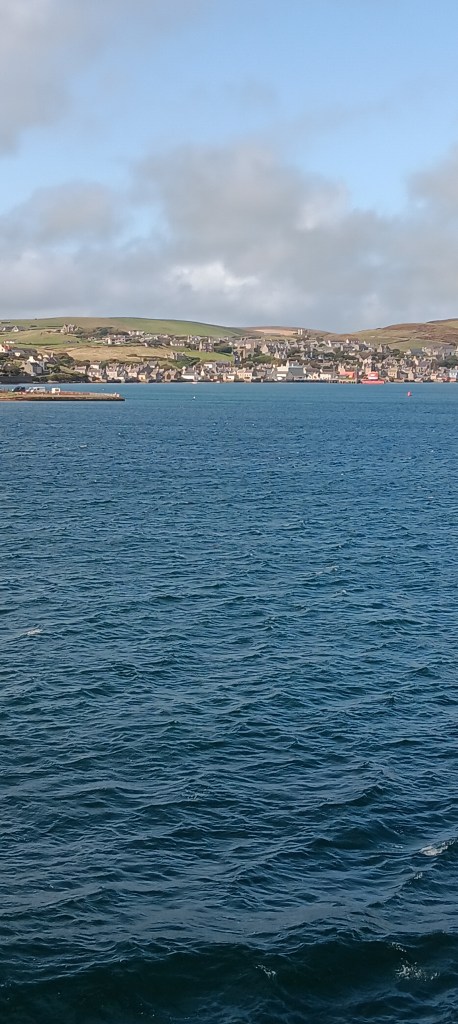
And why do the dwellers of a tiny harbour island have a car? (Look closely). Where do they go?
Such are the mysteries of life!
 Stories for you - Enjoy!